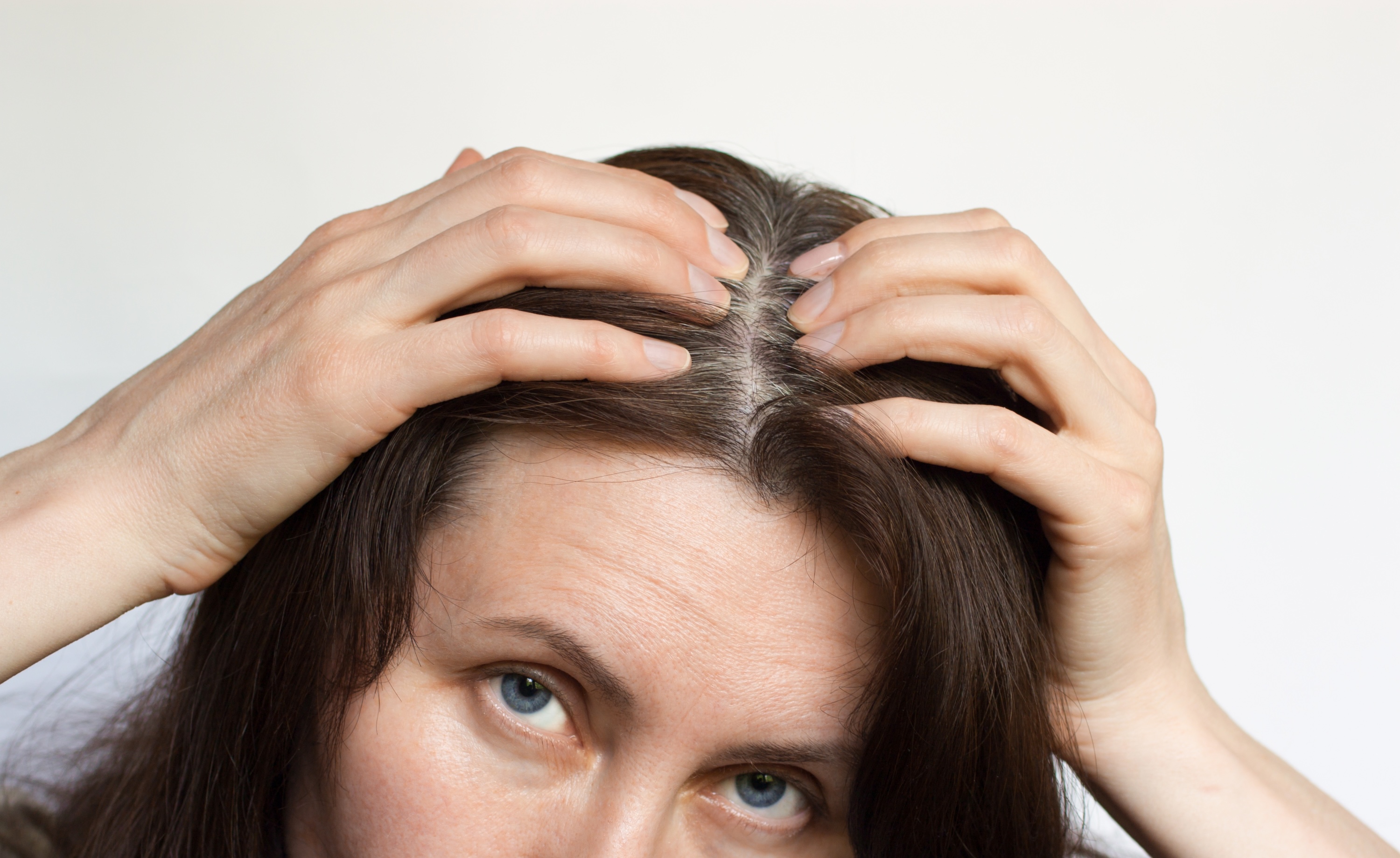
Female pattern hair loss (FPHL), also termed androgenetic alopecia in women, is the most common cause of hair loss in women — affecting an estimated 40% of women by age 50 and up to 55% by age 70. Unlike male pattern baldness, which typically presents as a receding hairline and vertex baldness, FPHL presents as diffuse thinning over the crown and frontal scalp with preservation of the frontal hairline, often classified using the Ludwig scale (I–III).
Topical minoxidil is the only FDA-approved topical treatment for FPHL, with 2% solution approved in 1991 and 5% foam approved in 2014. The mechanism of action is not fully understood — minoxidil is a potassium channel opener that was originally developed as an oral antihypertensive, and its hair growth effects were discovered as a side effect. Proposed mechanisms include prolongation of the anagen (growth) phase of the hair cycle, increased hair follicle size, and stimulation of vascular endothelial growth factor (VEGF) in the perifollicular dermis.
This analysis reviews the RCT evidence for topical minoxidil in FPHL, examines the 2% versus 5% concentration question, and addresses the practical considerations — including the initial shedding phase, response rates, and what happens when treatment is discontinued.
The RCT Evidence Base: What the Trials Show
The pivotal RCTs for topical minoxidil in FPHL were conducted in the 1990s and early 2000s, using non-vellus hair count in a defined 1 cm² target area as the primary endpoint. The largest trial (Olsen et al., 2002, n=381) compared minoxidil 5% foam to 2% solution and vehicle in women with FPHL over 48 weeks. Both active treatments produced significantly greater increases in non-vellus hair count versus vehicle; the 5% foam produced a significantly greater increase than 2% solution (mean increase of 20.7 hairs versus 14.9 hairs per cm²). Patient-reported improvement was consistent with the objective hair count data.
Response rates across the minoxidil FPHL trials are consistently in the 60–80% range — meaning 60–80% of treated women show measurable improvement in hair count versus baseline. The remaining 20–40% are non-responders, and the evidence does not reliably predict who will respond. Maximal response typically occurs at 12–16 weeks, with continued improvement possible through 48 weeks. The response is maintenance-dependent: hair count returns toward baseline within 3–6 months of discontinuation, as minoxidil does not alter the underlying androgenetic process.
The initial shedding phase — increased hair loss in the first 2–8 weeks of treatment — is a well-documented and frequently misunderstood phenomenon. It results from minoxidil synchronizing hair follicles into the anagen phase, causing telogen hairs to shed simultaneously. This shedding is temporary and does not indicate treatment failure; it is a sign that the follicles are responding. Patient counseling on this expected initial shedding is critical for adherence.
The Claim
"Minoxidil is clinically proven to regrow hair in women with thinning — FDA-approved and backed by decades of research. Results visible in as little as 3 months, with continued improvement over time."
(Composite representative claim reflecting Rogaine and generic minoxidil marketing for women.)
What the Evidence Actually Shows
The core claims for topical minoxidil in FPHL are well-supported. The FDA approval is based on adequate and well-controlled trials, the 60–80% response rate is consistently replicated, and the 3-month timeline for visible results is consistent with the trial data (though maximal response requires 12–16 weeks). The 5% concentration produces greater hair count improvement than 2% with a comparable tolerability profile in women.
Important caveats that marketing typically omits: the treatment effect is maintenance-dependent (hair loss resumes on discontinuation), 20–40% of women are non-responders, and the initial shedding phase can cause patients to discontinue prematurely. The evidence is for androgenetic alopecia specifically — minoxidil is not indicated for other causes of hair loss (alopecia areata, telogen effluvium, scarring alopecias) and the evidence for these conditions is substantially weaker.
Practical Considerations: Dosing, Formulation, and Adherence
The 5% foam formulation is generally preferred over 2% solution for women based on the Olsen 2002 trial data showing greater efficacy, and because the foam formulation is less likely to cause facial hypertrichosis (unwanted facial hair growth) — a side effect more common with the liquid solution due to runoff during application. The foam is applied once daily (versus twice daily for the solution), which may improve adherence.
Oral minoxidil at low doses (0.625–2.5 mg/day) has emerged as an alternative for women who find topical application inconvenient or who experience scalp irritation. The oral route is off-label for hair loss but has a growing evidence base; this is reviewed separately in the topical versus oral minoxidil analysis.
Verdict: Supported
The evidence for topical minoxidil in female pattern hair loss is well-supported. The FDA approval is based on adequate RCTs, the 60–80% response rate is consistently replicated, and the 5% concentration has demonstrated superiority over 2% in the largest head-to-head trial. The treatment is maintenance-dependent and does not address the underlying androgenetic process. Patient counseling on the initial shedding phase and the need for ongoing use is essential for adherence and realistic expectations. Evidence rating: 5/5.