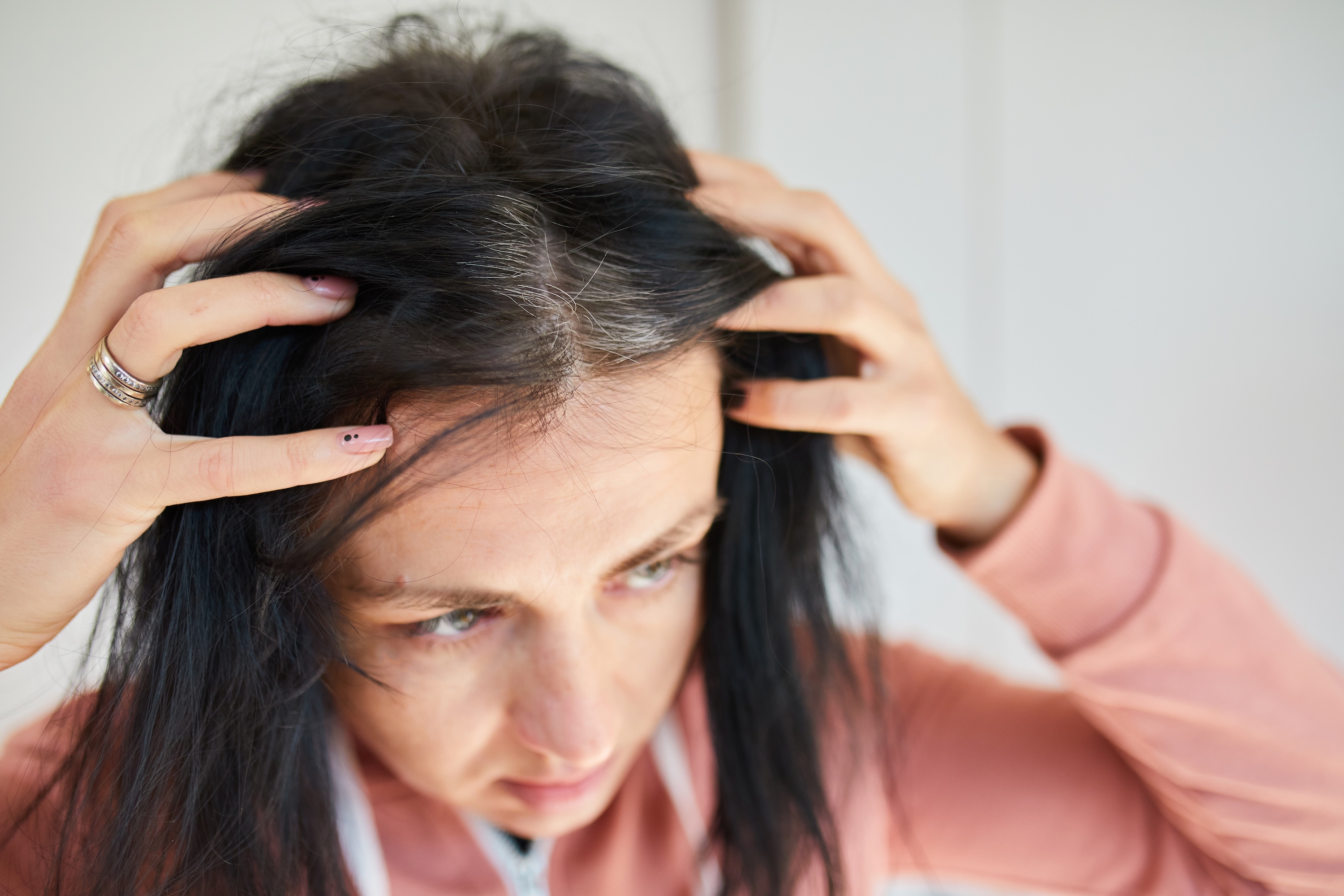
"Stress causes hair loss" is one of the most commonly repeated claims in popular health media — and unlike many wellness oversimplifications, it has a meaningful basis in biology. The relationship between psychological and physiological stress and hair loss is genuine and increasingly well-characterized by research. The supplement and wellness industry has, predictably, amplified this into a broad market of "stress hair" products and adaptogens marketed for stress-related shedding.
The important distinctions — what type of stress causes what type of hair loss, over what timeline, through which mechanisms, and what actually resolves it — are largely absent from the marketing narrative. This analysis examines the science behind stress-induced hair loss, with particular attention to the 2025–2026 research advancing our understanding of the brain-skin axis.
The HPA Axis and Telogen Effluvium
The best-characterized pathway linking stress to hair loss runs through the hypothalamic-pituitary-adrenal (HPA) axis. When the brain perceives a significant stressor — whether psychological (bereavement, job loss, illness) or physiological (surgery, severe illness, rapid weight loss, fever) — the hypothalamus releases corticotropin-releasing hormone (CRH), which triggers ACTH release from the pituitary, which in turn drives cortisol secretion from the adrenal glands.
CRH receptors are expressed on hair follicle cells, and CRH signaling in the follicle has direct effects on hair cycling. A study published in Biochemical and Biophysical Research Communications found that CRH inhibits autophagy in hair follicle cells — a process required for normal follicular maintenance — and can accelerate the transition from anagen (growth) to telogen (resting). When a sufficient number of follicles are pushed into telogen simultaneously by a stress event, diffuse shedding begins approximately 2–3 months later, a condition called telogen effluvium (TE).
The 2–3 month delay between the stressor and the shedding is clinically important: patients frequently cannot identify the triggering event because they are attributing hair loss to whatever is happening at the time of shedding, not what happened months earlier. Identifying the actual trigger — surgery, illness, emotional trauma, crash diet — is key to distinguishing TE from other hair loss causes.
Beyond Cortisol: Sympathetic Activation and the Brain-Skin Axis
More recent research has expanded the stress-hair loss mechanism beyond the HPA axis and cortisol. A January 2026 study published in PubMed (PMID: 41308637) demonstrated that stress-induced sympathetic nervous system hyperactivation — the "fight or flight" response mediated by norepinephrine — can cause hair follicle necrosis and trigger autoimmune responses targeting follicles. This is a distinct pathway from telogen effluvium and may help explain why severe or chronic stress can precipitate or worsen alopecia areata in susceptible individuals.
A May 2026 study in ScienceDirect identified the brain-skin axis as a therapeutic target, showing that oleanolic acid — a plant-derived triterpenoid — could alleviate stress-induced alopecia in a preclinical model by reducing dermal papilla cell senescence through neuroprotective pathways. While this is early-stage research, it reflects the growing understanding that neuroinflammatory signaling between the brain and skin is a distinct contributor to stress-related hair loss, not merely a consequence of elevated cortisol.
A 2025 review in ScienceDirect ("The role of psychological stress in hair loss") summarized the emerging picture: stress drives hair loss through multiple converging pathways — CRH/cortisol disrupting follicle cycling, sympathetic activation causing follicular damage, and mast cell and neuropeptide (Substance P) mediated neuroinflammation. Cortisol is a marker of stress exposure, not a single lever for hair loss intervention.
The Claim
"Adaptogen blend formulated to combat stress-related hair shedding — ashwagandha, rhodiola, and reishi to lower cortisol and protect hair follicles from stress damage."
(Composite representative claim reflecting adaptogen supplement marketing targeting stress-related hair loss.)
What the Evidence Actually Shows
The biological case for stress causing hair loss is sound. The case for adaptogens treating stress-related hair loss is not. Ashwagandha has modest RCT evidence for reducing perceived stress and cortisol levels in chronically stressed adults, but no clinical trial has demonstrated that cortisol reduction from ashwagandha (or any adaptogen) translates into reduced hair shedding or faster recovery from telogen effluvium. The claim chain — adaptogen → lower cortisol → less hair loss — requires extrapolation across two unstudied links.
Furthermore, stress-induced telogen effluvium is generally self-limiting. Once the triggering stressor resolves, hair cycling normalizes and shedding stops, typically within 3–6 months of the trigger's resolution. The condition does not require pharmacological or supplemental intervention in most cases — it requires the stressor to end or be managed.
Chronic telogen effluvium (lasting more than 6 months) is a distinct entity with a less well-understood mechanism. Co-factors including thyroid dysfunction, iron deficiency, and nutritional depletion commonly contribute and should be investigated before attributing chronic shedding to stress alone.
Distinguishing Stress Hair Loss from Pattern Hair Loss
A clinically important distinction is between telogen effluvium (diffuse shedding, typically reversible) and androgenetic alopecia (pattern thinning, progressive, DHT-mediated). Stress can trigger or exacerbate TE, but it does not cause androgenetic alopecia. Patients who attribute progressive crown or temple thinning to "stress" may be misidentifying the cause and delaying appropriate treatment.
Stress can, however, worsen androgenetic alopecia indirectly — cortisol excess promotes sebum production and scalp inflammation, and the sympathetic mechanisms identified in 2026 research suggest stress may accelerate follicular miniaturization in genetically susceptible individuals. The two conditions frequently coexist.
Verdict: Partially Supported
The connection between stress and hair loss is well-supported by mechanistic evidence, spanning the HPA axis, sympathetic nervous system, and brain-skin axis. Stress-induced telogen effluvium is a real and clinically recognized entity. The supplement industry's response — adaptogens targeting cortisol — lacks clinical evidence specifically for hair loss outcomes. Stress-induced TE is typically self-limiting; identifying and addressing the underlying stressor, and ruling out co-factors (thyroid, iron), is more evidence-aligned than supplement regimens. Evidence rating for adaptogen hair products: 1/5.