Before You Start Minoxidil: 5 Things to Know
How to tell if it is likely to work, what the early shedding actually means, and how a newer minoxidil-free approach compares.

Minoxidil doesn’t work for everyone, and an enzyme may be why
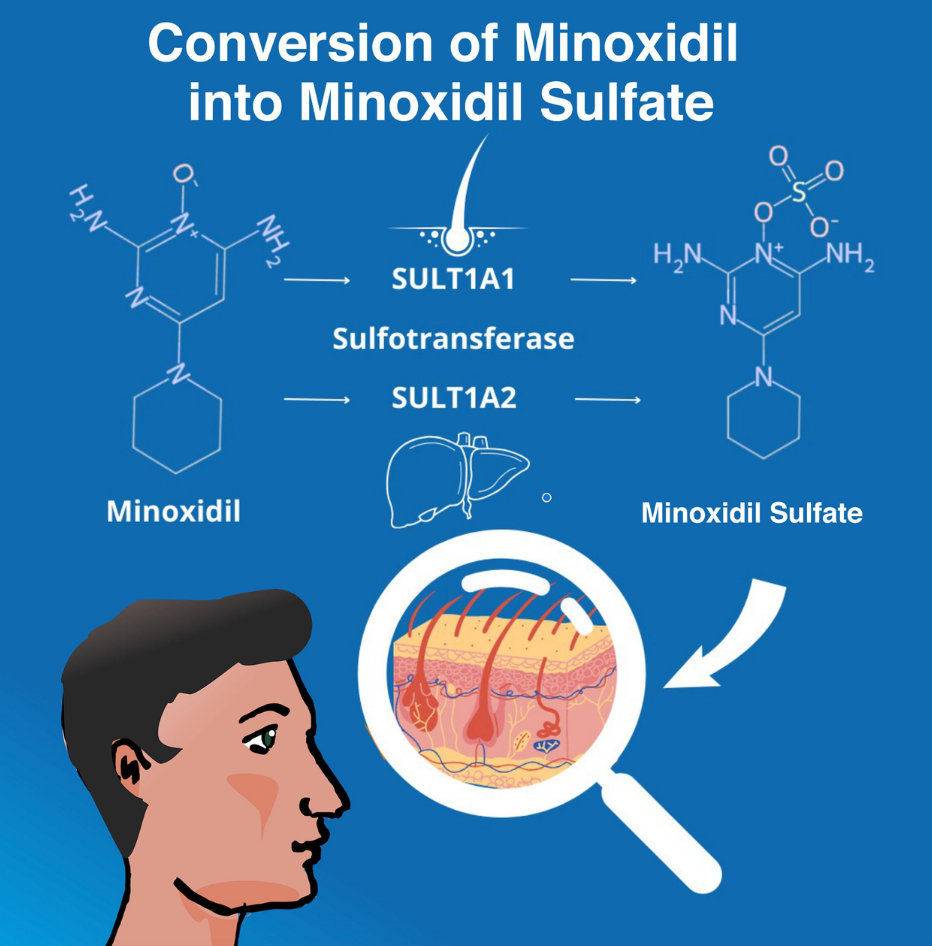
Topical minoxidil needs to be converted into minoxidil sulfate, its active form. An enzyme in the hair follicle called SULT1A1 helps perform that conversion. People with lower enzyme activity may activate less of the drug, helping explain why some users see little or no regrowth even when they apply it exactly as directed.
A sulfotransferase activity test analyzes a few plucked hairs and can help predict whether you’re likely to respond, before you spend months finding out.
Some side effects are expected. Others mean you should stop.
Tap or click each image to learn more about the side effect shown and when it may warrant a change in treatment.
Minoxidil wasn’t designed to address every part of hair thinning
Minoxidil was first developed as a blood pressure medication. Its effect on hair was discovered later. It widens blood vessels and helps prolong the anagen, the growth phase of the hair cycle.
However, hair thinning involves more than one pathway. Dermal papilla cells sit at the base of each follicle and help regulate its size, growth cycle, and ability to regenerate. The follicle also depends on signals from the vascular, metabolic, and hormonal environment around it. A drug repurposed for its effect on blood vessels was never built with that whole picture in mind.
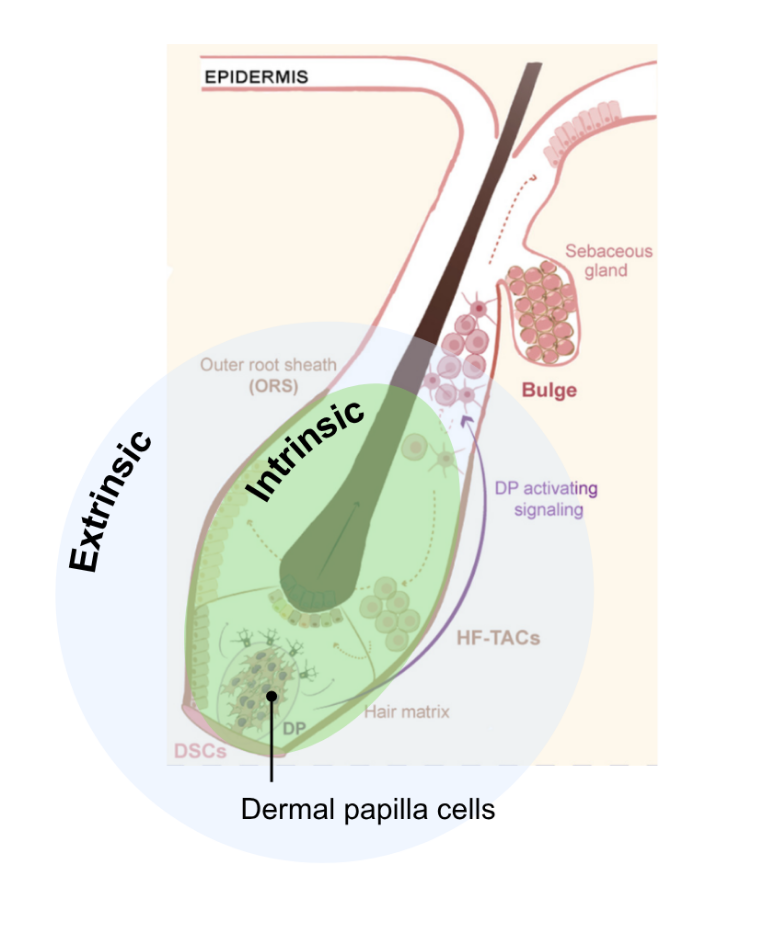
A minoxidil-free alternative takes a dual-path approach.
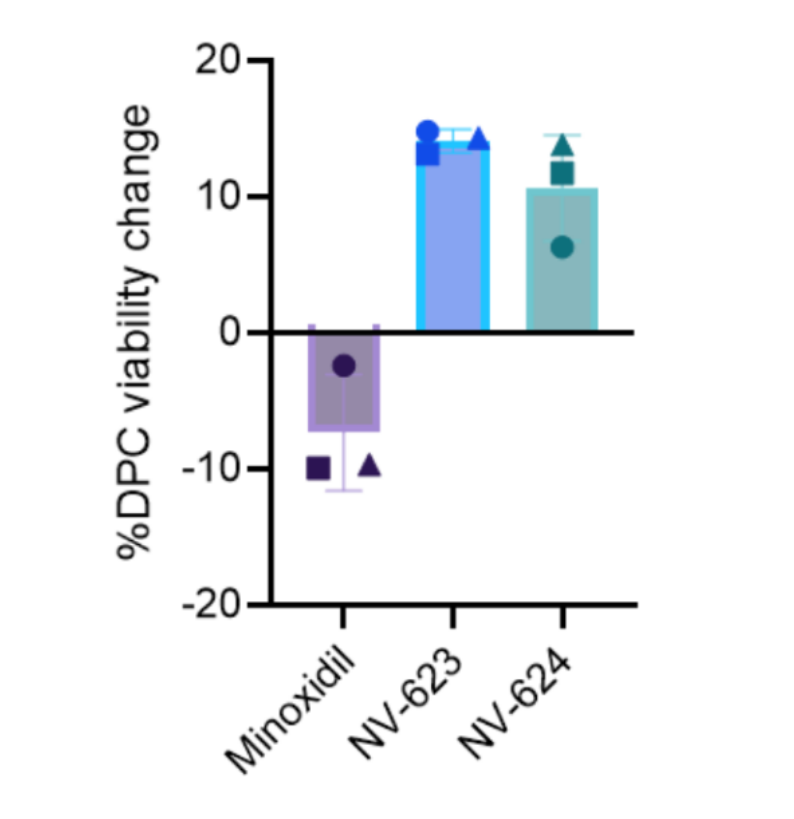
That broader view of hair biology is the thinking behind RE:YOU’s Dual-Path Hair Revival Serum, a minoxidil-free hormone-free daily scalp serum designed to support both follicle-cell activity and the surrounding environment.
Rather than repurposing an existing drug, its scientists used AI-screening to evaluate 20 million molecules, then refined and tested promising candidates. Three proprietary NOVOGRO™ molecules became the foundation of the formula, working along two paths:
- Path 1, the follicle’s cells: NOVOGRO™-623 and 624 support the energy and activity of dermal papilla cells, the growth-regulating cells at the base of the follicle.
- Path 2, the environment around the follicle: NOVOGRO™-273 activates regenerative signaling that supports oxygen and nutrient flow to the follicle.
A 190+ participant, six-month, double-blind randomized controlled trial comparing RE:YOU with minoxidil is currently underway. Interim results at 90 days show 50% more hair growth with RE:YOU than with minoxidil.
Results depend on consistency, both now and after you reach your goal.
Any hair treatment works only if you keep using it, so the routine matters as much as the formula. Beyond how often you apply it, drying time, residue, and how long you have to wait before washing all affect whether you stick with it.
Getting results: Women’s 2% minoxidil solution is applied twice a day. Greasy, flat-looking hair is one of the most common complaints in user reviews, and the product label notes that some people experience changes in hair texture. RE:YOU is a once-daily, water-based serum that absorbs quickly without a sticky or greasy finish. It works with your usual styling products, and you don’t need to wash your hair before each application.
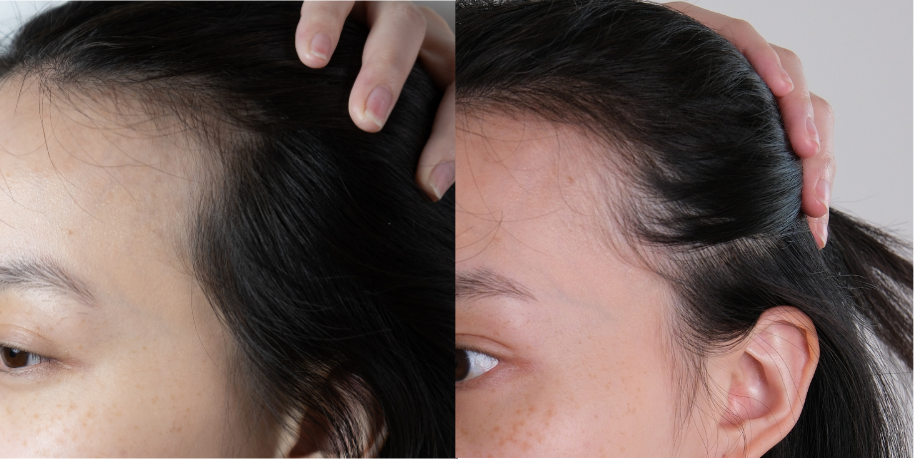
Keeping results: Minoxidil requires ongoing use. When treatment stops, the underlying hair loss resumes, and regrown hair is typically lost within three to four months. RE:YOU’s guidance allows a lighter maintenance routine: once desired results are established, usually after 6–12 months, users may reduce application to every few days or once a week.
References & Further Reading
- Goren, A., et al. (2014). Novel enzymatic assay predicts minoxidil response in the treatment of androgenetic alopecia. Dermatologic Therapy, 27(3), 171–173.
- Roberts, J., Desai, N., McCoy, J., & Goren, A. (2014). Sulfotransferase activity in plucked hair follicles predicts response to topical minoxidil in the treatment of female androgenetic alopecia. Dermatologic Therapy, 27(4), 252–254.
- Goren, A., et al. (2015). Clinical utility and validity of minoxidil response testing in androgenetic alopecia. Dermatologic Therapy, 28(1), 13–16.
- Friedman, E. S., Friedman, P. M., Cohen, D. E., & Washenik, K. (2002). Allergic contact dermatitis to topical minoxidil solution: Etiology and treatment. Journal of the American Academy of Dermatology, 46(2), 309–312.
- Han, J. H., et al. (2004). Effect of minoxidil on proliferation and apoptosis in dermal papilla cells of human hair follicle. Journal of Dermatological Science, 34(2), 91–98.
- Yum, S., et al. (2018). Minoxidil induction of VEGF is mediated by inhibition of HIF-prolyl hydroxylase. International Journal of Molecular Sciences, 19(1), 53.
- Qu, Z., et al. (2026). AI-enabled discovery of small molecules targeting complementary pathways for hair follicle rejuvenation. bioRxiv. Preprint, version 1. DOI: 10.64898/2026.06.09.728282.