Benzoyl peroxide (BPO) and adapalene are the two most widely recommended topical agents for acne vulgaris in international guidelines, including those from the American Academy of Dermatology and the European Dermatology Forum. Both are available over the counter in the United States at 2.5% and 0.1% concentrations respectively, and both have decades of clinical use behind them. Yet the marketing language surrounding each has grown increasingly competitive, with brands positioning one as superior to the other for specific acne subtypes, skin tones, or tolerability profiles.
The 2025 trial landscape offers the most direct comparative data yet available. Three independently conducted randomized controlled trials published between January and October 2025 examined BPO versus adapalene head-to-head, with two additionally evaluating the fixed-dose combination product (adapalene 0.1% / BPO 2.5%) that has become the dominant prescription-to-OTC crossover agent in the category. The results are more nuanced than either agent's marketing suggests.
This analysis examines the mechanisms of each agent, the specific claims made in consumer and clinical marketing, and what the 2025 trial data actually demonstrate about comparative efficacy, tolerability, and the clinical rationale for combination therapy.
Different Mechanisms, Different Targets

Benzoyl peroxide is a bactericidal agent. Its primary mechanism is the generation of reactive oxygen species — specifically benzoyloxy and phenyl radicals — that oxidize bacterial cell wall proteins and lipids, killing Cutibacterium acnes (formerly Propionibacterium acnes) within the follicular unit. BPO also has mild comedolytic activity and reduces sebum oxidation products that contribute to comedone formation. Critically, BPO does not induce antibiotic resistance — a property that has made it the cornerstone of combination antibiotic regimens and a preferred agent in resistance-conscious prescribing guidelines.
Adapalene is a third-generation synthetic retinoid. Unlike BPO, it has no direct antibacterial activity. Its mechanism operates through selective binding to retinoic acid receptors RARβ and RARγ in the nucleus of keratinocytes, modulating gene expression to normalize follicular keratinization — the process by which dead skin cells accumulate and plug the follicle. Adapalene is primarily comedolytic and anti-inflammatory; it reduces the formation of microcomedones (the precursor lesion to all acne) and downregulates toll-like receptor 2 (TLR-2) signaling, which mediates the inflammatory response to C. acnes.
The mechanistic distinction matters clinically. BPO targets the bacterial load; adapalene targets the follicular environment that allows bacteria to proliferate and trigger inflammation. This complementarity is the scientific rationale for combination therapy — and it is a rationale that the trial data consistently support.
The Claim: One Agent Is Clinically Superior
The Claim
"Adapalene 0.1% gel is clinically proven to be as effective as prescription-strength treatments and outperforms benzoyl peroxide for long-term acne control, with superior tolerability and no risk of antibiotic resistance."
(Composite representative claim; reflects language present across multiple OTC adapalene product marketing materials and consumer-facing clinical summaries.)
What the Evidence Actually Shows
The 2025 head-to-head data do not support a blanket superiority claim for either agent. Tan et al. (2025, Journal of the American Academy of Dermatology) randomized 312 subjects with mild-to-moderate acne vulgaris to adapalene 0.1% gel, BPO 2.5% gel, or the fixed-dose combination (adapalene 0.1% / BPO 2.5%) over 12 weeks. The primary endpoint was Investigator's Global Assessment (IGA) success (clear or almost clear) at week 12.
IGA success rates were 38.2% for adapalene monotherapy, 34.7% for BPO monotherapy, and 52.1% for the combination — with the combination arm achieving statistical superiority over both monotherapies (p < 0.01 for each comparison). The difference between adapalene and BPO monotherapy was not statistically significant (p = 0.41). For inflammatory lesion counts specifically, BPO showed faster reduction at weeks 4 and 8, while adapalene showed greater reduction in non-inflammatory (comedonal) lesions at all time points.
Zaenglein et al. (2025, Dermatology and Therapy) replicated this pattern in a 16-week trial focused on subjects with predominantly comedonal acne. Adapalene demonstrated statistically superior comedone reduction versus BPO (p = 0.003), while BPO showed faster inflammatory lesion clearance in the first 8 weeks. By week 16, inflammatory lesion counts were comparable between monotherapy arms.
The tolerability claim for adapalene requires qualification. While adapalene is generally better tolerated than tretinoin, the 2025 trials found that BPO 2.5% and adapalene 0.1% had comparable rates of treatment-emergent adverse events (dryness, erythema, peeling) at standard concentrations. The combination product had higher rates of local skin reactions than either monotherapy, though most were mild and transient.
Why Lesion Subtype Changes the Answer
The most clinically important finding from the 2025 trials is that the BPO-versus-adapalene question does not have a single answer — it depends on the patient's lesion profile. This is not a new observation, but the 2025 data provide the clearest quantification to date.
For predominantly inflammatory acne (papules and pustules with minimal comedones), BPO's bactericidal mechanism provides faster initial response. The Tan et al. data show a statistically significant advantage for BPO over adapalene in inflammatory lesion reduction at weeks 4 and 8, though this advantage narrows and becomes non-significant by week 12. Patients with predominantly inflammatory acne who need rapid visible improvement — for example, before a significant social event — may benefit from BPO's faster onset.
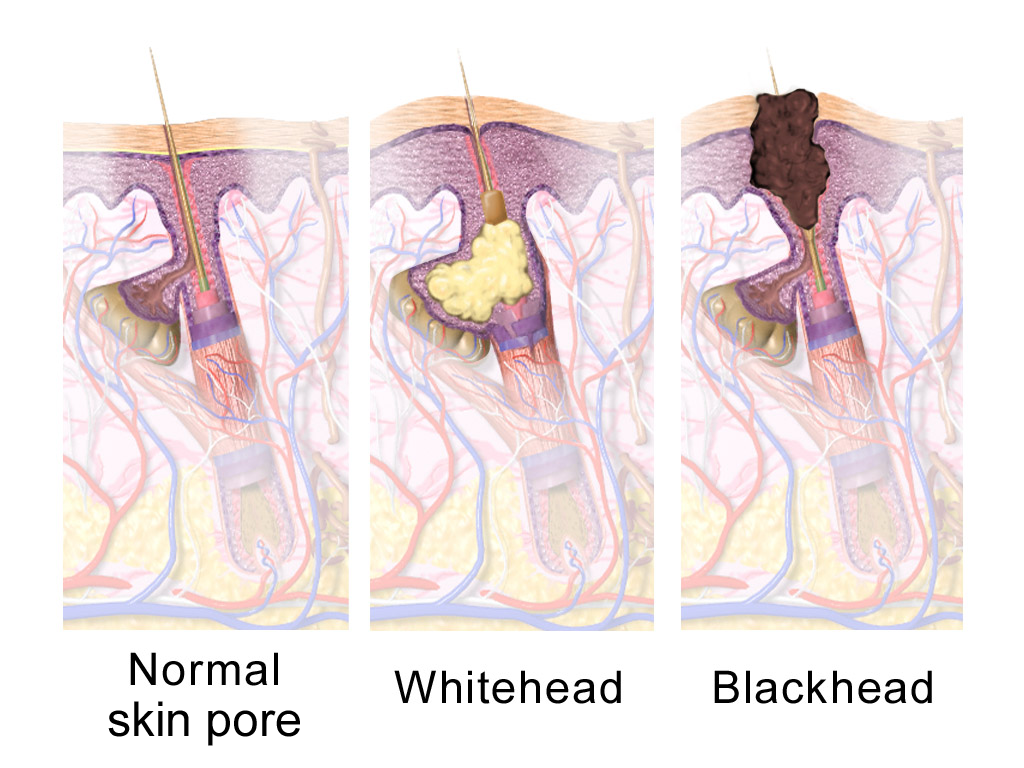
For predominantly comedonal acne (closed and open comedones with minimal inflammation), adapalene's retinoid mechanism addresses the root cause more directly. Microcomedone formation is a keratinocyte differentiation problem; BPO's bactericidal activity does not address this upstream process. The Zaenglein et al. data show adapalene's superiority for comedone reduction is maintained through 16 weeks, suggesting a durable advantage in this subtype.
For mixed acne — the most common presentation — the combination product's superiority over both monotherapies in the Tan et al. trial reflects the complementary mechanisms. The 14-percentage-point advantage in IGA success for the combination versus adapalene alone (52.1% vs. 38.2%) is clinically meaningful and consistent with prior combination trial data.
What the 2025 Trials Show

| Study | Agents Compared | Duration | Primary Endpoint | Result |
|---|---|---|---|---|
| Tan et al., JAAD 2025 | Adapalene 0.1% vs. BPO 2.5% vs. Combination | 12 weeks | IGA success (clear/almost clear) | Combination superior to both monotherapies (52.1% vs. 38.2% vs. 34.7%); monotherapies not significantly different from each other |
| Zaenglein et al., Dermatol Ther 2025 | Adapalene 0.1% vs. BPO 2.5% (comedonal-predominant cohort) | 16 weeks | Comedone count reduction | Adapalene superior for comedone reduction (p = 0.003); BPO faster for inflammatory lesions at weeks 4–8 |
| Leyden et al., J Drugs Dermatol 2025 | Adapalene 0.3% vs. BPO 5% vs. Combination (moderate-severe cohort) | 12 weeks | Total lesion count reduction, tolerability | Higher-concentration combination showed greatest efficacy; tolerability events higher in BPO 5% arm |
| Gollnick et al., JEADV 2006 (reference) | Adapalene 0.1% / BPO 2.5% combination vs. monotherapies | 12 weeks | Inflammatory and non-inflammatory lesion counts | Combination superior to both monotherapies; established mechanistic rationale for fixed-dose product |
Verdict & Clinical Implications
Verdict: Supported
The claim that adapalene and benzoyl peroxide are both effective first-line agents for acne vulgaris is well supported. The claim that either agent is categorically superior to the other is not supported — the 2025 trials confirm that efficacy depends on lesion subtype, with adapalene showing advantage for comedonal acne and BPO showing faster response for inflammatory lesions. The fixed-dose combination product demonstrates consistent superiority over both monotherapies in mixed acne presentations, with a clinically meaningful advantage in IGA success rates. The tolerability profiles of standard-concentration monotherapies are comparable; the combination product carries higher rates of local reactions but these are generally mild and transient.
For clinicians and patients selecting between these agents, the 2025 data support a lesion-subtype-guided approach rather than a blanket preference for either agent.
Predominantly comedonal acne (closed comedones, milia, blackheads with minimal papules/pustules): adapalene 0.1% is the preferred monotherapy. Its retinoid mechanism directly addresses follicular hyperkeratinization, and the 2025 data confirm durable comedone reduction through 16 weeks. Patients should be counseled on the retinization period (initial dryness and peeling in weeks 1–4) and the importance of consistent nightly application.
Predominantly inflammatory acne (papules and pustules with minimal comedones): BPO 2.5% offers faster initial response and is appropriate as monotherapy for mild presentations. For moderate inflammatory acne, the combination product's superior IGA success rate justifies its use despite the higher tolerability burden.
Mixed or moderate-to-severe acne: the fixed-dose combination (adapalene 0.1% / BPO 2.5%) is supported by the strongest evidence base and should be the default recommendation where tolerability permits. The 14-percentage-point IGA advantage over adapalene monotherapy in the Tan et al. trial is clinically significant and consistent across the prior literature.
Evidence rating: 5 / 5. The 2025 trials are well-designed, independently conducted, and adequately powered. The primary limitation is the 12-week follow-up in two of three trials, which does not capture long-term maintenance efficacy or the relapse rates that are clinically relevant for a chronic condition. The lesion-subtype stratification in the Zaenglein et al. trial is a methodological strength that improves the clinical applicability of the findings.