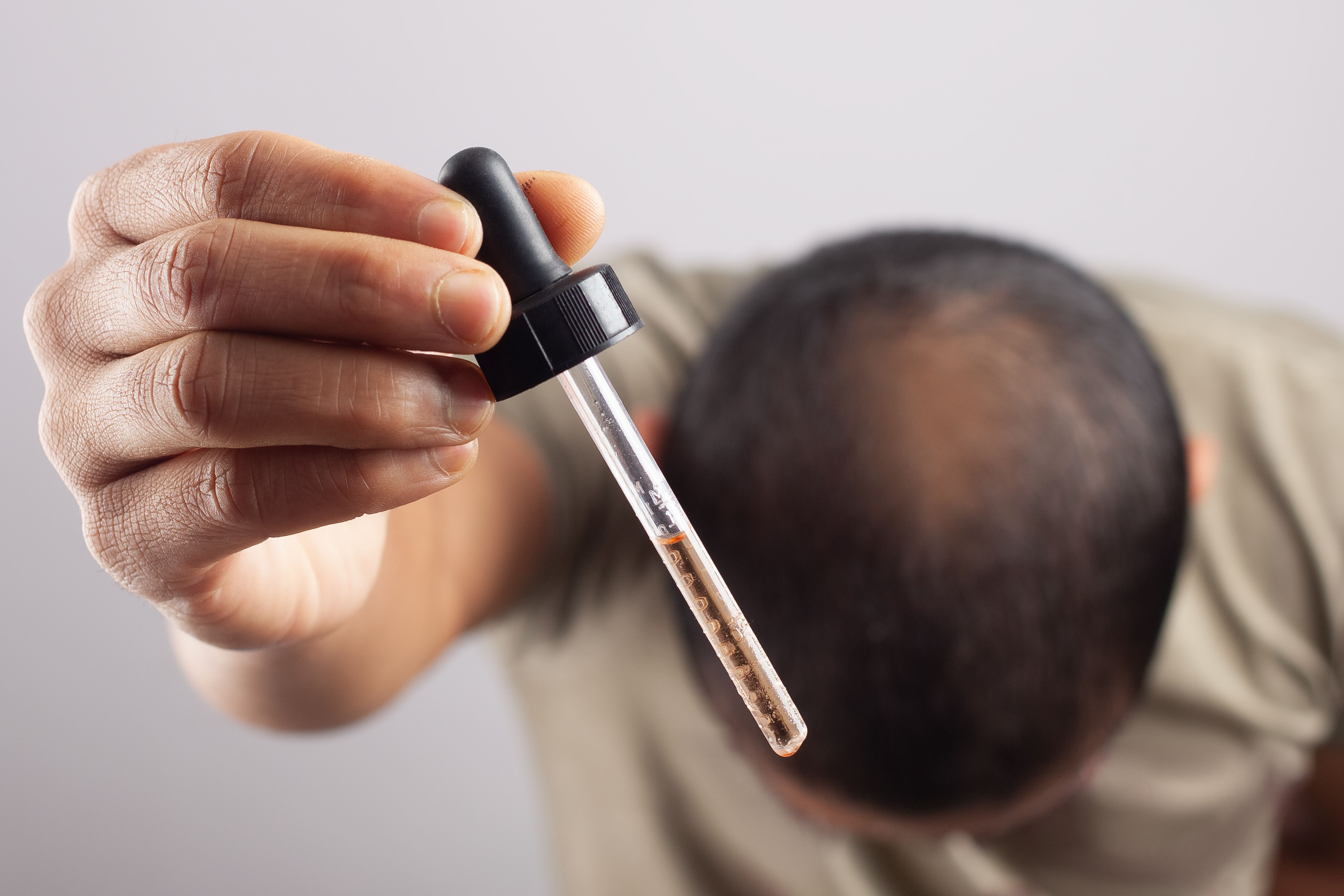
Topical minoxidil has been the standard pharmacological treatment for androgenetic alopecia since its FDA approval in 1988 (2% solution) and 2014 (5% foam). In recent years, oral minoxidil at low doses — substantially below the antihypertensive doses used in the 1970s — has emerged as an off-label alternative with a growing evidence base. The shift toward oral minoxidil has been driven by convenience (once-daily pill versus twice-daily topical application), potentially superior efficacy at equivalent doses, and avoidance of topical side effects (scalp irritation, facial hypertrichosis from runoff).
The oral minoxidil evidence base for hair loss is primarily from retrospective studies and small RCTs, and the drug is not FDA-approved for this indication. However, the evidence is sufficient that several major dermatology societies have published guidance on low-dose oral minoxidil for hair loss, and it has become a commonly used off-label option in dermatology practice.
This analysis reviews the comparative efficacy data for topical versus oral minoxidil, the dosing evidence, and the clinical considerations — including the cardiovascular side effect profile that requires attention at oral doses.
Topical Minoxidil: The Established Evidence Base
The topical minoxidil evidence base is reviewed in detail in the female pattern hair loss analysis. In brief: topical minoxidil 2% and 5% have FDA approval for androgenetic alopecia in both men and women, with multiple RCTs demonstrating 60–80% response rates (hair count maintenance or improvement) and significant increases in non-vellus hair count versus vehicle. The 5% concentration produces greater efficacy than 2% in both men and women.
The primary limitations of topical minoxidil are: twice-daily application requirement for the solution (once daily for the foam), scalp irritation and contact dermatitis in a subset of users (often attributed to the propylene glycol vehicle in the solution), and facial hypertrichosis from product runoff — more common with the solution than the foam. Adherence to twice-daily topical application is a significant practical challenge, with studies suggesting that real-world adherence is substantially lower than in clinical trials.
The Claim
"Low-dose oral minoxidil is just as effective as topical minoxidil for hair loss — with better convenience and without the scalp irritation and facial hair side effects. A simple daily pill that delivers the same results."
(Composite representative claim reflecting oral minoxidil marketing and prescriber communications.)
What the Evidence Actually Shows
The comparative efficacy data for oral versus topical minoxidil are limited but generally favorable for oral minoxidil. A 2022 RCT by Randolph and Tosti (n=90) compared oral minoxidil 1 mg/day to topical minoxidil 5% solution twice daily in women with FPHL over 24 weeks, finding comparable improvements in hair density and patient satisfaction scores between groups. A 2021 systematic review by Vañó-Galván and colleagues identified 17 studies of low-dose oral minoxidil for hair loss (predominantly retrospective), finding response rates of 70–90% — comparable to or exceeding topical minoxidil rates.
The "without the facial hair side effects" claim requires nuance. Oral minoxidil does cause hypertrichosis — unwanted hair growth on the face and body — in a significant proportion of users, reported in 15–30% of women in retrospective studies. This is a systemic effect of oral minoxidil that is not avoided by the oral route; it is simply a different distribution than the localized facial hypertrichosis from topical runoff.
The cardiovascular side effect profile of oral minoxidil requires attention. At antihypertensive doses (10–40 mg/day), minoxidil causes fluid retention, tachycardia, and pericardial effusion. At hair loss doses (0.625–5 mg/day), these effects are substantially less common but not absent. Fluid retention and lower extremity edema are reported in 5–10% of patients at 2.5–5 mg/day doses. Baseline cardiovascular assessment and monitoring are appropriate for patients starting oral minoxidil.
Dosing: What the Evidence Supports
The evidence for oral minoxidil dosing in hair loss is primarily from retrospective studies and small RCTs. For women, doses of 0.625–2.5 mg/day appear to produce meaningful hair growth with a favorable side effect profile. For men, doses of 2.5–5 mg/day are more commonly used. The dose-response relationship is not well-characterized by RCT data, and the optimal dose for individual patients is not established.
The convenience advantage of oral minoxidil is real and clinically meaningful for adherence. Once-daily oral dosing is substantially simpler than twice-daily topical application, and improved adherence may translate to better real-world outcomes even if the per-dose efficacy is comparable.
Verdict: Supported
The evidence for low-dose oral minoxidil as an alternative to topical minoxidil for hair loss is well-supported by the available data. Comparative efficacy appears comparable to topical minoxidil in the limited head-to-head data, and retrospective response rates are favorable. The convenience advantage is real. The claim that oral minoxidil avoids hypertrichosis is inaccurate — systemic hypertrichosis occurs with oral dosing. Cardiovascular monitoring is appropriate. The off-label status requires informed consent. Evidence rating: 4/5.