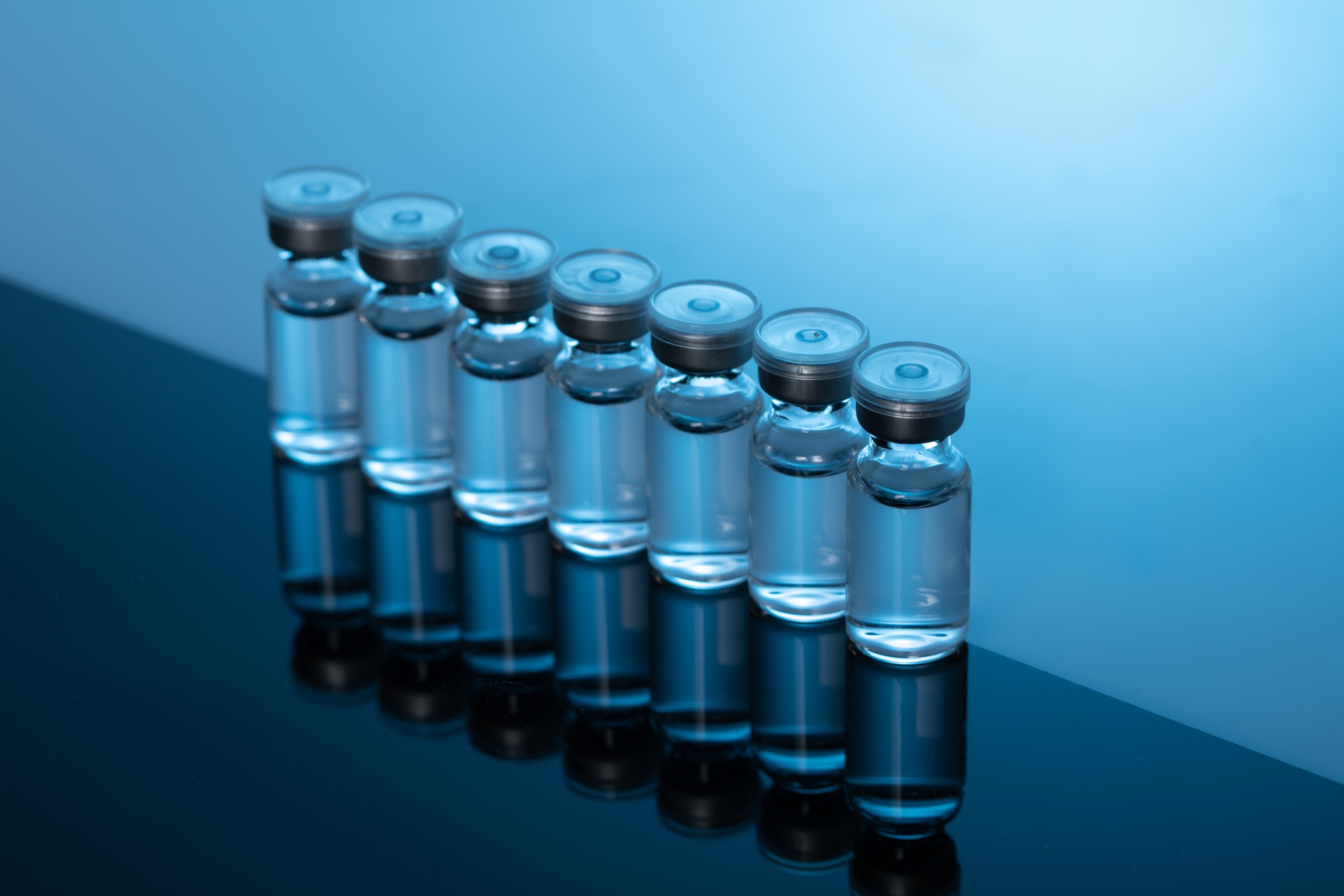
When GLP-1 receptor agonists became the dominant story in weight management — expensive, prescription-only, with a waiting list and a side-effect profile that made headlines — a parallel market filled the space. Telehealth clinics and peptide compounding pharmacies began promoting AOD-9604 as a “natural fat-loss peptide” that “targets adipose tissue directly” and delivers results “without the nausea, muscle loss, or rebound of Ozempic.”
The compound has a real mechanism, a real development history, and a real body of clinical trial data. That data is almost never mentioned in the marketing — because it shows the drug failed to beat placebo for weight loss in human beings.
Part of a Series
This article is Part 2 of our Peptides: Marketing or Science? series, examining the evidence behind popular peptide products and claims.
- What Are Peptides? What the Label Actually Means
- You are here: AOD-9604 and Fat-Loss Peptide Fragments: The “Ozempic Alternative” Without the Evidence
- Anti-Aging Peptides: What the Longevity Marketing Is Really Selling (coming soon)
- Gut Peptides: The Science Behind “Gut-Healing” Supplements (coming soon)
- The Peptide Buyer’s Guide: How to Vet a Product and Ask the Right Questions (coming soon)
What AOD-9604 Is
AOD-9604 (also called HGH fragment 176–191) is a synthetic peptide corresponding to amino acids 176 through 191 of human growth hormone (hGH). It was developed in the 1990s by Metabolic Pharmaceuticals, an Australian biotech, based on the observation that this region of the hGH molecule appeared responsible for its fat-metabolizing effects — while the growth-promoting effects were attributed to a different part of the protein.
The rationale was elegant: isolate the lipolytic fragment, strip away the rest, and you might get fat loss without the insulin resistance, organ growth, and other adverse effects associated with full hGH administration. In rodent studies, the hypothesis held up. AOD-9604 reduced body fat in obese mice, increased fat oxidation, and did not appear to affect blood glucose or IGF-1 levels in the way full hGH does — findings reported in Heffernan et al. (2001) and subsequent animal work. These results were real and reproducible in animal models. They became the evidentiary foundation that the marketing still rests on today.
The Clinical Trial History
Metabolic Pharmaceuticals ran a substantial human trial program. AOD-9604 went through six randomized controlled trials, including Phase 2a and Phase 2b studies in obese adults. The trials tested multiple doses (oral and injectable) over periods ranging from 12 to 24 weeks, with body weight and body composition as endpoints.
The pivotal human result was reported by Herd et al. (2005) in a randomized, double-blind, placebo-controlled, multicenter study: AOD-9604 did not produce statistically significant weight loss compared to placebo in obese adults. Across the dose range tested, the drug failed its primary endpoint. The Phase 2b program was discontinued. No Phase 3 trial was initiated. Metabolic Pharmaceuticals pivoted the compound toward osteoarthritis research, where it holds a different mechanism rationale.
The safety profile was not the problem. A human tolerability study (Stier et al.) found AOD-9604 was well tolerated. The failure was one of efficacy: the fat-loss signal that was clear in rodents simply did not appear in humans at tested doses.
The Claim
“AOD-9604 is a clinically proven fat-loss peptide — it’s the fragment of HGH that specifically targets and burns fat, without the risks of growth hormone or the side effects of GLP-1 drugs.”
(Composite representative claim drawn from current telehealth, compounding pharmacy, and peptide supplement marketing for AOD-9604.)
The Animal-to-Human Gap
AOD-9604’s trajectory follows a familiar pattern in drug development: a compelling mechanism, strong animal data, and a human trial program that does not replicate the preclinical results. There are several reasons this gap is common with fat-metabolism research specifically.
Rodent adipose biology differs meaningfully from human adipose biology in receptor distribution, metabolic rate, and hormonal regulation. Doses that produce dramatic fat loss in mice — when normalized to body weight — often do not translate to equivalent human doses that are safe or practical to administer. And lipolysis in a cell or tissue assay (fat cells releasing stored fatty acids) does not automatically translate to net fat mass reduction in a living person, where compensatory appetite, metabolic adaptation, and energy homeostasis all interact.
The marketing for AOD-9604 draws almost exclusively on the rodent literature and mechanism statements. The human trial results — which are the relevant evidence for a consumer making a purchasing decision — are absent.
How the Marketing Works Now
Despite the failed trial program, AOD-9604 has found a second life in the compounding pharmacy and peptide supplement market. Several dynamics drive this:
- GLP-1 demand overflow. As semaglutide and tirzepatide became household names, interest in weight-loss injectables spiked. AOD-9604 offers a “peptide for fat loss” narrative for patients who cannot access or afford GLP-1 drugs, or who have heard about muscle loss and GI side effects and want an alternative.
- The “natural fragment” framing. Because AOD-9604 is derived from the sequence of a human hormone, it is frequently described as “natural” or “bioidentical” — language that implies safety and physiological appropriateness without addressing efficacy.
- FDA GRAS status misrepresented. The FDA granted AOD-9604 GRAS (Generally Recognized as Safe) status as a food ingredient — a designation about safety at food-level exposures, not therapeutic efficacy. This is sometimes cited in marketing as evidence of FDA “approval,” which it is not.
- Regulatory gray zone. AOD-9604 is not FDA-approved for any therapeutic indication. It is not on the FDA’s 503A Category 1 or 2 bulks lists as a permitted compounding ingredient for weight loss. This means compounded versions operate in a legally ambiguous space, with variable quality control and no standardized dosing protocol.
HGH Fragment 176–191: The Rebranding Question
AOD-9604 and “HGH fragment 176–191” are the same molecule. Sellers sometimes use the fragment nomenclature to suggest a more clinical or research-oriented framing; the underlying evidence base is identical. Newer iterations marketed as “modified fragment” or combined with other peptides (CJC-1295, ipamorelin) do not have independent controlled trial data for weight loss. Combining a compound that failed its human trials with other compounds that also lack human weight-loss trial data does not add up to evidence.
| AOD-9604 | GLP-1 Agonists (semaglutide / tirzepatide) | |
|---|---|---|
| Mechanism | hGH fragment; lipolytic effect in animal models | GLP-1 (and GIP) receptor agonism; appetite suppression + gastric emptying |
| Human RCT evidence for weight loss | Failed primary endpoint in Phase 2b multicenter RCT | ~15–22% body weight loss in large Phase 3 RCTs |
| Number of human trials | 6 RCTs (Phase 2a / 2b) | Multiple large Phase 3 programs (STEP, SURMOUNT series) |
| FDA approval for weight loss | No | Yes (semaglutide 2.4 mg / Wegovy; tirzepatide / Zepbound) |
| Current availability | Compounding pharmacies; peptide vendors; no standardized dose | Branded (Wegovy, Zepbound); compounded versions under FDA scrutiny |
| Safety in humans | Well tolerated in trials; no major safety signals | GI side effects common; rare but serious risks documented |
What the Evidence Actually Shows
AOD-9604 has a plausible mechanism grounded in real animal data. It has been through six human randomized controlled trials. In those trials it did not produce statistically significant weight loss compared to placebo. The Phase 2b program was discontinued. The current consumer market for this compound is built almost entirely on the animal data and mechanism story — not the human trial results.
What to Make of Anecdotal Reports
Testimonials for AOD-9604 exist, and some users report fat loss or improved body composition. These reports are not evidence of efficacy for several reasons: the context typically involves caloric restriction and exercise alongside the peptide; there is no control condition; placebo effects on body composition outcomes are well documented; and the injectable route of administration carries expectation effects that are difficult to disentangle from any peptide-specific action.
None of this means every person who reports a benefit is wrong about their experience. It means individual anecdotes cannot distinguish a real drug effect from placebo, behavioral change, or regression to the mean — which is exactly what controlled trials are designed to do. The trials were done. They did not show a drug effect.
Verdict: Claim Unsupported
The fat-loss efficacy claim for AOD-9604 is unsupported by human evidence. The animal mechanism is real; the human trial program was conducted properly; it failed to demonstrate efficacy. Positioning this compound as an evidence-based alternative to GLP-1 receptor agonists — which have among the strongest weight-loss trial evidence in the field — is not supported by the available data. Evidence rating: 1/5 — failed human RCTs.
References & Further Reading
- Heffernan, M., et al. (2001). Increase of fat oxidation and weight loss in obese mice caused by chronic treatment with human growth hormone or a modified C-terminal fragment. International Journal of Obesity, 25(10), 1442–1449.
- Heffernan, M., et al. (2001). The effects of human GH and its lipolytic fragment (AOD9604) on lipid metabolism following chronic treatment in obese mice. Endocrinology, 142(12), 5182–5189.
- Herd, C., et al. (2005). The effect of AOD9604 on weight loss in obese adults: Results of a randomized, double-blind, placebo-controlled, multicenter study. University of Queensland repository.
- Stier, H., et al. Safety and tolerability of the hexadecapeptide AOD9604 in humans. Journal of Endocrinology and Metabolism.
- Marketing or Science. Compounded Semaglutide and Tirzepatide: What the Shortage Loophole Actually Delivered.
- Marketing or Science. Seven Peptides, One Regulatory Gray Zone: Inside the FDA’s 503A Compounding Review.
- Marketing or Science. What Are Peptides? What the Label Actually Means.