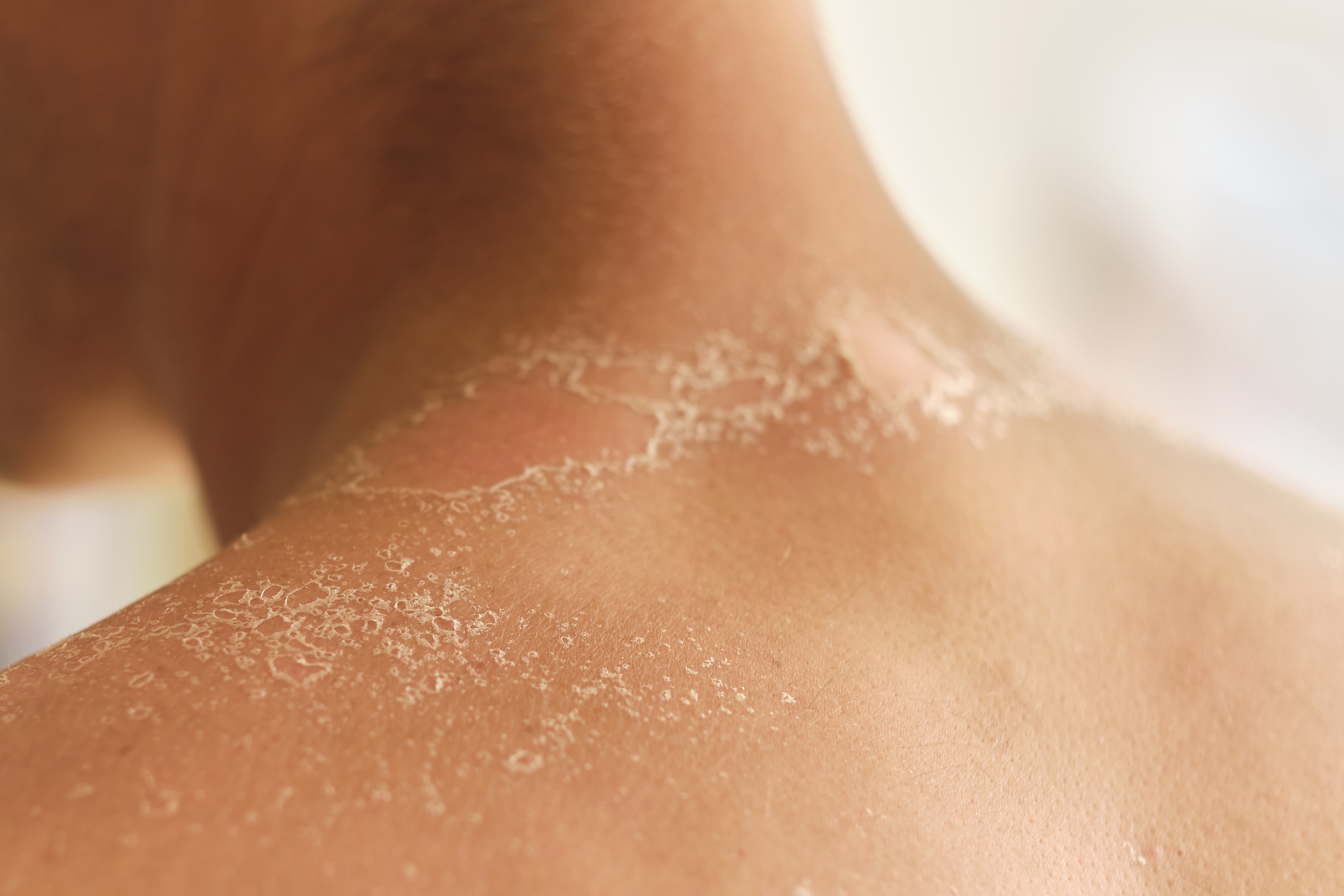
SPF 100 sunscreens occupy the premium end of sun care retail — positioned as the maximum protection available and marketed to consumers who spend time in high-UV environments, have fair skin or personal or family history of melanoma, or simply believe that more protection is always better. The marketing logic is intuitive: if SPF 50 is good, SPF 100 must be twice as good. The number is twice as large. The price is frequently 40–80% higher.
The photobiology does not support this intuition. The SPF scale is not linear — it is logarithmic in relationship to UV transmittance, which means the increment from SPF 50 to SPF 100 represents a much smaller absolute protection increase than the increment from SPF 15 to SPF 30. The FDA's proposed 2019 sunscreen monograph — which would cap SPF labeling at "SPF 60+" for any product meeting the threshold — reflects this regulatory concern about consumer misinterpretation of high SPF numbers. As of 2025, that rule has not been finalized, leaving SPF 100 products on shelves.
This analysis examines the photobiology of SPF, the FDA's regulatory position and its basis in the science, and the one well-designed real-world randomized trial that directly compared SPF 50 and SPF 100 performance in actual outdoor conditions.
What SPF Actually Measures — and What It Doesn't

Sun Protection Factor (SPF) is a laboratory measure of a sunscreen's ability to protect against UVB radiation — the UV wavelengths primarily responsible for sunburn and a significant driver of squamous cell carcinoma and melanoma risk. It is determined by measuring the minimal erythema dose (MED) — the UV dose that produces just-detectable redness — on skin with and without sunscreen applied at a standardized concentration of 2 mg/cm². SPF is the ratio of these two values:
SPF = MED (protected) / MED (unprotected)
SPF 15 means the protected skin required 15× more UV exposure to produce minimal erythema than unprotected skin. This translates to the following UV transmittance percentages: SPF 15 allows 6.7% of UVB to transmit; SPF 30 allows 3.3%; SPF 50 allows 2%; SPF 100 allows 1%. The absolute difference between SPF 50 and SPF 100 is 1 percentage point in UVB transmittance — from 2% to 1%. SPF 50 already blocks 98% of UVB; SPF 100 blocks 99%. This is the fundamental photobiological argument against the premium positioning of SPF 100.
SPF does not measure UVA protection. UVA radiation (320–400 nm) penetrates more deeply into the dermis, is primarily responsible for photoaging (collagen degradation, elastosis, pigmentation changes), and contributes to melanoma risk. In the United States, UVA protection is regulated separately through "broad spectrum" labeling, which requires the product to pass an FDA-specified critical wavelength test. A product can carry a very high SPF number and still provide inferior UVA protection to a lower-SPF broad-spectrum product — a distinction that is rarely apparent to consumers.
The Claim: SPF 100 Provides Meaningfully Superior Protection

The Claim
"Our SPF 100+ formula provides maximum sun protection — twice the protection of SPF 50 — for those who need the highest level of defense against harmful UV rays, including outdoor athletes, fair-skinned individuals, and anyone with a history of skin cancer."
(Composite representative claim; reflects language present across multiple SPF 100 sunscreen products and brand marketing materials.)
What the Evidence Actually Shows
The most direct evidence comes from a randomized controlled trial published in the Journal of the American Academy of Dermatology in 2017 by Osterwalder and colleagues. 199 beachgoers were randomized to apply either SPF 50 or SPF 100 sunscreen on different sides of their face in a split-face design, with application method and behavior uncontrolled (i.e., real-world conditions). At the end of the beach day, sunburn incidence was assessed by dermatologist evaluation. Subjects using SPF 100 were significantly less likely to sunburn on the SPF 100 side (6% sunburned) compared to the SPF 50 side (25% sunburned). The authors concluded that SPF 100 provided meaningful real-world protection advantage over SPF 50.
The Osterwalder et al. finding is often cited to support SPF 100 superiority, but the interpretation requires context. The real-world protection advantage observed — SPF 100 outperforming SPF 50 in actual beach conditions — may reflect not an intrinsic SPF difference but rather the consequences of under-application. Consumers routinely apply approximately 0.5–1 mg/cm² rather than the standardized 2 mg/cm² test dose. At half application, the effective SPF of a labeled SPF 100 product drops to roughly SPF 30–40, while the effective SPF of a labeled SPF 50 product drops to roughly SPF 15–22. The real-world advantage of SPF 100 may largely be an artifact of under-application providing a built-in buffer — not a demonstration that SPF 100 is intrinsically superior when used correctly.
The FDA's proposed 2019 sunscreen monograph would limit SPF claims to "SPF 60+" for any product testing at SPF 60 or above, on the grounds that consumers overestimate the protective increment at very high SPF numbers and that the difference between SPF 60 and SPF 100 is not clinically meaningful at correct application. As of 2025, this rule remains proposed but not finalized, in part due to industry lobbying and pending regulatory review timelines.
Under-Application: The Problem That Affects Every SPF

The SPF testing standard specifies 2 mg/cm² — equivalent to roughly 1 teaspoon of product for the face and neck, or 1 ounce (30 mL) for the full body. Multiple observational studies have documented that average consumer application is approximately 0.5–0.8 mg/cm², or roughly 25–40% of the test dose. This under-application is not marginal; it has a substantial effect on effective protection.
The relationship between applied dose and effective SPF is non-linear and follows a power function. At approximately half the test dose (1 mg/cm²), the effective SPF is approximately the square root of the labeled SPF. This means a labeled SPF 100 product used at half dose provides an effective SPF of roughly 10 (√100), and a labeled SPF 50 product used at half dose provides an effective SPF of roughly 7 (√50). These are much closer together than the labeled values suggest, and both are dramatically lower than consumers assume.
The practical implication is that the primary determinant of real-world sunscreen protection is application quantity and frequency — not SPF number above SPF 30. A correctly applied SPF 30 product provides more actual UV protection than an incorrectly applied SPF 100 product. This is the evidence base underlying the dermatology community's consensus recommendation that SPF 30–50 broad spectrum products applied correctly and reapplied every two hours provide adequate sun protection for most individuals in most conditions.
What the Research Shows on SPF Performance
| Study / Regulatory Source | SPF Levels Compared | Method | Key Finding |
|---|---|---|---|
| Osterwalder et al., JAAD 2017 | SPF 50 vs. SPF 100 (split-face) | Randomized real-world beach study, n=199 | SPF 100 side sunburned in 6% vs. 25% for SPF 50 side; advantage attributed to under-application buffering, not intrinsic SPF difference |
| FDA Proposed Sunscreen Monograph, 2019 | SPF 60+ as proposed cap | Regulatory analysis | Proposed limiting SPF claims to "60+" on grounds that increment above SPF 60 is not clinically meaningful; rule not yet finalized as of 2025 |
| Schalka & Reis, An Bras Dermatol 2011 | Multiple SPF levels vs. application dose | Photobiology modeling + in vitro | At 0.5 mg/cm² (half test dose), effective SPF approximates square root of labeled SPF; absolute difference between SPF 50 and SPF 100 collapses to ~3 SPF units effective |
| Green et al., J Clin Oncol 2011 | SPF 15+ daily vs. discretionary use | 10-year randomized trial, n=1,621 | Regular SPF 15+ application reduced melanoma incidence by 50% vs. discretionary use; application adherence, not SPF number, was the primary determinant |
Verdict & Clinical Implications
Verdict: Claim Unsupported
The claim that SPF 100 provides "twice the protection of SPF 50" is unsupported. The photobiology is clear: SPF 100 blocks 99% of UVB versus SPF 50's 98% — a 1 percentage-point absolute difference. The real-world data from the Osterwalder trial show a larger practical advantage for SPF 100, but this advantage likely reflects under-application buffering rather than an intrinsic photobiological superiority. The FDA's proposed regulatory position — capping SPF labeling at 60+ — reflects the scientific consensus that high SPF numbers mislead consumers about the magnitude of additional protection delivered. Application quantity, frequency, and broad-spectrum coverage matter substantially more than the choice between SPF 50 and SPF 100 for real-world protection.
For clinicians advising patients and for informed consumer decision-making, the SPF evidence base supports several clear conclusions.
SPF 30–50 broad spectrum, applied correctly, is the evidence-based target. The 10-year Green et al. melanoma trial — the strongest long-term sunscreen outcome data available — demonstrated that regular SPF 15+ application reduced melanoma incidence by 50%. No equivalent long-term outcome trial has been conducted comparing SPF 50 to SPF 100. The marginal benefit of SPF 100 over correctly applied SPF 50 is theoretically 1 percentage point of additional UVB blockade.
Application quantity is the dominant variable. Patients should be counseled on the practical standard: approximately 1 teaspoon for face and neck, reapplied every 2 hours during sun exposure and after swimming or sweating. This behavioral change produces larger real-world protection gains than upgrading from SPF 50 to SPF 100.
High-SPF products may confer a behavioral benefit for under-appliers. The Osterwalder real-world data suggest that SPF 100 does provide better practical protection than SPF 50 in conditions of typical under-application. For patients who are known under-appliers and cannot be reliably counseled to change behavior, SPF 100 provides a built-in buffer. This is a pragmatic concession, not a photobiological endorsement of the marketing claim.
Evidence rating: 2 / 5. The photobiology of SPF is well-established and unambiguous about the marginal increment at very high SPF values. The evidence rating reflects the gap between the theoretical 1-percentage-point UVB transmittance difference and the "twice the protection" marketing claim, the FDA's unresolved regulatory action against high-SPF labeling, and the absence of long-term melanoma outcome data specifically comparing SPF 50 to SPF 100.