
Niacinamide — also known as nicotinamide, the amide form of vitamin B3 — has emerged as one of the most clinically validated and commercially prevalent skincare actives of the past decade. It appears in products targeting sebum control, hyperpigmentation, barrier repair, photoaging, and acne, across price points from drugstore to prestige. Its popularity reflects genuine clinical support: the mechanistic and trial literature for niacinamide is broader and more consistent than for many comparable ingredients.
Within this established efficacy story, a concentration arms race has developed. The industry has broadly converged on 10% as the aspirational concentration — the signal of a "serious" or "clinical-strength" formula. Products at 5% are increasingly repositioned as introductory or sensitive-skin offerings, while 10% is marketed as delivering meaningfully superior outcomes. Some formulations now list 15% or 20% concentrations, claiming to push efficacy further still.
The controlled trial literature does not fully support this hierarchy. Across multiple endpoints — sebum reduction, hyperpigmentation, barrier function — the clinical difference between 5% and 10% niacinamide is smaller than the marketing differential implies, and at higher concentrations the tolerability profile shifts in ways that are rarely disclosed in promotional materials.
What Niacinamide Does in Skin

Niacinamide's clinical versatility stems from its role as a precursor to nicotinamide adenine dinucleotide (NAD+) and NADP+, coenzymes involved in hundreds of cellular metabolic reactions. In skin, several downstream mechanisms have been characterized with varying degrees of clinical support.
Melanin transfer inhibition. Niacinamide inhibits the transfer of melanosomes from melanocytes to keratinocytes — the step responsible for visible pigmentation. It does not inhibit melanin synthesis (unlike hydroquinone or kojic acid), but blocks the paracrine signaling pathway that packages and transfers melanosomes to surrounding cells. Topically applied niacinamide at 5% has demonstrated statistically significant reduction in hyperpigmentation and improvement in skin tone evenness in multiple controlled trials.
Sebum regulation. Niacinamide has been shown to reduce sebum excretion rate in subjects with oily skin. The mechanism is not fully characterized but appears to involve inhibition of ACTH-stimulated sebocyte lipid synthesis. Clinical trials at 2% and 4% concentrations have demonstrated measurable sebum reduction; 5% formulations show consistent effects in controlled settings.
Barrier function support. Niacinamide stimulates the synthesis of ceramides, free fatty acids, and cholesterol — key components of the stratum corneum lipid lamellae that constitute the skin barrier. It also upregulates involucrin and filaggrin expression in keratinocytes, supporting structural integrity of the cornified envelope. These effects have been demonstrated at concentrations as low as 2–4%.
Anti-inflammatory activity. Niacinamide inhibits several pro-inflammatory cytokines, including interleukins and TNF-α, through NF-κB pathway modulation. This anti-inflammatory action underlies its use in acne, rosacea, and reactive skin conditions. It has been directly compared to topical clindamycin 1% for inflammatory acne in one randomized trial (Shalita et al., 1995), with comparable efficacy at 4% concentration.
The Claim: 10% Delivers Meaningfully Superior Results
The Claim
"Our 10% niacinamide formula delivers maximum-strength results for visibly reduced pores, balanced sebum production, and a more even skin tone. Twice the concentration means twice the efficacy for serious skin concerns."
(Composite representative claim; reflects language present across multiple prestige and direct-to-consumer niacinamide serums marketed at 10% concentration.)
What the Evidence Actually Shows
The landmark niacinamide concentration comparison trial — Bissett et al. (2005, International Journal of Cosmetic Science) — remains the most cited reference in this area. Subjects with facial hyperpigmentation applied 2% or 5% niacinamide twice daily for 8 weeks. Both concentrations produced significant reductions in hyperpigmented spot area compared to vehicle; the difference between 2% and 5% was modest, with 5% showing a numerically but not always statistically superior outcome on individual endpoints. This trial established 5% as the reference concentration for topical niacinamide efficacy — but it did not include a 10% arm.
Navarrete-Solís et al. (2011, Dermatology Research and Practice) compared 4% niacinamide to 4% hydroquinone for facial melasma in a randomized split-face trial. Niacinamide at 4% showed comparable efficacy to hydroquinone at 4% with fewer adverse events — a finding that has been widely cited to support niacinamide's anti-pigmentation efficacy, though the concentration used was 4%, not 10%.
Direct 5%-versus-10% head-to-head controlled trials with clinical endpoints are sparse. The available data from cosmetic industry studies (many of which are unpublished or published as conference abstracts rather than peer-reviewed trials) suggest that 10% produces marginally superior sebum reduction and hyperpigmentation improvement compared to 5%, but the absolute difference in validated outcome measures is small. The "twice the concentration, twice the efficacy" framing is not supported by any published data; niacinamide, like most topical actives, exhibits a non-linear dose-response curve with diminishing returns at higher concentrations.
At concentrations above 5%, niacinamide carries a meaningfully higher risk of niacin flush — a transient erythema and warmth reaction caused by the conversion of a small fraction of niacinamide to niacin (nicotinic acid) and subsequent prostaglandin-mediated vasodilation. The flush reaction is benign but uncomfortable, and its frequency increases non-linearly above 5% concentration.
"The flush risk doesn't scale linearly with concentration. In my clinical experience, patients who tolerate 5% niacinamide well can have significant reactions at 10% or above — and they're often surprised because the label looks similar."
The Tolerability Trade-Off Above 5%
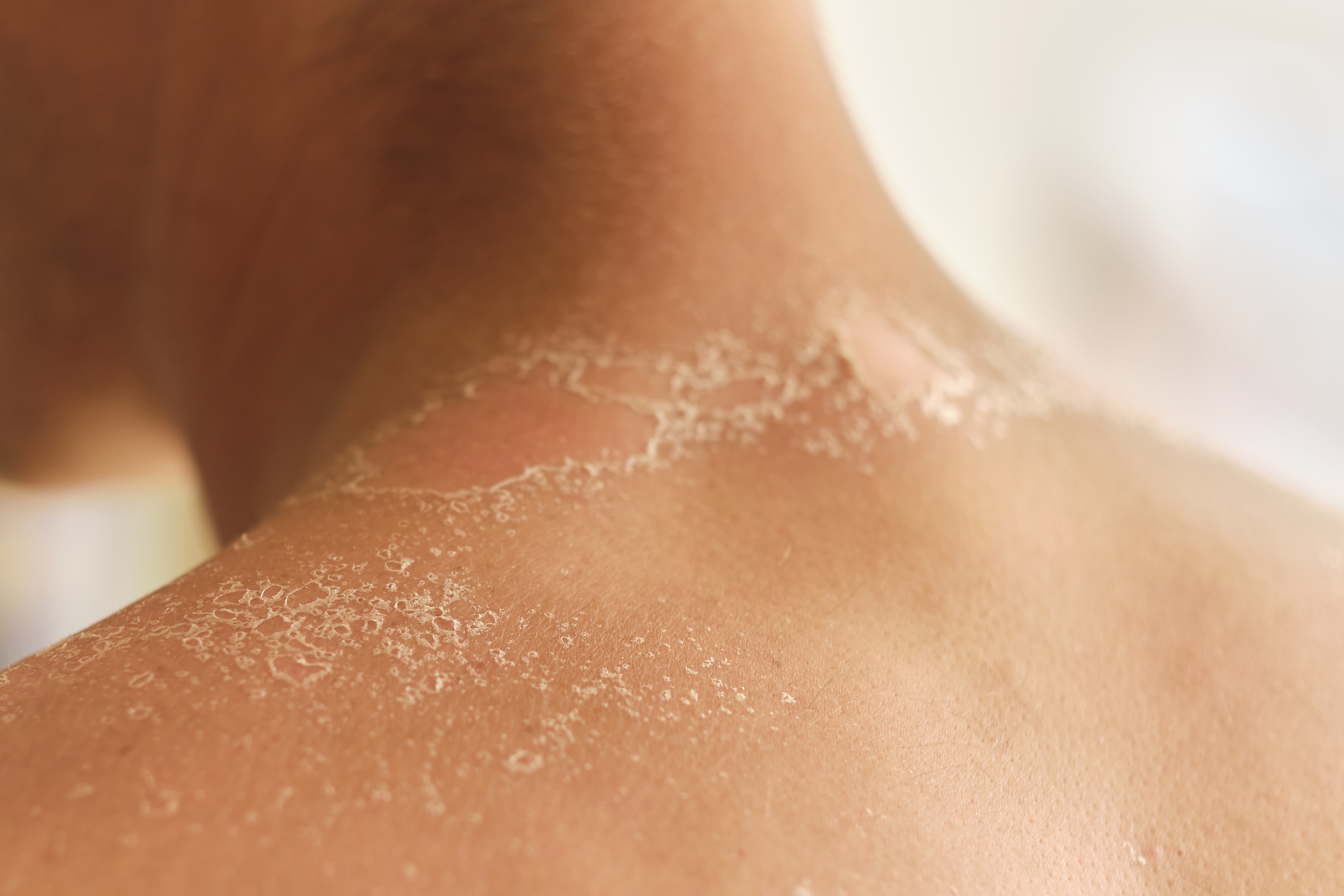
Niacin flush from topical niacinamide occurs through a specific mechanism: a small fraction of topically applied niacinamide is hydrolyzed to niacin (nicotinic acid), which binds to the GPR109A receptor on keratinocytes and Langerhans cells, triggering prostaglandin D2 and E2 release, which causes transient cutaneous vasodilation — the visible flush.
The rate of this conversion is proportional to the applied concentration. At 2–5%, the niacin load generated is typically below the threshold for visible flushing in most individuals. Above 5%, flush rates increase; at 10%, a meaningful fraction of users — estimates vary by skin type and formulation, but published data suggest 5–15% — experience some degree of visible flush, particularly on initial applications.
Formulation quality matters significantly here. The purity of the niacinamide raw material — specifically, the niacin content — is a major determinant of flush risk. High-purity niacinamide (less than 0.1% niacin contamination) has substantially lower flush rates than lower-purity grades, which may contain 0.5–2% niacin. Premium formulations typically use pharmaceutical-grade or cosmetic-grade niacinamide with verified purity; economy products may not. This means that flush risk at a given labeled concentration varies considerably by product, a variable that is not disclosed on product labels and that consumers have no straightforward way to assess.
"Pharmaceutical-grade niacinamide and lower-purity cosmetic-grade material can have dramatically different niacin impurity levels. Two products both labeled '10% niacinamide' can behave very differently in terms of flush risk."
Key Trials on Niacinamide Concentration
| Study | Concentration(s) | Duration | Primary Endpoint(s) | Result |
|---|---|---|---|---|
| Bissett et al., Int J Cosmet Sci 2005 | 2% vs. 5% niacinamide | 8 weeks | Hyperpigmented spot area, skin tone | Both concentrations significant vs. vehicle; 5% numerically superior; no 10% arm |
| Shalita et al., Int J Dermatol 1995 | 4% niacinamide vs. 1% clindamycin | 8 weeks | Inflammatory acne lesion count | Comparable efficacy between agents; niacinamide 4% non-inferior to topical antibiotic |
| Navarrete-Solís et al., Dermatol Res Pract 2011 | 4% niacinamide vs. 4% hydroquinone (split-face) | 8 weeks | Melasma area, colorimetry | Comparable reduction in melasma; niacinamide better tolerated; concentration 4%, not 10% |
| Hakozaki et al., Br J Dermatol 2002 | 5% niacinamide | 8 weeks | Melanosome transfer, skin tone, spots | Significant reduction in melanosome transfer and pigmented spot number vs. vehicle at 5% |
Verdict & Clinical Implications
Verdict: Partially Supported
Niacinamide's efficacy for hyperpigmentation, sebum control, barrier support, and mild inflammatory acne is well supported by the clinical literature at concentrations of 4–5%. The claim that 10% delivers meaningfully superior clinical outcomes compared to 5% is partially supported at best — the dose-response relationship exists but is non-linear, and direct 5%-versus-10% head-to-head controlled trials with validated clinical endpoints are limited. The "twice the concentration, twice the efficacy" framing is unsupported. Above 5%, the niacin flush risk increases measurably and the marginal efficacy gain is modest, making 5% the better-characterized efficacy-to-tolerability optimum for most patients.
For clinicians and patients selecting niacinamide formulations, the evidence supports the following practical approach.
5% is the evidence-based reference concentration. The bulk of the controlled trial literature demonstrating niacinamide's clinical efficacy used concentrations of 2–5%. Patients seeking niacinamide benefits for hyperpigmentation, sebum control, or barrier support should be directed toward well-formulated 5% products rather than feeling pressure to seek 10% formulations for superior outcomes.
10% may offer marginal benefit with increased flush risk. For patients who tolerate 5% well and are seeking incremental improvement — particularly for hyperpigmentation endpoints — a trial of 10% is reasonable, with counseling on the flush reaction and the instruction to start with alternate-day application. Patients with sensitive skin, rosacea, or concurrent use of other actives should generally remain at 5%.
Formulation purity matters more than labeled concentration above 5%. The flush risk at 10% is highly dependent on niacinamide raw material purity. Where available, products specifying pharmaceutical-grade niacinamide or providing batch purity data are preferable to unlabeled products at the same concentration.
Evidence rating: 3 / 5. Niacinamide's overall efficacy is well-established, but the concentration-specific comparative literature — particularly for 5% versus 10% — is thin and partly unpublished. The rating reflects confidence in the ingredient at reference concentrations and uncertainty about the incremental value of higher concentrations.