House dust mites (dermatophagoides pteronyssinus) are microscopic organisms found in nearly 85% of all homes[1] throughout the world, particularly in mattresses, bedding, upholstered furniture, and carpets. They’re an important etiological factor in allergic rhinitis, allergic asthma and atopic dermatitis for up to 500 million people across the world[2] – many of whom aren’t even aware of their sensitivity.
Decades of research surrounding two of the most important allergens, Der p 1 and Der p 2, have uncovered key mechanisms by which house dust mites can affect the body and skin barrier.
The Mechanism Behind Der p 1
Der p 1, an allergen found mainly in the feces of dust mites, is a digestive cysteine protease that degrades crucial tight junction proteins such as occludin and claudin-1 – these proteins are necessary to maintain the intercellular tight junctions within your skin’s epithelial layer[3,4]. Tight junctions are structures that sit between neighboring epithelial cells, almost like microscopic seals that regulate what is allowed to pass between cells. Conceptually, you can think of Der p 1 as a pair of microscopic, molecular scissors that cut structures that are important to skin barrier health.
The result is what’s commonly known as a “leaky barrier,” which makes it easier for environmental irritants to cross the barrier they would normally have had difficulty penetrating.
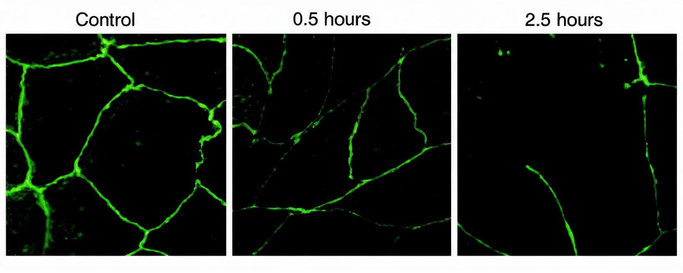
It should be noted that studies were conducted in airway epithelial cells rather than human skin, so it should not be interpreted as definitive proof that Der p 1 produces the identical effect in living skin. But this undoubtedly raises an important question about whether repeated exposure to Der p 1 could similarly compromise epithelial-barrier integrity at other sites of the body, including the skin.
The Mechanism Behind Der p 2
Der p 2 has been linked to inflammatory signaling and changes in skin-barrier gene expression. On a technical level, Der p 2 is able to mimic MD-2, a protein involved in the body's recognition of certain microbial signals through the TLR4 pathway[5] – this makes your immune system hyper-responsive to certain signals and exaggerates inflammation.
Further research indicates that Der p 2 reduces the expression of genes involved in cell-cell and cell-matrix adhesion[6], the mechanisms that help hold skin cells together and anchor them to the surrounding tissue. Disrupting these connections could further compromise the skin’s structural integrity.
EnviroBlock™: Protection Against Der p 1 and Der p 2
The Claim
“EnviroBlock™ inhibits the effects of Der p 1 and Der p 2, thereby protecting the epithelial barrier’s integrity and reducing inflammation.”
(Composite representative claim; reflects EnviroBlock™'s proposed positioning as a protective shield against dust allergens)
During our research, our team came across a company called Pacagen, the creators of EnviroBlock™, and a bioRxiv preprint their team had just published. Supposedly, this technology utilizes a pair of single-domain variable-heavy chain (VHH) antibodies that specifically target Der p 1 and Der p 2. Their in vitro (laboratory) findings suggest EnviroBlock™ has both high affinity and neutralization efficacy for these targets upon binding[7].
In the world of consumer goods, it’s rare to find an ingredient developed specifically to combat dust mite allergens. While most allergen management solutions are largely non-specific (i.e., they may accidentally target other particles essential to your health), EnviroBlock™ was made to only target Der p 1 and Der p 2.
But the key question is whether this highly targeted approach actually translates into meaningful protection. Most importantly, is there substantial evidence that it’s safe for individuals already struggling with sensitive skin? We will explore these topics below to determine whether the science supports the narrative this brand’s building around their novel ingredient.
Understanding the Data Behind EnviroBlock™
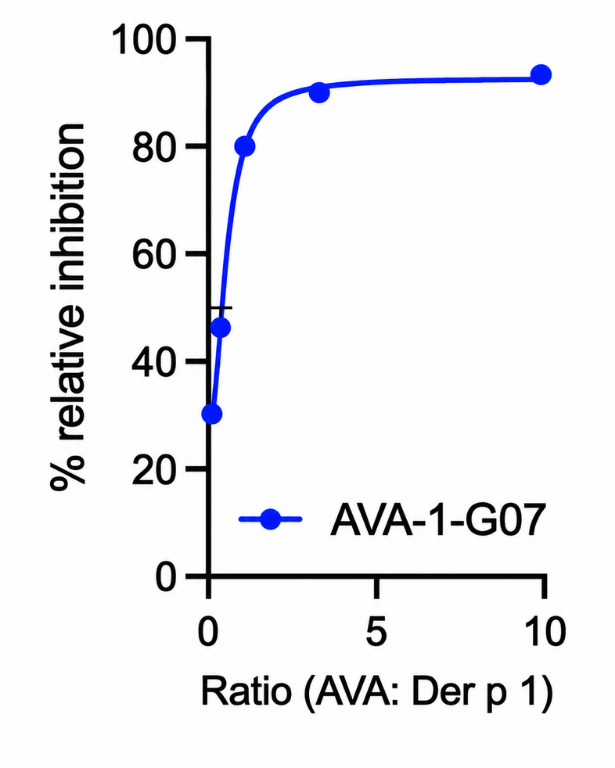
In the bioRxiv preprint, their researchers begin by stating that Der p 1 and Der p 2 act together to amplify the body’s immune response in a “feed-forward loop,” intensifying inflammation. As we’ve already covered, this illustrates just how harmful prolonged exposure to dust mite allergens can be.
After several rounds of sequencing and screening, their lab discovered promising VHH candidates that each showed consistently robust binding affinities to Der p 1 and Der p 2, even at incredibly low concentrations. These candidates would be combined to produce EnviroBlock™, which is added to the company’s skincare products.
To validate the effectiveness against Der p 1 in particular, they incubated it with the VHH candidate and conducted a set of experiments to determine Der p 1’s change in cysteine protease activity. Impressively, they saw significant neutralization of Der p 1’s activity at various concentrations, effectively inhibiting its ability to act as harmful “molecular scissors” against epithelial cells.
To measure safety, a series of cytotoxicity assays were also conducted. A representative VHH candidate was tested in vitro against a range of primary human cells, including skin cells such as keratinocytes and dermal fibroblasts, as well as cells from blood vessels, muscle, and kidneys. Across a concentration range spanning more than 1,000-fold, researchers observed no substantial loss of cell viability.
Editorial Note — 2026-09-10
Our editorial team has been made aware that an updated version of the manuscript reporting the data behind EnviroBlock™ has been submitted. This article reflects what is publicly available as of September 10, 2026 and will be updated as new data is published.
Our Verdict on EnviroBlock™
It’s easy to take all this data at face value, but it’s important to consider the broader picture. The research team behind EnviroBlock™ acknowledges that several caveats and limitations warrant discussion. Most notably, while in vitro and computational data supports EnviroBlock™’s ability to safely neutralize dust mite allergens’ effects, these observations require further validation in human studies (i.e., clinical evidence).
That being said, the effects of Der p 1 and Der p 2 on your biology cannot be ignored. In a consumer landscape dominated by broad, non-specific approaches to allergen management, EnviroBlock™ stands out for taking a fundamentally different approach – targeting the allergens themselves at the molecular level. If future clinical data supports the current findings, EnviroBlock™ could represent the most meaningful innovation for protection against dust allergens in decades.
References & Further Reading
- Arbes, S. J., Jr., Cohn, R. D., Yin, M., et al. (2003). House dust mite allergen in US beds: Results from the First National Survey of Lead and Allergens in Housing. Journal of Allergy and Clinical Immunology, 111(2), 408–414.
- Jurkiewicz, K., Jutel, M., & Smolinska, S. (2025). Update on HDM allergy: Principal changes over the years. International Journal of Molecular Sciences, 26(12), 5660.
- Ogi, K., Ramezanpour, M., Liu, S., et al. (2021). Der p 1 disrupts the epithelial barrier and induces IL-6 production in patients with house dust mite allergic rhinitis. Frontiers in Allergy, 2, 692049.
- Wan, H., Winton, H. L., Soeller, C., et al. (1999). Der p 1 facilitates transepithelial allergen delivery by disruption of tight junctions.. Journal of Clinical Investigation, 104(1), 123–133.
- Tumurkhuu, G., Dagvadorj, J., Jones, H. D., et al. (2015). Alternatively spliced myeloid differentiation protein-2 inhibits TLR4-mediated lung inflammation. The Journal of Immunology, 194(4), 1686–1694.
- Pfisterer, K., Wielscher, M., Samardzic, D., et al. (2023). Non-IgE-reactive allergen peptides deteriorate the skin barrier in house dust mite-sensitized atopic dermatitis patients. Frontiers in Cell and Developmental Biology, 11, 1240289.
- Zhang, D. K. Y., Yue, Q., He, Q., et al. (2025). Development of high-affinity, single-domain protein binders for neutralizing household allergens. bioRxiv.