The retinoid family is the most evidence-supported category in topical dermatology. Tretinoin (all-trans retinoic acid) has been studied in randomized controlled trials since the late 1980s, with robust data across photoaging, acne, and post-inflammatory hyperpigmentation endpoints. The OTC retinoid market — retinol, retinaldehyde, retinyl esters — has grown substantially on the back of this prescription evidence base, with marketing that implies a smooth continuum of potency from drugstore retinol to dermatologist-prescribed tretinoin.
The clinical reality is more complicated. Retinol is not retinoic acid. It requires two enzymatic conversion steps in the skin — retinol to retinaldehyde, then retinaldehyde to retinoic acid — and the efficiency of this conversion is variable, concentration-dependent, and subject to significant individual variation. Adapalene, a synthetic retinoid available OTC at 0.1%, bypasses this conversion pathway entirely and binds retinoic acid receptors directly, but with a receptor selectivity profile that differs from tretinoin. The marketing hierarchy — retinol as "entry level," tretinoin as "maximum strength" — does not map cleanly onto the clinical evidence hierarchy.
This analysis examines each rung of the retinoid ladder, the conversion and receptor-binding evidence, and what the head-to-head and comparative RCT data actually show about clinical equivalence and differentiation.
The Conversion Pathway: Why Retinol Is Not Retinoic Acid
Retinoic acid (tretinoin) exerts its effects by binding nuclear retinoic acid receptors (RARα, RARβ, RARγ), which regulate gene transcription affecting keratinocyte differentiation, collagen synthesis, and melanogenesis. Retinol, the alcohol form of vitamin A, must be converted to retinaldehyde by retinol dehydrogenases, and then retinaldehyde must be oxidized to retinoic acid by retinaldehyde dehydrogenases. Both steps are enzymatically regulated and subject to feedback inhibition — the skin has mechanisms to limit retinoic acid accumulation, which is why topical retinol produces less irritation than equivalent-concentration tretinoin.
The conversion efficiency estimates in the literature vary considerably. Kligman and colleagues estimated that 0.1% retinol produces retinoic acid activity roughly equivalent to 0.001–0.025% tretinoin — a 4–100× potency difference depending on the endpoint measured. More recent in vitro and in vivo studies have suggested the conversion is more efficient than early estimates, but the range remains wide and individual variation is substantial. Retinyl esters (retinyl palmitate, retinyl acetate) require an additional hydrolysis step before entering the retinol-to-retinoic acid pathway, making them the least potent rung of the OTC ladder.
Retinaldehyde (retinal) occupies the middle rung — one conversion step from retinoic acid rather than two. Several European cosmeceutical brands have positioned retinaldehyde as a more potent OTC alternative to retinol with a better tolerability profile than tretinoin. The clinical evidence for retinaldehyde is thinner than for either retinol or tretinoin, but the mechanistic rationale for intermediate potency is sound.

Adapalene: The Synthetic Outlier
Adapalene (0.1% OTC, 0.3% Rx) is a third-generation synthetic retinoid that binds RARβ and RARγ selectively, with minimal RARα activity. This receptor selectivity profile differs from tretinoin, which binds all three RAR subtypes. The clinical consequence is that adapalene produces less retinoid dermatitis (erythema, peeling, dryness) than tretinoin at comparable concentrations — a tolerability advantage that has been demonstrated in multiple head-to-head trials.
For acne, adapalene 0.1% has been shown in RCTs to be comparable to tretinoin 0.025% in comedolytic and anti-inflammatory efficacy, with superior tolerability. The 2019 FDA OTC switch for adapalene 0.1% (Differin) made a prescription-grade retinoid available without a prescription for the first time in the United States — a significant regulatory event that the marketing hierarchy has not fully absorbed. Adapalene 0.1% OTC is not "weaker" than prescription tretinoin 0.025% in acne endpoints; it is comparable in efficacy with better tolerability.
The Claim
"Start with retinol and work your way up to prescription-strength tretinoin as your skin builds tolerance. The retinoid ladder goes from gentle OTC retinol to maximum-strength Rx tretinoin — each rung is stronger and more effective than the last."
(Composite representative claim reflecting common skincare editorial and brand marketing framing of the retinoid category.)
What the Evidence Actually Shows
The "ladder" framing is partially accurate but systematically misleading in two ways. First, adapalene 0.1% OTC is not weaker than tretinoin 0.025% Rx for acne — it is comparable in efficacy with better tolerability, making the OTC-to-Rx progression unnecessary for many acne patients. Second, the potency hierarchy for photoaging endpoints is better established than for acne: tretinoin 0.025–0.1% has the strongest RCT evidence base for wrinkle reduction and collagen synthesis, with retinol showing meaningful but smaller effects at typical OTC concentrations (0.025–0.1%).
A 2022 systematic review by Zasada and Budzisz examining 23 RCTs found that tretinoin 0.025–0.05% produced statistically significant improvements in fine lines, skin texture, and hyperpigmentation in all trials reviewed, while retinol 0.1% produced significant improvements in 7 of 9 trials — with effect sizes approximately 40–60% smaller than tretinoin at comparable timepoints. Retinaldehyde 0.05% showed effects intermediate between retinol and tretinoin in the three trials that included it. Adapalene's photoaging data are limited; its primary evidence base is acne.
The irritation hierarchy is real and clinically relevant: tretinoin produces significantly more retinoid dermatitis than adapalene or retinol at comparable concentrations, and this tolerability difference affects adherence. For patients who cannot tolerate tretinoin, retinol or adapalene are not simply "weaker" alternatives — they are evidence-supported options with different receptor profiles and tolerability characteristics.
Matching Retinoid to Indication: What the Evidence Supports
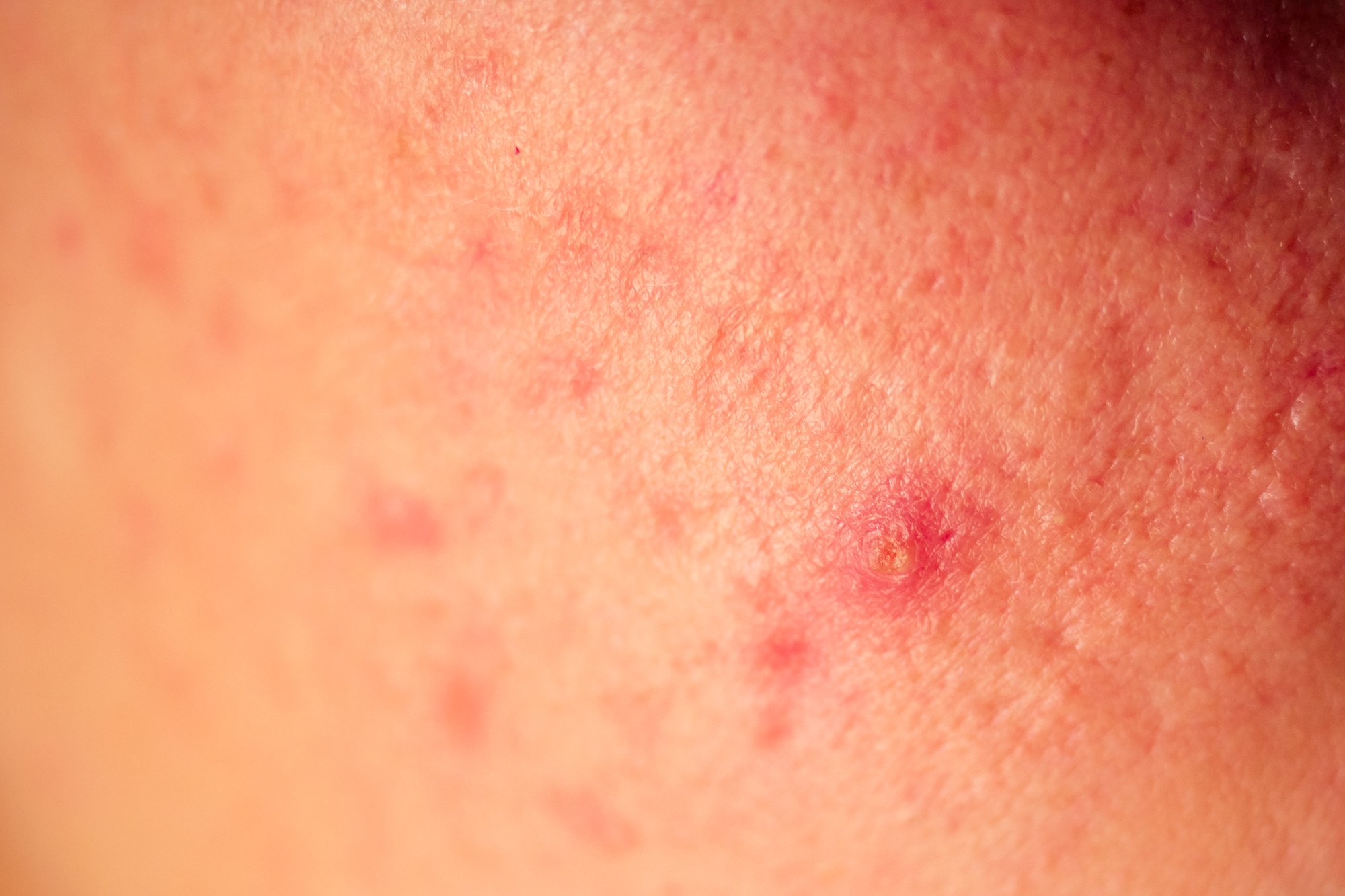
For acne, the evidence supports adapalene 0.1% OTC as a first-line retinoid option — comparable to tretinoin 0.025% in efficacy with superior tolerability and without a prescription requirement. Tretinoin 0.025–0.05% is appropriate for patients who do not respond to adapalene or who have concurrent photoaging concerns. The combination of adapalene 0.1% with benzoyl peroxide 2.5% (Epiduo OTC) has the strongest combination acne evidence base.
For photoaging, tretinoin has the deepest evidence base. The Kligman group's original tretinoin photoaging trials, replicated multiple times, established 0.025–0.05% as the minimum effective concentration for wrinkle reduction and collagen synthesis endpoints. Retinol 0.1% is a reasonable alternative for patients who cannot tolerate tretinoin, with the expectation of smaller effect sizes and longer time to response. Retinaldehyde 0.05% is a plausible intermediate option with limited but supportive RCT data.
For post-inflammatory hyperpigmentation, tretinoin has the strongest evidence, often used in combination with hydroquinone and a corticosteroid (the Kligman formula). Adapalene has emerging evidence for PIH in skin of color populations, with a tolerability advantage that may improve adherence in this indication.
Verdict: Mixed Evidence
The retinoid ladder concept is partially supported but systematically oversimplified. The potency hierarchy is real for photoaging endpoints, where tretinoin has the strongest evidence and retinol shows meaningful but smaller effects. For acne, the hierarchy breaks down: adapalene 0.1% OTC is not weaker than tretinoin 0.025% Rx in efficacy, and its tolerability advantage makes it a first-line option rather than a stepping stone. The framing of OTC retinoids as "entry level" and prescription tretinoin as "maximum strength" is a marketing construct that does not reflect the indication-specific evidence base. Retinoid selection should be driven by indication, tolerability, and patient adherence considerations — not by a linear potency hierarchy.