For over 40 years, minoxidil (commonly known as Rogaine) has been the gold standard of topical hair loss treatment for both men and women. Entire generations of products and marketing claims have been built around the same basic idea: stimulate the follicle, increase blood flow, and keep hair growing longer. Minoxidil has shown the ability to slow thinning and improve density in some users, but the results are often modest, temporary, and highly dependent on continued use.
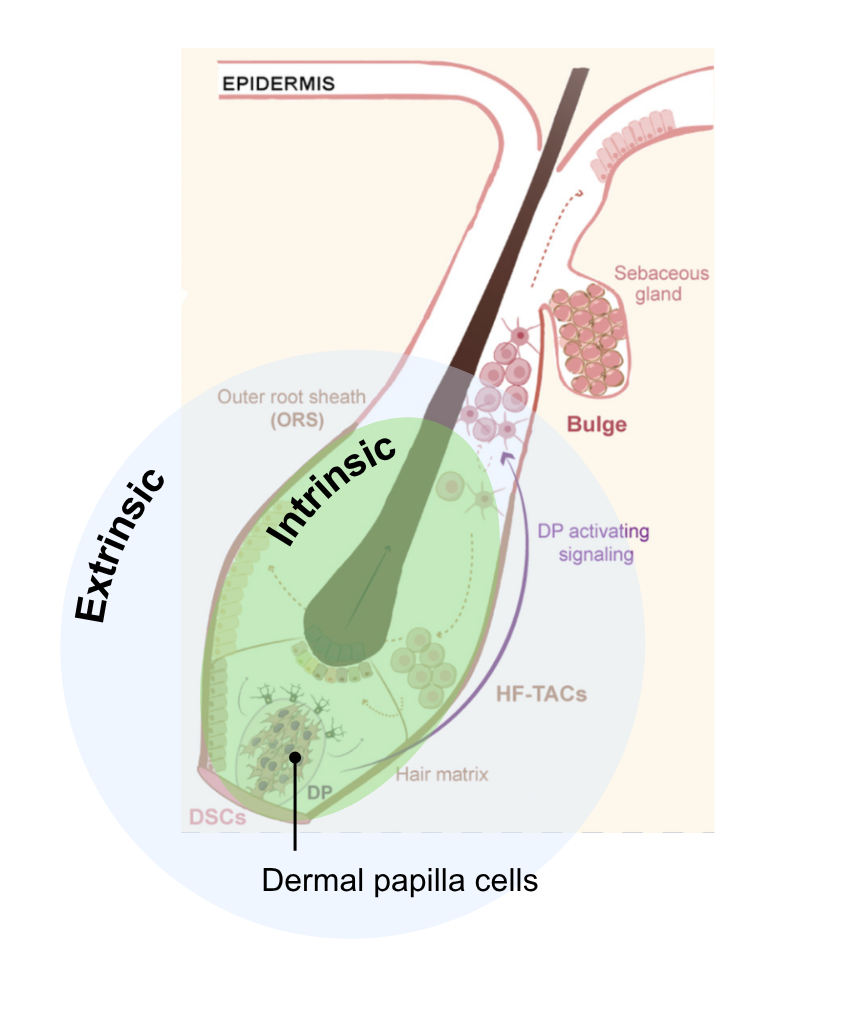
Recently, our team did some digging and came across a brand called RE:YOU, the company behind NOVOGRO™, and a bioRxiv preprint their team had just posted that outlines an approach that challenges that current model in a meaningful way. Rather than optimizing a single pathway, NOVOGRO™ (NV) claims to address hair thinning across multiple biological layers simultaneously — targeting not just the follicle’s surrounding environment, but the health of the follicle itself (specifically via NV-623 and NV-624). In the language of hair biology, that means engaging both the extrinsic environment and the intrinsic hair follicle, a distinction that most products on the market don’t even attempt to make.
The key question is whether this represents a genuine shift in hair growth science, or simply another example of sophisticated hair loss marketing built around early-stage data. In this breakdown, we examine what minoxidil actually does, how NV-623 and NV-624 differ mechanistically, what the current preclinical evidence shows, and whether the science justifies the growing narrative around it.
What Minoxidil (Rogaine) Actually Does
Minoxidil was not originally developed for hair loss. It entered medicine in the 1970s as a treatment for high blood pressure after researchers noticed an unexpected side effect: some patients started growing more hair. That accidental observation eventually evolved into one of the largest and most heavily marketed products in the entire hair loss industry.
Over the past several decades, both topical and oral forms of minoxidil have been extensively studied, revealing the ability to slow thinning and improve hair density in certain users, but clear limitations exist. Many users experience increased shedding during the first few months as hair follicles transition between growth cycles. Regardless of the route of delivery, results with minoxidil are often temporary, dependent on continued use, and cosmetically modest for the large percentage of users who respond.

The scientific hair loss knowledge base has grown significantly in the last 40 years, and minoxidil does not directly address many of the biological processes now believed to drive long-term hair thinning. Minoxidil does not meaningfully target DHT-related follicle miniaturization, perifollicular inflammation, cellular aging and senescence, or, most importantly, declining dermal papilla cell function. Even its growth-supportive effect appears to be largely indirect — routed through growth factor release from adipose-derived stem cells[3] rather than acting on the follicle itself. In other words, minoxidil mainly helps support the environment around the hair follicle.
Minoxidil’s mechanism also illustrates a timeline constraint. While it prolongs anagen and may shorten telogen, it does not immediately produce new hair. Instead, it shifts follicles from telogen into anagen. Because follicles cycle asynchronously, this shift occurs gradually across the follicle population over weeks to months. Subjects using minoxidil should not expect to see results for at least 3–4 months.
Notably, finasteride’s mechanism — inhibiting 5-alpha reductase to reduce DHT — operates even more slowly. DHT-mediated follicle miniaturization occurs over a period of years, and reversing it requires multiple hair cycles. The pivotal finasteride trials measured outcomes at 12 and 24 months. Meaningful regrowth was not consistently detectable at six months in all studies.
NOVOGRO™: The Future of Hair?
The Claim
“NV-623 and NV-624 potentiate dermal papilla cells (DPCs), the core drivers of hair growth[4] in the hair follicle.”
(Composite representative claim; reflects NV-623 and NV-624’s proposed positioning as a potentiator of dermal papilla cell health.)
Understanding The Data
NV-623 and NV-624 were presented in a new bioRxiv preprint outlining a considerably different approach to tackling hair thinning. The system, termed NOVOGRO™, consists of four new molecules: NV-273, NV-623, NV-624, and NV-1065. These molecules were discovered using an artificial intelligence-guided framework that combined virtual screening and multi-pathway analysis, enabling the researchers to find new molecules that target complementary mechanisms involved in hair follicle health and thinning. The research group is interdisciplinary, with scientists trained at Princeton, Harvard, and Northwestern across medicinal chemistry, physiology, and computational chemistry.
Rather than repurposing a drug with known side effects, the researchers point out that most current solutions only tackle one aspect of hair thinning — minoxidil, for example, primarily helps support the nutrient supply to the hair follicles — and have undesirable side effects such as shedding. They hypothesized that the optimal solution should tackle complementary pathways in hair follicle biology: it should both support the hair follicle’s surrounding environment and improve the health of the hair follicle itself. This “inside out and outside in” approach means simultaneously supporting dermal papilla cell activity (the cells responsible for hair growth) while boosting growth signaling and reducing DHT-related stress in the surrounding environment, rather than depending primarily on increased blood flow alone, as minoxidil does.
Conceptually, this represents a far more modern approach than what has historically dominated the category. The researchers’ multi-pathway strategy appears more biologically sophisticated than the frameworks that have defined topical hair loss treatments for decades. Whether that ultimately translates into meaningful clinical outcomes, however, is still unclear.
Analyzing the Mechanistic Claims
One of the biggest differences between NV-623/NV-624 and traditional treatments like minoxidil is its follicle-intrinsic focus. This is in contrast to extrinsic approaches that mainly affect the environment around the follicle, where minoxidil largely operates through increased blood and nutrient flow and hair cycle extension. Hair follicle-intrinsic approaches attempt to boost the follicle itself, including the cells responsible for growth signaling, follicle maintenance, and hair production.
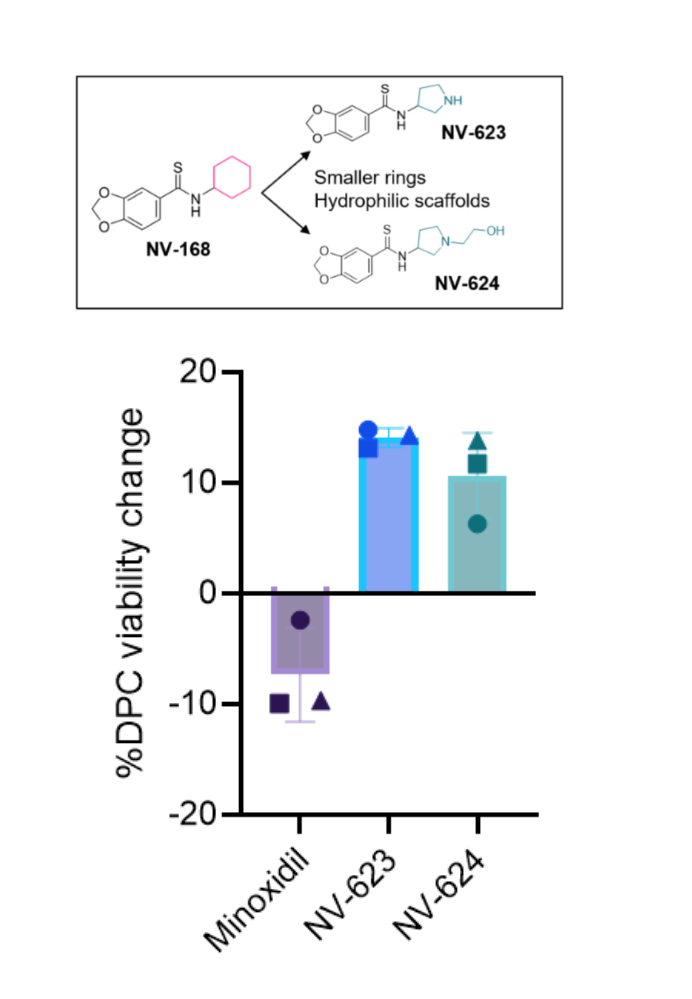
Using their AI-guided discovery framework, the researchers initially identified NV-168 as a potentiator of dermal papilla cells. Given its incompatibility with water-based serums, they further optimized it using medicinal chemistry to make it compatible with water-based formulas, resulting in NV-623 and NV-624. Minoxidil has long suffered from low solubility, resulting in numerous liposomal formulations and alternative delivery methods. NV-623 in particular appears to circumvent this altogether.
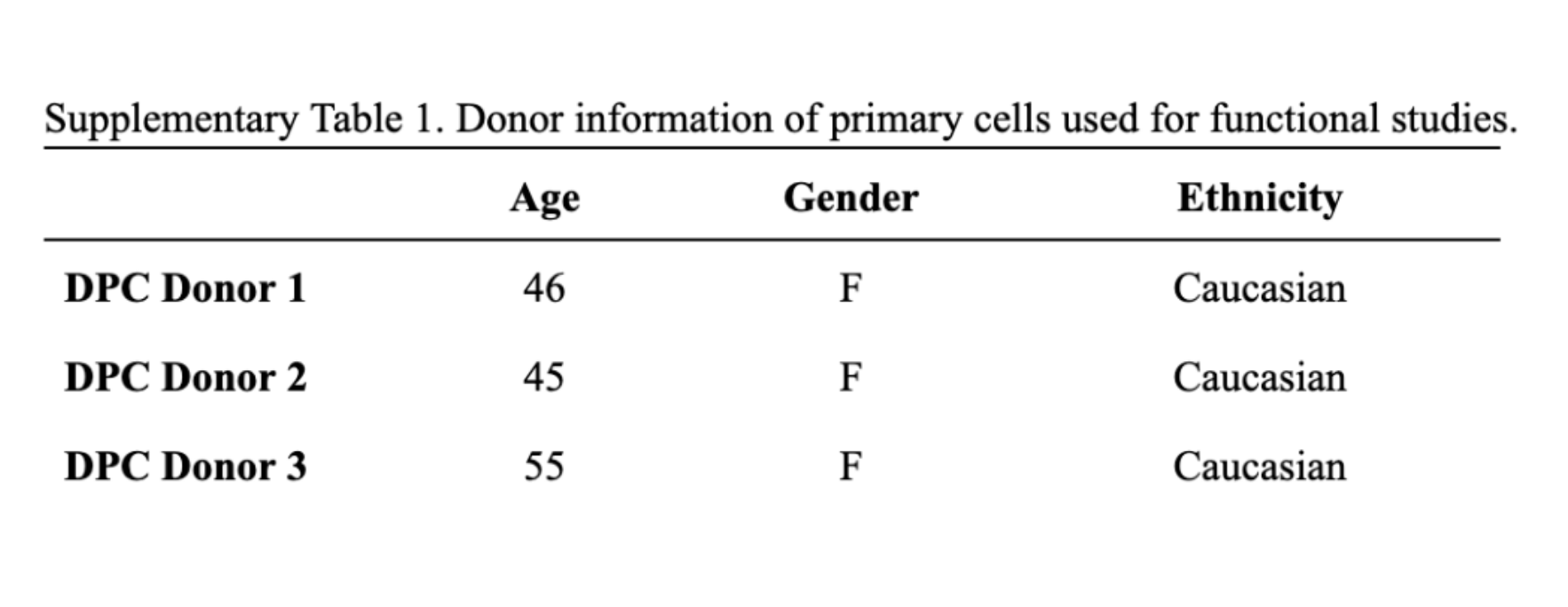
The researchers then go on to show how NV-623 and NV-624 potentiate dermal papilla cell metabolism and growth, whereas minoxidil initially causes minor toxicity. They reported that NV-623 and NV-624 promoted 21.4% and 17.9% greater dermal papilla cell growth than minoxidil, respectively. The authors also showed that NV-623 and NV-624 were non-mutagenic, non-sensitizing, and non-toxic in primary human cells. What we liked about how the study was conducted is that, instead of using cell lines, the researchers opted for DPCs from real human donors in a relevant age range and demographic for hair thinning.
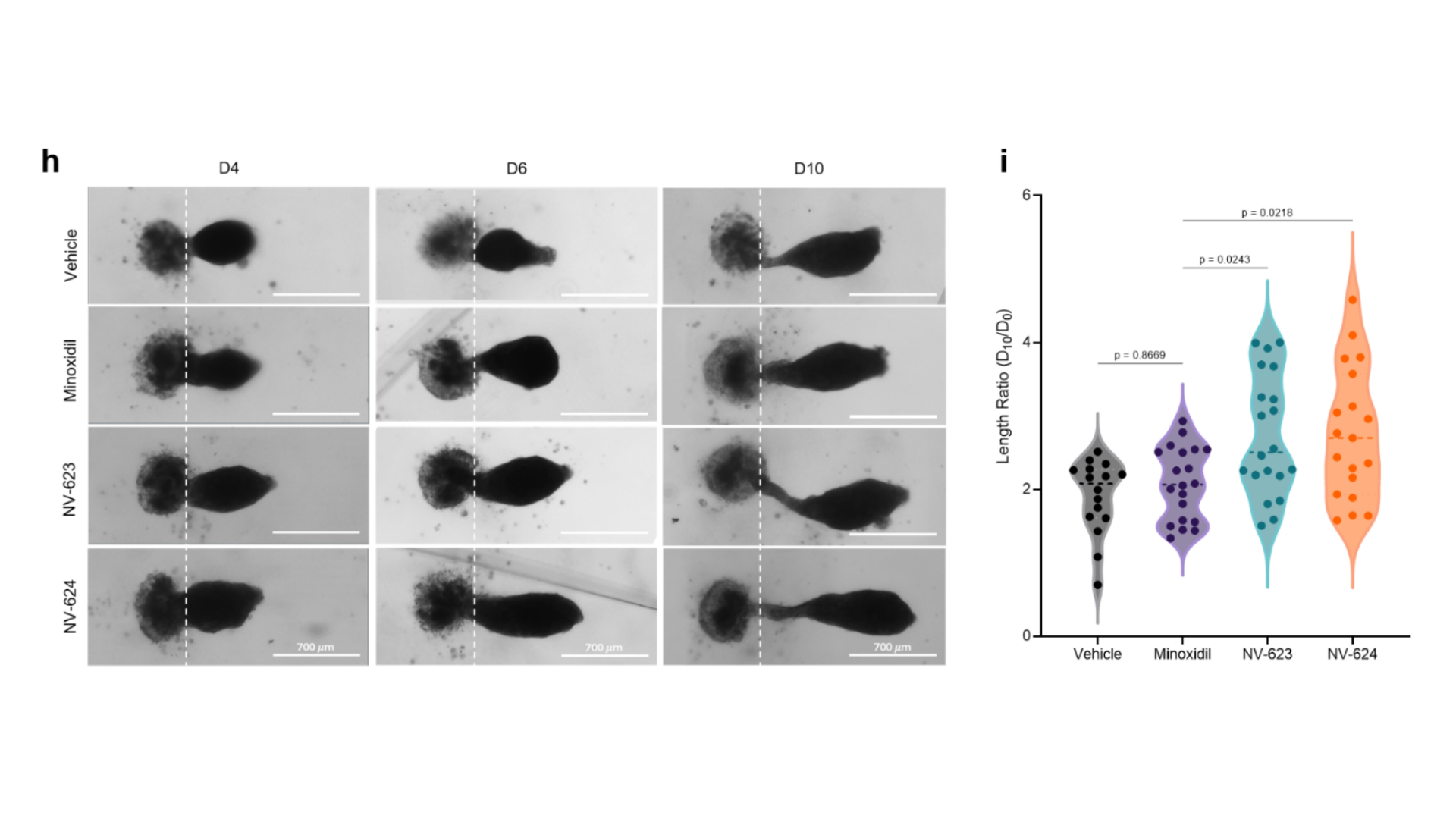
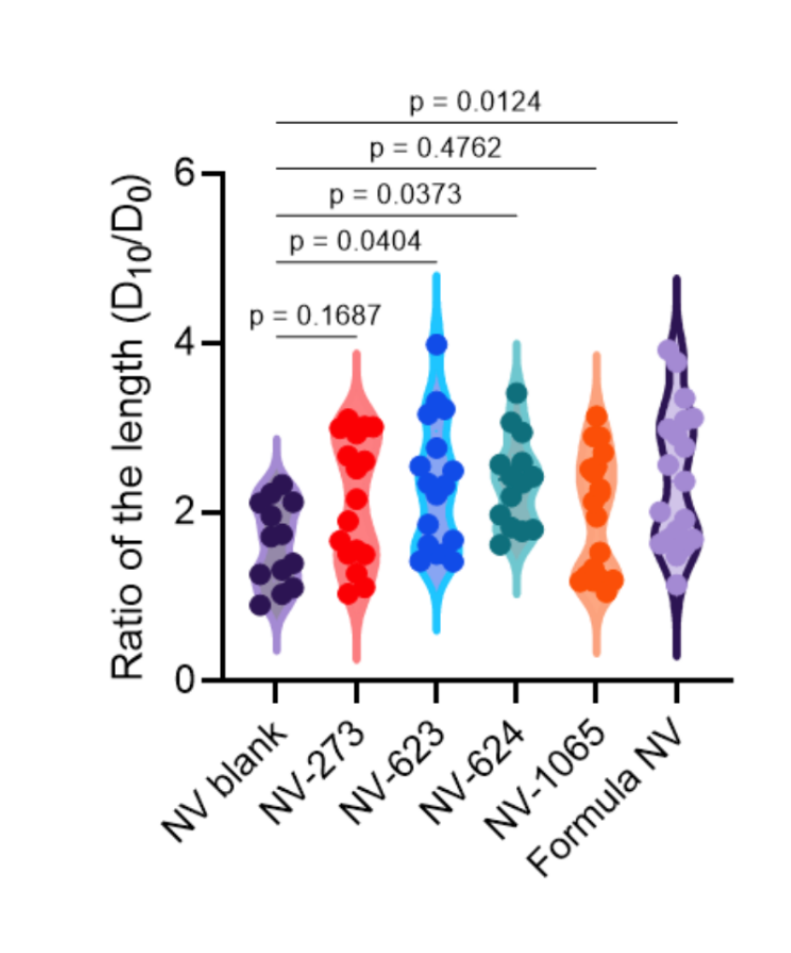
One of the strongest pieces of data in the preprint centers on a 3D hair follicle model, which recapitulates major aspects of the human hair follicle in a dish. This tiny, lab-grown mini hair follicle is made by combining two types of human skin cells — the outer skin cells (keratinocytes) and the deeper follicle tissue cells (dermal papilla cells) — in a 3D gel environment, where they self-organize into a ball and spontaneously sprout a hair peg-like structure within roughly 10 days. The researchers showed that NV-623 and NV-624 drove stronger dermal papilla cell activity compared to minoxidil, leading to 30% greater and faster peg-like sprouting. This matters because declining dermal papilla cell function is increasingly believed to play a major role in progressive follicle miniaturization. How this translates into humans will be very interesting to watch. Could it shorten the 3–4 month results window observed with minoxidil??
The NOVOGRO™ Complex
The researchers also highlight several proposed extrinsic paths and novel molecules (NV-1065, NV-273) to support the environment around the hair follicle. These include inhibiting the 5-alpha reductase enzyme, which helps reduce DHT-related stress that would otherwise slowly cause the hair follicles to shrink over time (NV-1065). The preprint also discusses targeting HIF1α and metabolic reprogramming of the microenvironment, including lactate and VEGF-related pathways, which are linked to blood flow, oxygen delivery, and helping follicles get the energy and nutrients needed for hair growth (NV-273).
A key question raised by the preprint is whether targeting multiple mechanisms simultaneously actually produces meaningfully stronger outcomes than relying on a single pathway alone. This is where the paper’s proposed synergistic effects become important. Rather than depending on one mechanism such as blood flow stimulation (like minoxidil), the NOVOGRO™ framework attempts to combine intrinsic follicle support, DHT-related stress reduction, growth signaling, and metabolic support at the same time.
According to the preclinical data, several of these pathways appeared to produce stronger combined effects when evaluated together than when tested individually. Conceptually, this matters because hair thinning is increasingly understood as a multi-factor pathway problem rather than a single-pathway one. In theory, a multi-mechanism system could improve efficacy while reducing the limitations associated with relying too heavily on one biological target alone.
Buried deep in the preprint, the researchers showed that they could successfully combine the NOVOGRO™ molecules (NV-623, NV-624, NV-1065, and NV-273) into a simple, water-based formula that drives peg-like sprouting in their 3D hair follicle model.
Minoxidil vs. NV-623 & NV-624: The Breakdown
The biggest current limitation is the lack of published randomized clinical trials. Most of the available evidence remains preclinical and in vitro. That said, the overall biological strategy appears notably more modern, intentional, and multi-dimensional than other approaches we have reviewed in the past. If future clinical data support the current findings, NOVOGRO™ could represent the most meaningful shift in hair growth science in decades.
| Category | Minoxidil | NV-623 & NV-624 |
|---|---|---|
| Original development path | Developed as a hypertension drug | Developed specifically to support the hair follicle intrinsically |
| Primary target | Unknown / non-specific | Dermal papilla cells (DPCs) |
| Chemical class | Small molecule | Small molecule |
| Mechanistic approach | Potassium channel opener; vasodilation, increased blood flow, prolonged anagen phase | Potentiates dermal papilla cell health and follicle-intrinsic growth signaling |
| Formulability | Low water solubility; formulas often require sticky oils and foams | High water solubility; compatible with simple aqueous serums |
| Side effect profile | Scalp irritation, early-stage shedding, unwanted hair growth, possible cardiovascular effects (oral) | Robust preclinical safety in human skin and non-skin cells; long-term real-world data still needed |
| Clinical data | ~1 mg/day oral comparable to topical 5%; ~70–90% response rates | TBD — randomized clinical trial reportedly running |
| MoS assessment | The current gold standard for treating female hair loss | Still early-stage and largely preclinical, but the biological strategy appears meaningfully more sophisticated than traditional approaches. The real test will be whether future clinical data can reproduce the strength of the current lab findings. |
Right now, most of the publicly available NOVOGRO™ data is still in vitro, meaning the experiments were performed in laboratory models rather than large human clinical trials. Because of that, the most useful comparison today is against previously published minoxidil lab studies. The most impressive comparison presented in the paper involves artificial follicoid models, where NV-623 and NV-624 outperform minoxidil by over 30%.
While RCTs are missing, the evidence presented in the NOVOGRO™ study is stronger than any other DHT inhibitor we have ever investigated. Our editorial team also reached out to the research team, who mentioned that there is a 150+ person clinical study currently ongoing.
What the Evidence Actually Shows
The preclinical case for NV-623 and NV-624 is unusually strong: greater dermal papilla cell proliferation than minoxidil in primary human cells, faster and longer sprouting in 3D hair follicle organoids, broad water solubility, and a clean preclinical safety package. The framework around them — pairing intrinsic follicle support with DHT-related stress reduction and metabolic support — is more biologically modern than the single-pathway approaches that have defined the category. What's missing is randomized clinical data in humans. Until that lands, this is a promising hypothesis, but not yet a product.
Our Verdict
At this stage, NOVOGRO™ represents one of the more scientifically interesting approaches we have seen in the hair category in years. The framework appears substantially more modern, particularly in its attempt to address both intrinsic and extrinsic pathways involved in hair follicle health and hair thinning. That said, the biggest missing piece is randomized clinical data. While the preclinical findings appear unusually strong across multiple pathways, laboratory results alone are not enough to prove real-world efficacy. For that reason, we are not ready to provide a definitive score.
Clinically, minoxidil remains the current first-line topical standard. We will be following the NOVOGRO™ clinical trial closely and looking carefully at the relevant minoxidil benchmarks. NOVOGRO™ (specifically NV-623 and NV-624) may ultimately prove useful as an add-on for users who respond poorly to traditional solutions, or as part of a bigger shift toward a modern, multi-path approach to hair thinning.
Verdict: Promising — Awaiting Clinical Data
Strong, multi-pathway preclinical evidence in human cells and 3D hair follicle organoids, with NV-623 and NV-624 outperforming minoxidil on dermal papilla cell proliferation and follicle sprouting. The framework is the most modern we’ve seen in the hair category. We’re withholding a definitive evidence rating until the ongoing 150+ person clinical study reads out.
Preclinical strength: 5/5. Clinical strength: TBD.
Read the Rest of the Series
This is Part 1 of a 3-part series comparing NOVOGRO™ to the current hair loss standards. To follow the science as it evolves, see RE:YOU — the company developing NOVOGRO.
- Part 2 — Finasteride vs. NOVOGRO™: Can we target DHT without systemic hormone trade-offs?
- Part 3 — PP405 vs. NOVOGRO™: How NOVOGRO™ compares to the next generation of follicle-stem-cell-targeted hair growth molecules.
References & Further Reading
- Lachgar, S., Charveron, M., Gall, Y., & Bonafe, J. L. (1998). Minoxidil upregulates the expression of vascular endothelial growth factor in human hair dermal papilla cells. British Journal of Dermatology, 138(3), 407–411.
- Yum, S., Jeong, S., Kim, D., et al. (2017). Minoxidil induction of VEGF is mediated by inhibition of HIF-prolyl hydroxylase. International Journal of Molecular Sciences, 19(1), 53.
- Choi, N., Shin, S., Song, S. U., & Sung, J. H. (2018). Minoxidil promotes hair growth through stimulation of growth factor release from adipose-derived stem cells. International Journal of Molecular Sciences, 19(3), 691.
- Kageyama, T., Seo, J., Yan, L., et al. (2023). Effects of oxytocin on the hair growth ability of dermal papilla cells. Scientific Reports, 13, 15587.
- Thor, D., Pagani, A., Bukowiecki, J., et al. (2023). A novel hair restoration technology counteracts androgenic hair loss and promotes hair growth in a blinded clinical trial. Journal of Clinical Medicine, 12(2), 470.