This article is Part 3 of a 3-part series on NOVOGRO™, a new category of intentionally designed molecules that target damaged hair follicles from two directions: inside and out. Researchers developed NOVOGRO-273, which targets the surrounding hair follicle environment to prepare the ground for growth. Is it marketing or science?
Hair loss is a clinical problem, not a cosmetic one. The most common cause is androgenetic alopecia (AGA), a progressive condition in which hair follicles undergo gradual miniaturization across successive growth cycles, producing thinner, weaker, and less densely packed hair over time. Although AGA is most often framed as a male condition, roughly 40 to 50 percent of women will experience androgenetic-pattern thinning during their lifetime, with onset typically delayed by a decade or more relative to men.
Within the last several years, the hair loss pipeline has begun to shift away from the long-standing minoxidil/finasteride paradigm toward mechanisms that engage follicle biology more directly. Recently, Pelage Therapeutics has advanced its lead molecule, PP405, into extended Phase IIb clinical trials, making it one of the more closely watched programs in hair-growth science in decades. PP405 targets a specific metabolic switch in follicle stem cells, with the goal of reactivating hair follicle stem cells that have dropped into a prolonged, dormant state.
Recently, our editorial team came across a preprint that outlines a separate philosophy, focusing on tackling hair loss from multiple overlapping biological failure modes — supporting several distinct pathways simultaneously rather than betting on a single mechanism. Together, these two innovative approaches frame the larger scientific debate: is meaningful hair regeneration best achieved by precisely targeting one mechanism, or by supporting the entire hair follicle environment at once?
Hair Loss Is Complex
Hair loss is one of the most normalized forms of age-related decline, which is probably why the consumer category has been so willing to oversimplify it. In men, it typically presents as bitemporal recession and vertex thinning (the Norwood pattern); in women, as diffuse thinning along the central scalp with preservation of the frontal hairline (the Ludwig pattern).
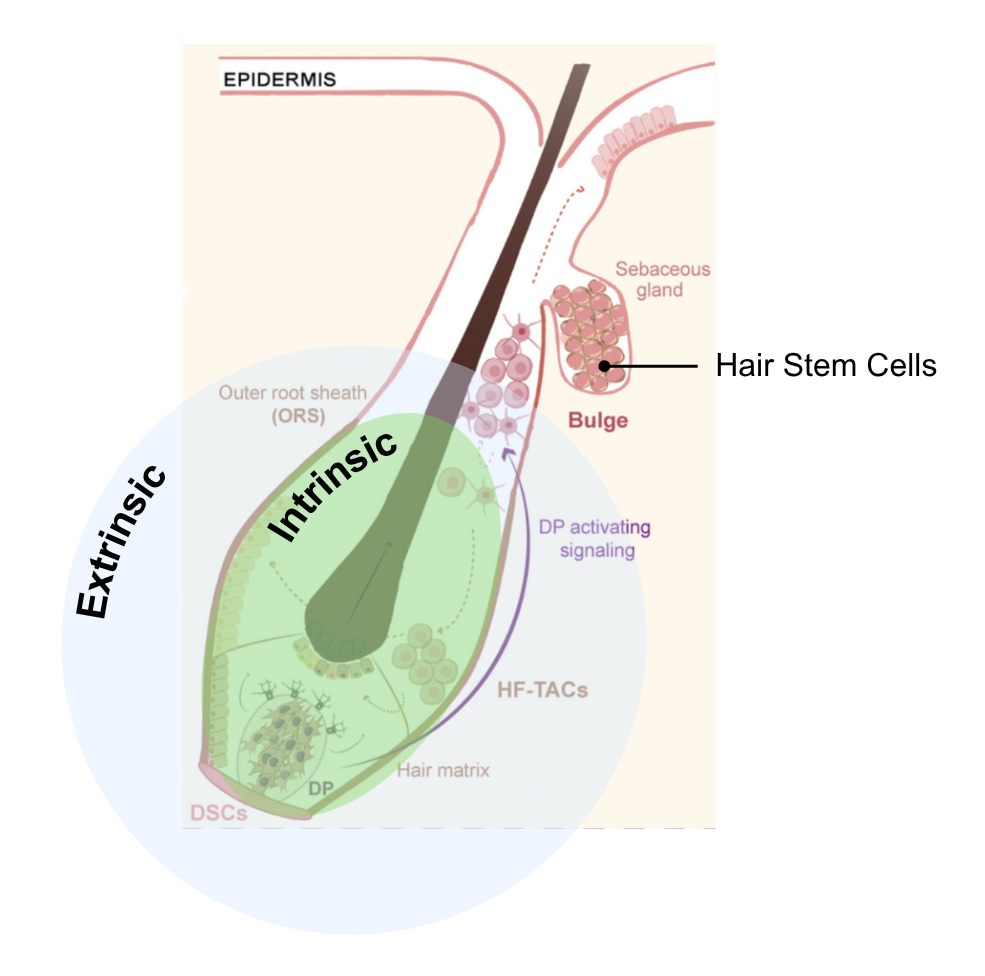
The underlying problem is that the hair follicle begins losing its ability to function as a healthy regenerative organ. Hair biologists sometimes describe this through an intrinsic vs. extrinsic distinction. The intrinsic system includes the follicle’s internal regulatory machinery — the stem cell compartment in the bulge region and the dermal papilla cells that drive the hair cycle and hair growth. But follicles don’t operate in isolation. They also depend on an extrinsic environment: blood supply, hormonal milieu (notably DHT exposure in androgen-sensitive follicles), local oxygenation, inflammation, and paracrine growth-factor signaling from surrounding cells. When the balance between these systems breaks down, follicles miniaturize — anagen phases shorten, telogen phases lengthen, and hair shafts become progressively finer until visible coverage is lost. This is why so many hair-loss products fail. Hair decline is a multi-pathway process, yet much of the consumer market still markets single-ingredient “miracles” as if one fashionable molecule could solve a problem with three or more overlapping causes.[3]
What Does PP405 Actually Do?
Every follicle cycles through growth (anagen), regression (catagen), rest (telogen), and shedding (exogen), governed largely by dermal papilla cells at the follicle’s base — themselves replenished by stem cells in the bulge region. When those stem cells remain in prolonged quiescence, follicles fail to re-enter anagen, and miniaturization compounds over time.
PP405 is a topical small molecule inhibitor of the mitochondrial pyruvate carrier (MPC), developed from work by Heather Christofk and William Lowry at UCLA on the metabolic regulation of hair follicle stem cells. By blocking pyruvate’s entry into the mitochondria, it shifts metabolism toward glycolysis and elevates intracellular lactate — hypothesized to be a permissive signal for stem cells to exit quiescence and restart the growth phase. The mechanism isn’t quite “forcing a hair follicle to grow.” Rather, it “recreates the metabolic conditions in which the follicle’s own renewal program restarts.”
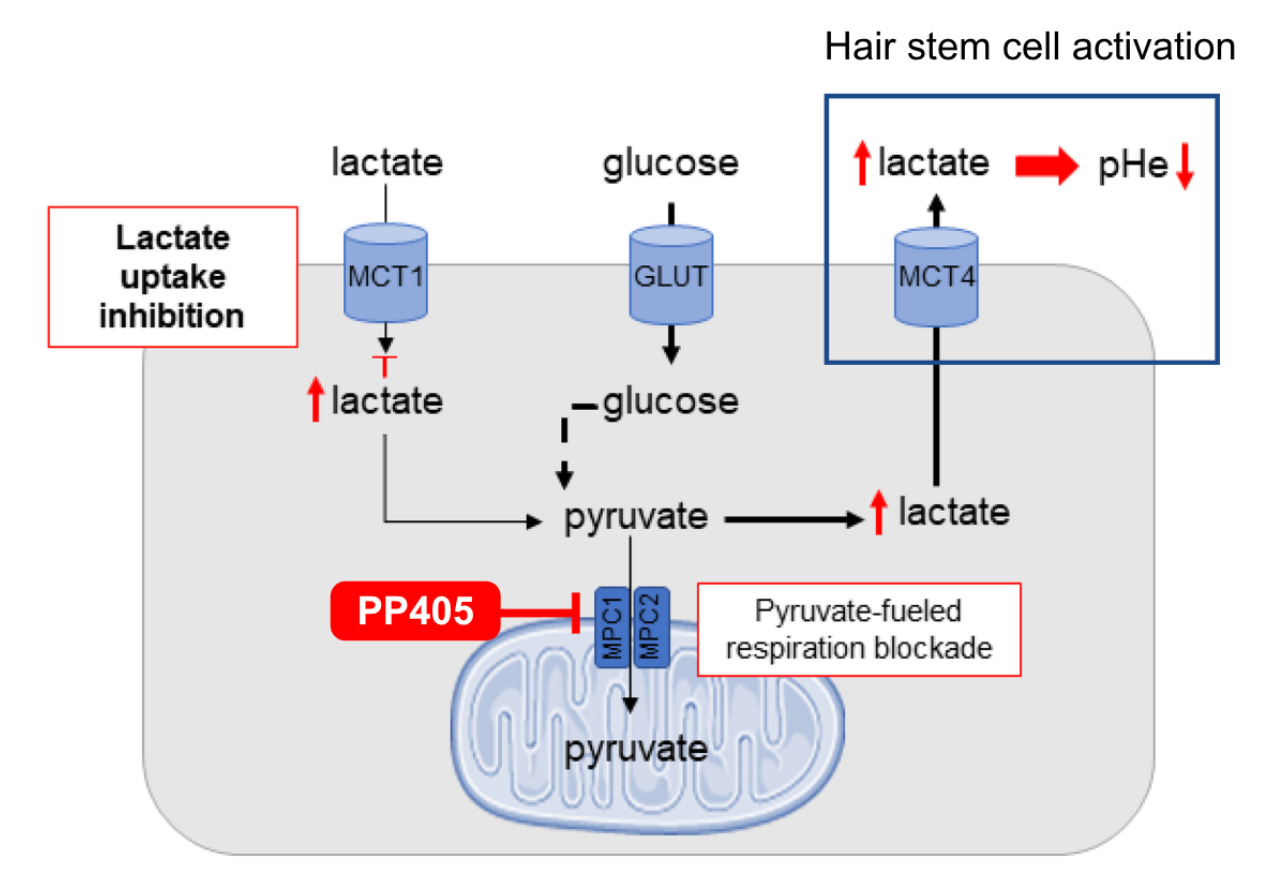
Conceptually, this is among the more biologically interesting approaches in the AGA space, engaging stem cell behavior rather than simply improving blood and nutrient perfusion (e.g., minoxidil) or blunting androgen exposure (e.g., finasteride, dutasteride). The harder question is whether activating a single metabolic switch is sufficient to overcome the broader decline in aging follicles and environmental deterioration often occurring simultaneously and reinforcing one another.
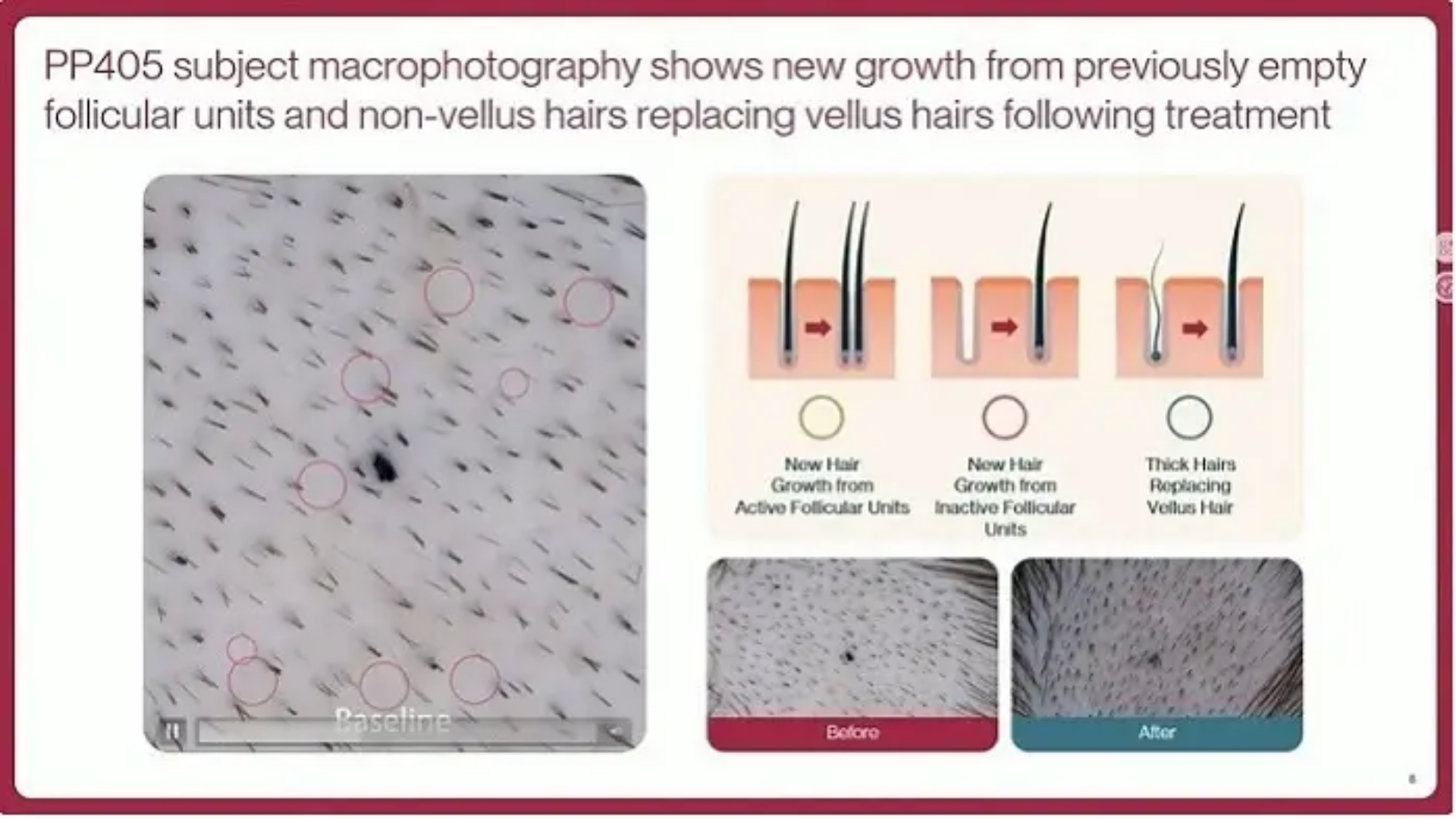
This is also where the public marketing has slowly begun to outrun the data. A widely repeated figure — “31% of participants achieved over 20% hair growth in eight weeks” — tends to circulate without the qualifications in Pelage’s own communications: the strongest responses appear concentrated in a subset of participants rather than the overall trial population.
As seen in the images below taken from Pelage Pharmaceuticals Phase IIa clinical data presentation, one can observe that even after 84 days, broadly very minimal growth was observed. Like many biotech press releases, percentage increases in hair density can sound far more dramatic than they actually look cosmetically. A small increase in hair count on a thinning patch may generate impressive graphs while remaining barely noticeable in the mirror.
Despite this, PP405 is one of the few hair-loss programs in recent memory that is built on a coherent biological hypothesis rather than recycled cosmetic ingredients (e.g., KilgourMD) and category-trend marketing (e.g., Nutrafol, Vegamour). The mechanism is plausible, the preclinical work is real, and the target (follicle stem cell quiescence) addresses a feature of hair thinning that existing solutions do not directly engage. In our opinion, the public excitement is moving faster than the published data, and it is not yet established whether reactivating a single metabolic pathway is sufficient to meaningfully reverse the multi-system decline that drives hair thinning and hair loss in the first place. The Phase IIb readout in late 2026 will be one to watch.
Recently, our team came across a preprint that outlines a new system (NOVOGRO™) which leverages a multi-path approach to boost the hair follicle from both the outside in, and the inside out. Interestingly, we noted that one of the pathways NOVOGRO™ targets is conceptually similar to PP405 — a core regeneration pathway that prepares the environment surrounding the hair follicle for growth.
The Claim
“NV-273 induces durable HIF-1α activation and activates downstream pro-regenerative programs.”
(Composite representative claim; reflects NV-273’s proposed positioning as an inhibitor of PHD2, and subsequent activator of HIF-1α.)
What the Evidence Actually Shows
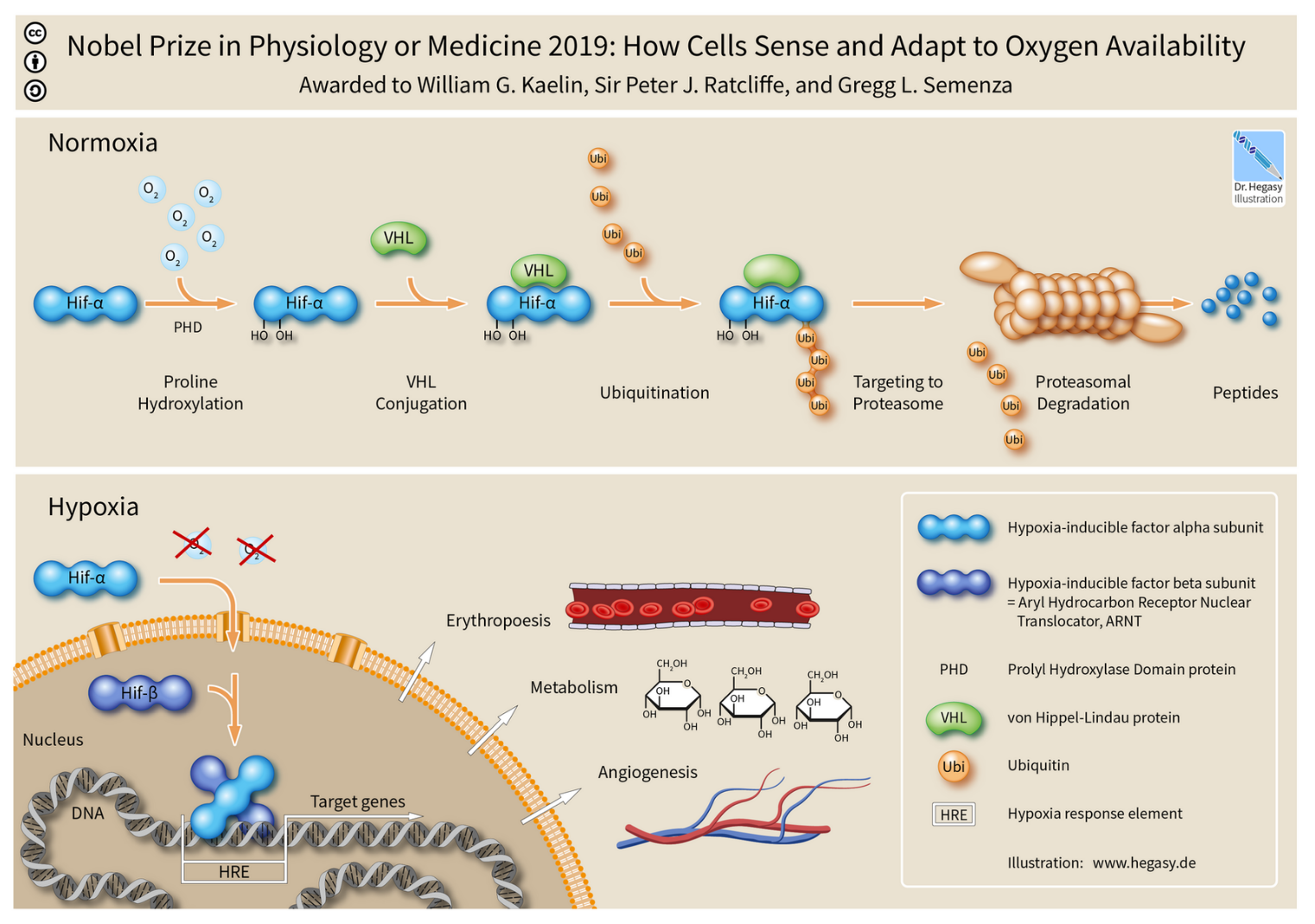
One of the body’s core adaptive responses to stress of various forms is the hypoxia-response pathway — a biological program that helps cells cope when oxygen or nutrient availability is low. For example, this same pathway is activated during wound healing, where it coordinates the vascular regrowth and tissue repair needed to restore damaged tissues. Central to this system is HIF-1α (hypoxia-inducible factor 1-alpha), a transcription factor that, when active, upregulates growth factor production, promotes microvascular expansion, and works to preserve tissue integrity.
In the preprint, the researchers designed a small molecule (NV-273) that helps preserve and protect HIF-1α, preventing it from being prematurely broken down in the cell by an enzyme called Prolyl-hydroxylase 2 (PHD2). This allows the natural hypoxia-response program to stay active longer to drive blood vessel formation (i.e., enhancing nutrient delivery) while supporting the energy metabolism of dermal papilla cells (DPCs).[4]
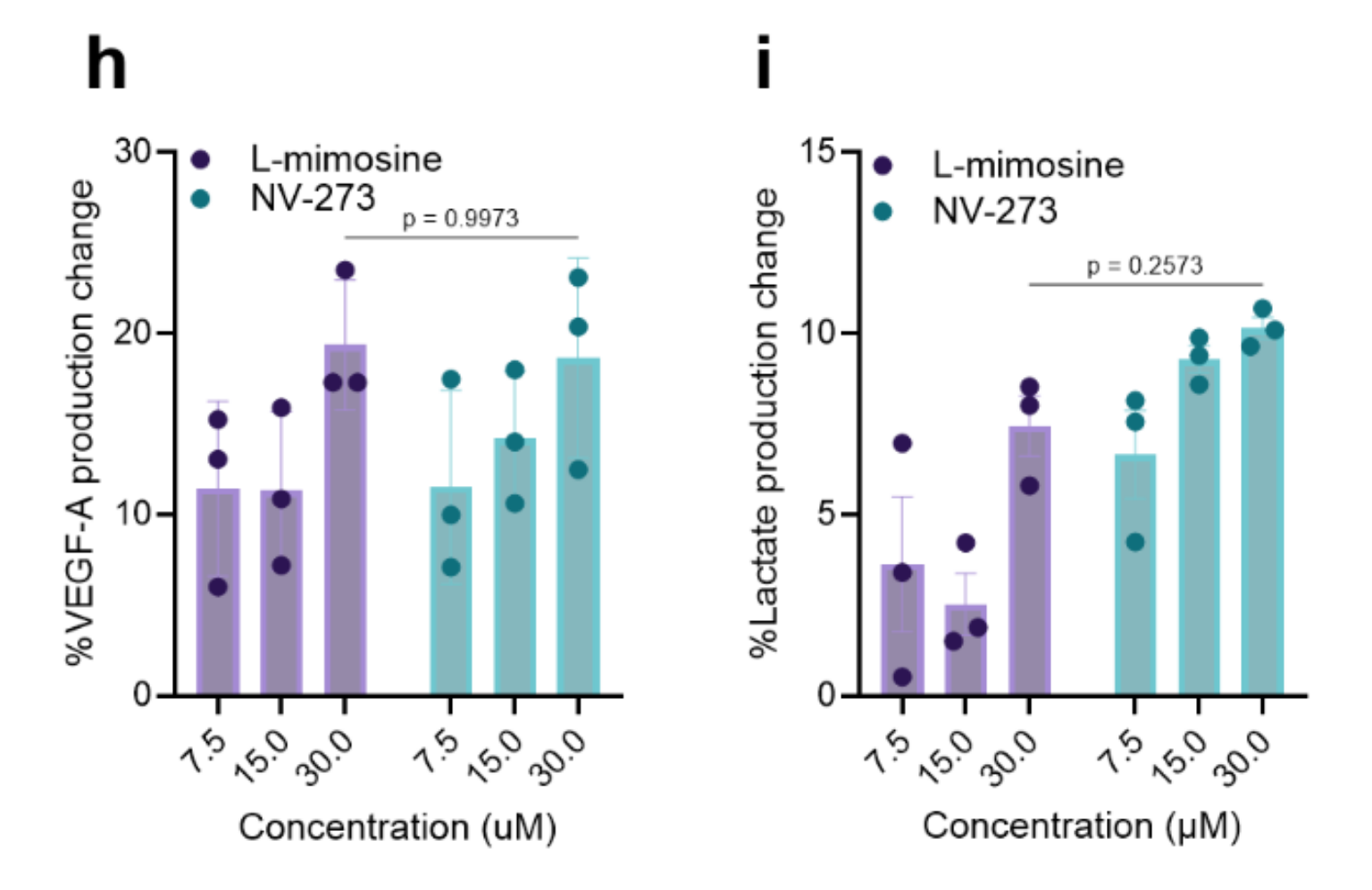
Indeed, they showed that NV-273 promoted VEGF-A production in human keratinocytes, while increasing lactate production in DPCs after 24 hours of treatment. The data was benchmarked against L-mimosine, a known inhibitor of PHD2 and a HIF-1α activator. This mechanism is similar to PP405 and this crucial piece of data highlights how NV-273 may help prepare the hair follicle environment for growth.
According to our scientists, MPC inhibition (via PP405) and PHD2 inhibition (via NV-273) both ultimately shift the hair follicle toward a more metabolically permissive, growth-favorable state — but they arrive there by slightly different routes and engage different cell populations along the way. MPC inhibition works upstream, at the level of the hair follicle stem cells in the bulge area. By restricting pyruvate entry into mitochondria and redirecting metabolism toward glycolysis, it elevates intracellular lactate, which appears to function as a quiescence-exit signal in the bulge stem cell compartment. On the other hand, PHD2 inhibition works at the level of the follicular niche. By blocking the hydroxylation and subsequent degradation of HIF-1α, it stabilizes the hypoxia-response program under normoxic conditions — effectively mimicking the low-oxygen signaling environment that promotes vascular remodeling, growth factor secretion, and dermal papilla cell survival.
Now where these pathways converge is meaningful. Both pathways intersect at the level of metabolic reprogramming — glycolysis is also upregulated downstream of HIF-1α stabilization, meaning lactate production increases through PHD2 inhibition as well. There is also a shared interest in dermal papilla cell viability; MPC inhibition may indirectly support DPC function through stem cell reactivation, while PHD2 inhibition acts on it more directly through VEGF upregulation and improved local perfusion.
Where they diverge is equally important:
- ➡️ MPC inhibition is primarily a stem cell biology intervention — it addresses intrinsic quiescence, and its efficacy likely depends on whether a sufficient, functional stem cell pool remains.
- ➡️ PHD2 inhibition, on the other hand, helps reset extrinsic deterioration, and its efficacy likely depends on the health of the hair follicles.
Recognizing this, the researchers developed several additional molecules that target complementary mechanisms involved in hair follicle miniaturization, including targeting DHT using NV-1065, and targeting the hair follicle health, using NV-623 & NV-624.
NOVOGRO™: Inside-Out AND Outside-In
In parts one & two of this three-part series, we breakdown the other compounds in the NOVOGRO™ complex. Please read part 1 and part 2 of this 3-part series to learn about how NOVOGRO™ compares to Minoxidil and Finasteride:
- Part 1 — Minoxidil: Minoxidil vs. NOVOGRO™
- Part 2 — Finasteride: Finasteride vs. NOVOGRO™
Our editorial team has reached out to the researchers who mentioned that there is a 150+ person clinical study currently ongoing. We will update this article as the clinical data, and as any new data comes in.
PP405 vs. NV-273: The Breakdown
| Category | PP405 | NV-273 |
|---|---|---|
| Original development path | Developed specifically for hair loss; licensed from UCLA research by Heather Christofk and William Lowry on metabolic regulation of hair follicle stem cells. | Developed specifically to activate a core pro-regeneration pathway in hair follicles. |
| Primary target | Mitochondrial Pyruvate Carrier (MPC) | Prolyl-hydroxylase 2 (PHD2) |
| Chemical class | Small molecule | Small molecule |
| Mechanistic approach | Shifts stem cell metabolism from oxidative phosphorylation to glycolysis; elevates intracellular lactate via LDH upregulation to promote stem cell exit from quiescence and anagen re-entry. | Stabilizes HIF-1α under normoxic conditions, activating the hypoxia-response pathway to upregulate growth factors, support dermal papilla cell metabolism, and promote microvascular remodeling. |
| Formulability | Water-insoluble; sticky gel/foam formula needed. | Slightly water-soluble; more amenable to topical formulation. |
| Side effect profile | Met primary safety endpoint in Phase 2a; well-tolerated with no serious treatment-related adverse events reported. | Long-term safety and real-world follow-up needed, but robust preclinical safety data in human skin and non-skin cells. Topical delivery is a meaningful safety advantage. |
| Clinical data | Phase 2a complete; 31% of participants with higher-grade hair loss achieved >20% increase in hair density at 8 weeks vs. 0% in placebo. Phase IIb ongoing. | TBD. Randomized clinical trial running. |
| MoS assessment | Mechanistically novel and clinically progressing — the stem cell activation data is compelling, though the headline efficacy figure reflects a responder subset rather than the full trial population, and cosmetic translation of density gains remains to be demonstrated at scale. | Still preclinical, but the biological strategy is meaningfully more sophisticated than traditional approaches and comparable to PP405; the real test will be whether clinical data can reproduce the strength of current preclinical findings. |
Our Verdict
The path to restoring hair isn’t likely going to be made possible by a single miracle molecule. PP405 represents one of the more scientifically compelling approaches to emerge in the hair loss space in years. By targeting the metabolic switch that governs stem cell quiescence, it engages the hair follicle’s own renewal machinery rather than working around it. That’s a meaningful advance in hair science. But a single mechanism, however elegant, is unlikely to be sufficient in a condition defined by complex intrinsic and extrinsic factors.
NOVOGRO™ represents a robust, multi-path approach that we have never before seen. The overall framework is modern like PP405, but is unique in its attempt to simultaneously resolve both intrinsic and extrinsic pathways involved in hair follicle health and hair thinning — it targets the additional layers of decline that MPC inhibition alone doesn’t reach. That said, the biggest missing piece is still randomized clinical data. NOVOGRO™ (specifically NV-273) is supported by a robust dataset, and we will keep a close eye on emerging RCT data as they are released.
Verdict: Promising — Awaiting Clinical Data
PP405 is mechanistically novel and clinically progressing, representing one of the most scientifically grounded hair loss programs in years. NV-273 targets a complementary but distinct pathway — the follicular niche rather than the stem cell compartment — and is part of a broader multi-mechanism platform that addresses both intrinsic and extrinsic failure modes simultaneously. Both approaches are more sophisticated than the minoxidil/finasteride paradigm. The key question for PP405 is whether a single metabolic switch is sufficient; the key question for NV-273 (and NOVOGRO™ overall) is whether preclinical strength translates to clinical outcomes.
Evidence rating — NOVOGRO™: 4/5 preclinical | TBD pending clinical data.
References & Further Reading
- Hair Loss Cure 2020. (2025). Pelage Pharmaceuticals Clinical Trials.
- Tasdogan, A., Faubert, B., Bhatt, V., et al. (2021). Metabolic regulation and the Warburg effect in cancer. Cancers, 13(17), 4278.
- Wang, E. C. E., & Christiano, A. M. (2020). Hair follicle stem cells and their niche in the context of hair cycling. Stem Cells Translational Medicine.
- Qu, Z. Et al. (2026). AI-enabled discovery of small molecules targeting complementary pathways for hair follicle rejuvenation. bioRxiv.
- Wikimedia Commons. (2019). HIF Nobel Prize Physiology Medicine 2019 (Hegasy).