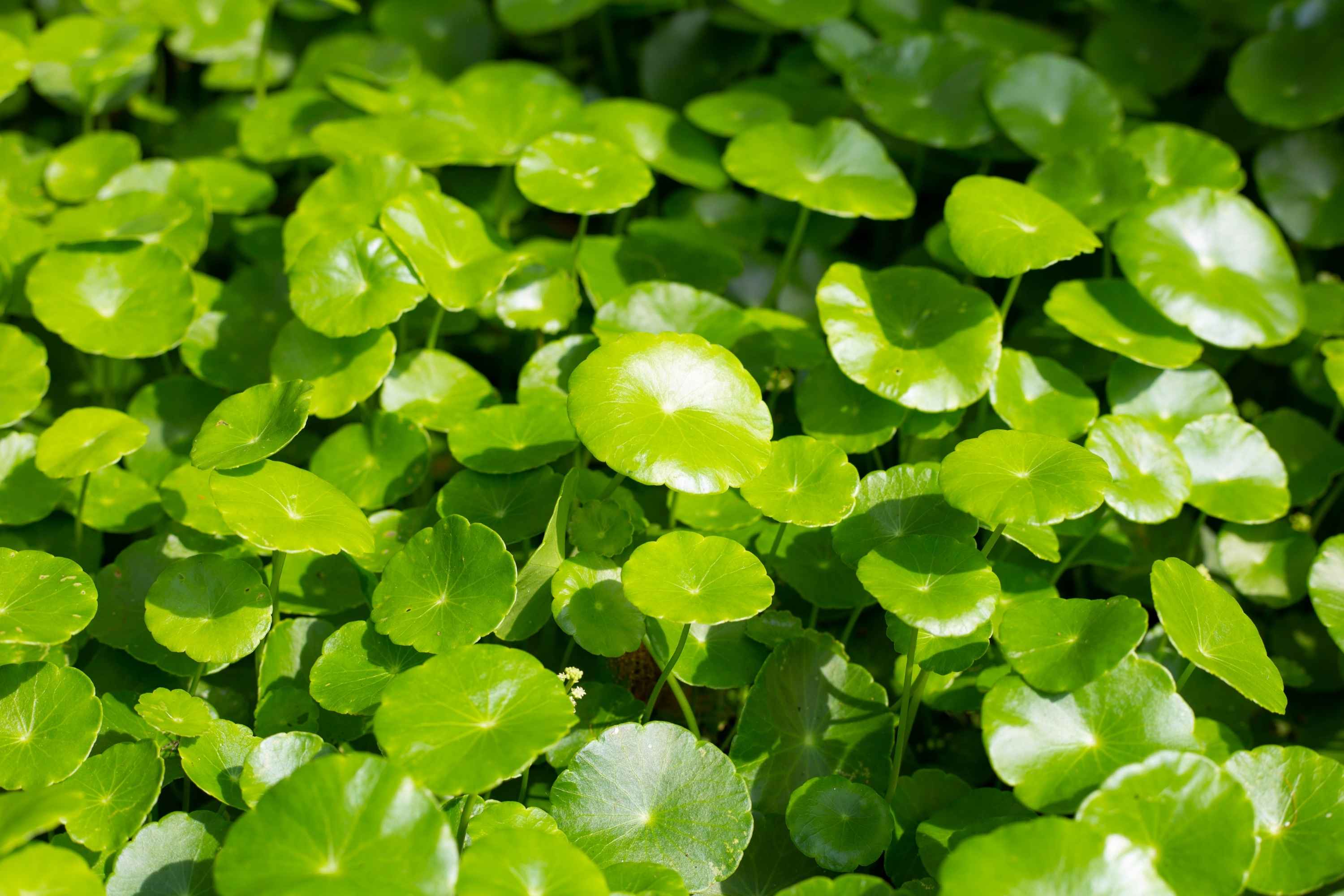
Few botanicals have crossed from traditional medicine into mainstream skincare as successfully as Centella asiatica. Sold under the shorthand “cica” (from Centella, though often blurred with “cicatrization,” meaning wound healing), it anchors an entire category of soothing creams, barrier balms, and post-procedure gels — a cornerstone of the K-beauty aisle now everywhere. The plant is also called gotu kola or tiger grass.
Unusually for a trendy botanical, the mechanism here is not hand-waving. Centella contains a well-characterized set of active compounds with real pharmacological literature behind them. The task is to separate what those actives have been shown to do from what the broad “cica” marketing label implies — because the two are not the same, much as with the snail mucin and beauty peptides categories.
The Actives, Not the Buzzword
Centella's activity is attributed mainly to four triterpene compounds: asiaticoside and madecassoside (the glycosides) and their corresponding acids, asiatic acid and madecassic acid. Collectively these are often standardized as a “titrated extract of Centella asiatica” (TECA or CAST). A review of the pharmacological activities of asiaticoside and madecassoside documents genuine mechanisms: stimulation of collagen synthesis, promotion of angiogenesis (new blood-vessel formation), and antioxidant and anti-inflammatory effects.
This is the crux of the “cica” problem. A jar labeled cica may contain a meaningful, standardized concentration of these actives — or a token amount of centella extract added mainly for the label. The buzzword tells you a plant is present; it does not tell you whether the dose that produced effects in the literature is present. Evidence attaches to the standardized actives at studied concentrations, not to the word on the front of the tube.
The Claim
“Cica calms irritation, repairs your skin barrier, heals and regenerates damaged skin, and fights the signs of aging — a clinically proven all-in-one for sensitive, compromised skin.”
(Composite representative claim; reflects language used across cica creams, balms, and post-procedure products.)
Where the Evidence Is Strong
The best-supported use is wound healing and barrier support. A systematic review of Centella asiatica on wound healing concluded that it may enhance healing, plausibly through stimulation of collagen I, fibroblast growth factor, and vascular endothelial growth factor — consistent with the compound-level mechanisms. Work on the active ingredients responsible for burn-wound healing points to the same triterpenes doing the work.
For everyday skincare, the soothing and barrier-support claims are the ones on firmest ground: the anti-inflammatory and antioxidant activity translates reasonably into calming redness and supporting a compromised barrier, which is why cica products pair naturally with actives that stress the barrier, such as retinoids and exfoliating acids covered in the retinoid ladder. The review of Centella asiatica in cosmetology supports these soothing and hydration-related roles.
Where the Label Outruns the Science
Two gaps matter. First, the strongest data come from wound-healing contexts — burns, surgical wounds, ulcers — often using standardized extracts at defined doses. Extrapolating from “helps a healing wound” to “reverses aging on intact skin” is a leap the anti-aging marketing makes but the strongest studies don't. The collagen-stimulation mechanism is promising for anti-aging, but the direct topical anti-wrinkle evidence in humans is thinner than the soothing and healing evidence.
Second is the perennial concentration and formulation problem. Much of the mechanistic work uses isolated, standardized actives, whereas a consumer cica cream rarely discloses how much madecassoside or asiaticoside it contains. As a recent characterization of centella extract serums illustrates, bioactivity depends on the extract and its processing — so two products both proudly labeled “cica” can be pharmacologically very different. The same concentration-matters lesson from niacinamide applies here.
| Claim | Evidence Strength | Notes |
|---|---|---|
| Soothing / calming irritation | Good | Consistent anti-inflammatory mechanism and cosmetic use |
| Barrier support / post-procedure recovery | Good | Aligns with wound-healing data; sensible adjunct to actives |
| Wound / burn healing | Moderate–Good | Best-studied use, but with standardized extracts, not random creams |
| Anti-aging / wrinkle reversal | Limited | Plausible collagen mechanism; thin direct topical human evidence |
What the Evidence Actually Shows
Centella asiatica is one of the better-supported botanicals in skincare. Its actives — asiaticoside, madecassoside, and the related acids — have genuine anti-inflammatory, antioxidant, and collagen-stimulating mechanisms, and the soothing, barrier-support, and wound-healing claims are reasonably backed. The weaker links are the sweeping anti-aging promises, where direct topical human evidence is thin, and the “cica” label itself, which signals a plant is present but says nothing about whether the studied actives are there at effective concentrations.
Verdict & Practical Implications
Verdict: Partially Supported
The core soothing and barrier-repair claims are supported; the “heals and regenerates” framing is reasonable in a wound-context sense; and the broad anti-aging promise is only partially supported. Centella is a real active, not marketing vapor — but the “cica” buzzword is a category, not a dose. Evidence rating: 3/5 — strong for soothing and barrier support, dropping toward 2/5 for wrinkle-reversal claims, with the usual concentration-disclosure caveat.
Practically, cica products are a sensible choice for calming irritation, supporting a stressed barrier, and recovering after procedures or strong actives — that is where the evidence lives. If anti-aging is the goal, treat centella as a supporting player alongside actives with stronger direct evidence, such as retinoids and vitamin C, rather than the main event. And because “cica” on the label guarantees little about dose, favor products that name a standardized centella extract or specify madecassoside/asiaticoside content over those that just print the buzzword. It is a good ingredient sold with occasionally inflated ambitions — useful when you match the claim to the evidence.
References & Further Reading
- (2023). Therapeutic Properties and Pharmacological Activities of Asiaticoside and Madecassoside: A Review.
- (2022). A Systematic Review of the Effect of Centella asiatica on Wound Healing. International Journal of Environmental Research and Public Health, 19(6), 3266.
- (2013). Identification of Major Active Ingredients Responsible for Burn Wound Healing of Centella asiatica Herbs.
- (2013). Centella asiatica in Cosmetology. Advances in Dermatology and Allergology, 30(1), 46–49.
- (2025). Bioactivity and Physicochemical Characterization of Centella asiatica and Marigold Extract Serums.
- Marketing or Science. Niacinamide Concentration (why disclosed active concentration matters).