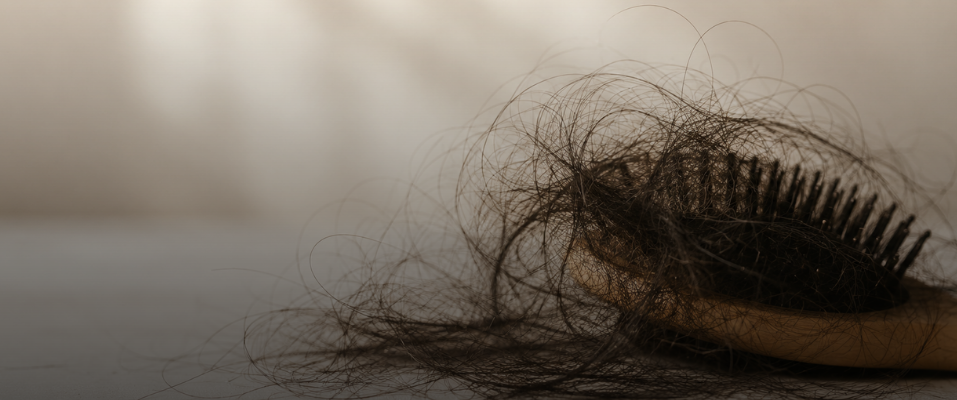

Wooden hairbrush with a large clump of shed dark hair caught in the bristles

The GLP-1 Hair-Loss Dilemma: What I Learned as a Physiologist Who Experienced It

I knew rapid weight loss could affect the hair cycle, so I was already prioritizing protein and paying attention to nutrition. When the shedding continued anyway, I wanted to understand what was happening inside the follicle, how much would recover on its own, and whether there was anything reasonable I could do in the meantime.

Evidence-Based Clinical Review

The GLP-1 Hair-Loss Problem Is More Complicated Than “Eat More Protein”

A few months into GLP-1, I started noticing more hair than usual in my brush and shower drain. As a physiologist, I was familiar with the most likely explanation. Significant weight loss can act as a physiological stressor, appetite suppression can make it easier to under-consume calories and protein, and nutritional deficiencies can contribute to excessive shedding. These are well-established triggers for telogen effluvium, the diffuse shedding pattern that often follows major changes in the body.

That was also why I had been paying attention to them from the beginning. I prioritized protein, monitored my nutrition, and avoided trying to lose weight as aggressively as possible. Yet the shedding still appeared, which made me look more closely at what happens to the hair cycle after the initial trigger has already occurred.

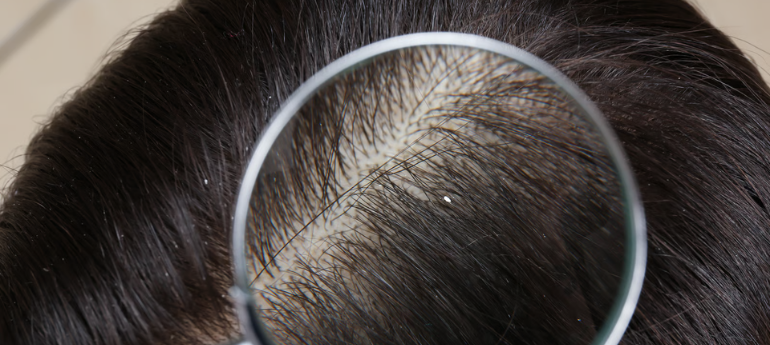
Close-up of a scalp viewed through a magnifying glass, showing diffuse thinning
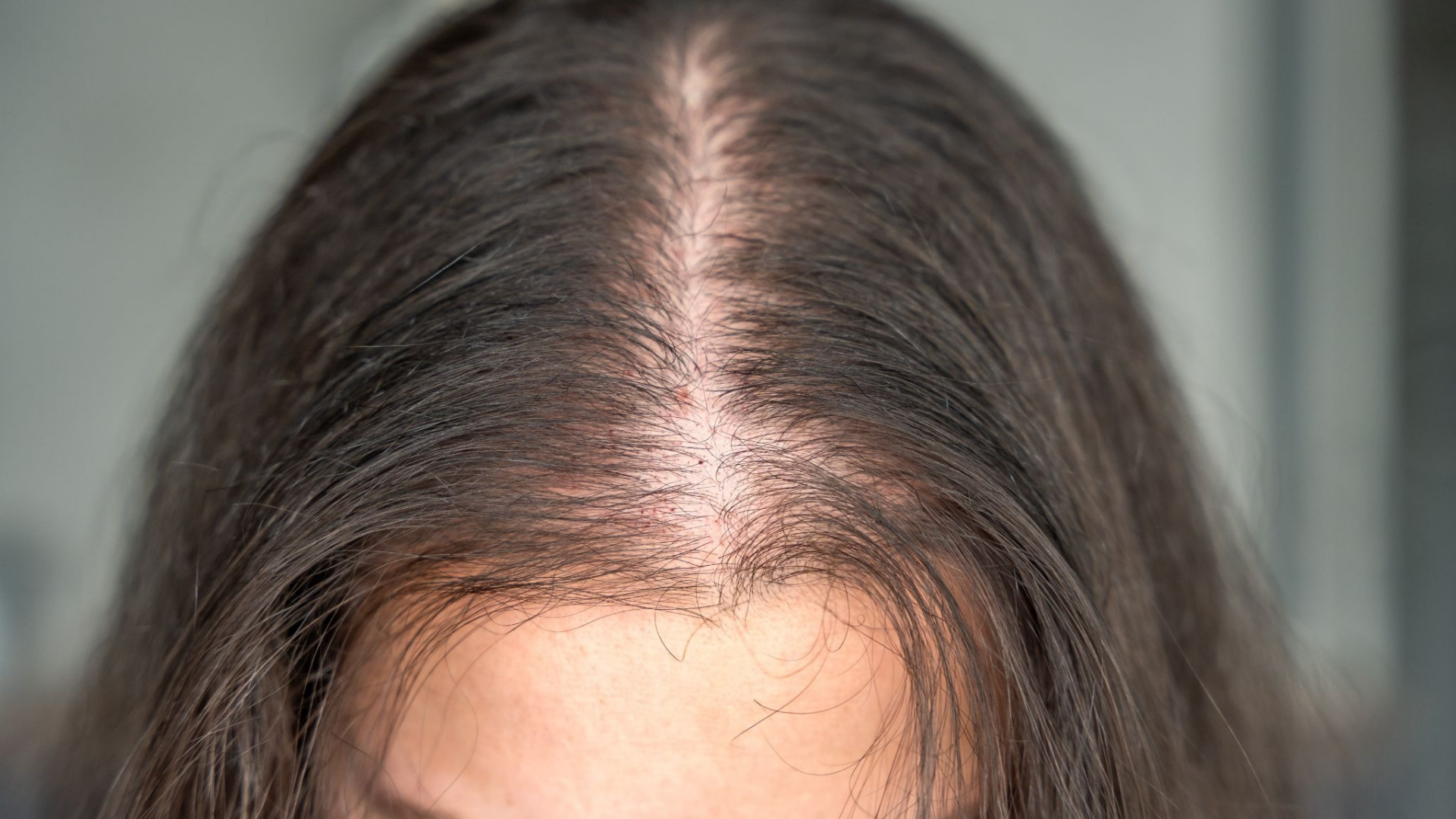
What telogen effluvium looks like: diffuse thinning across the scalp, often making the part or crown look more visible. The follicles remain intact, which is why it is considered a non-scarring form of hair loss.

What Telogen Effluvium Actually Does to the Hair Cycle

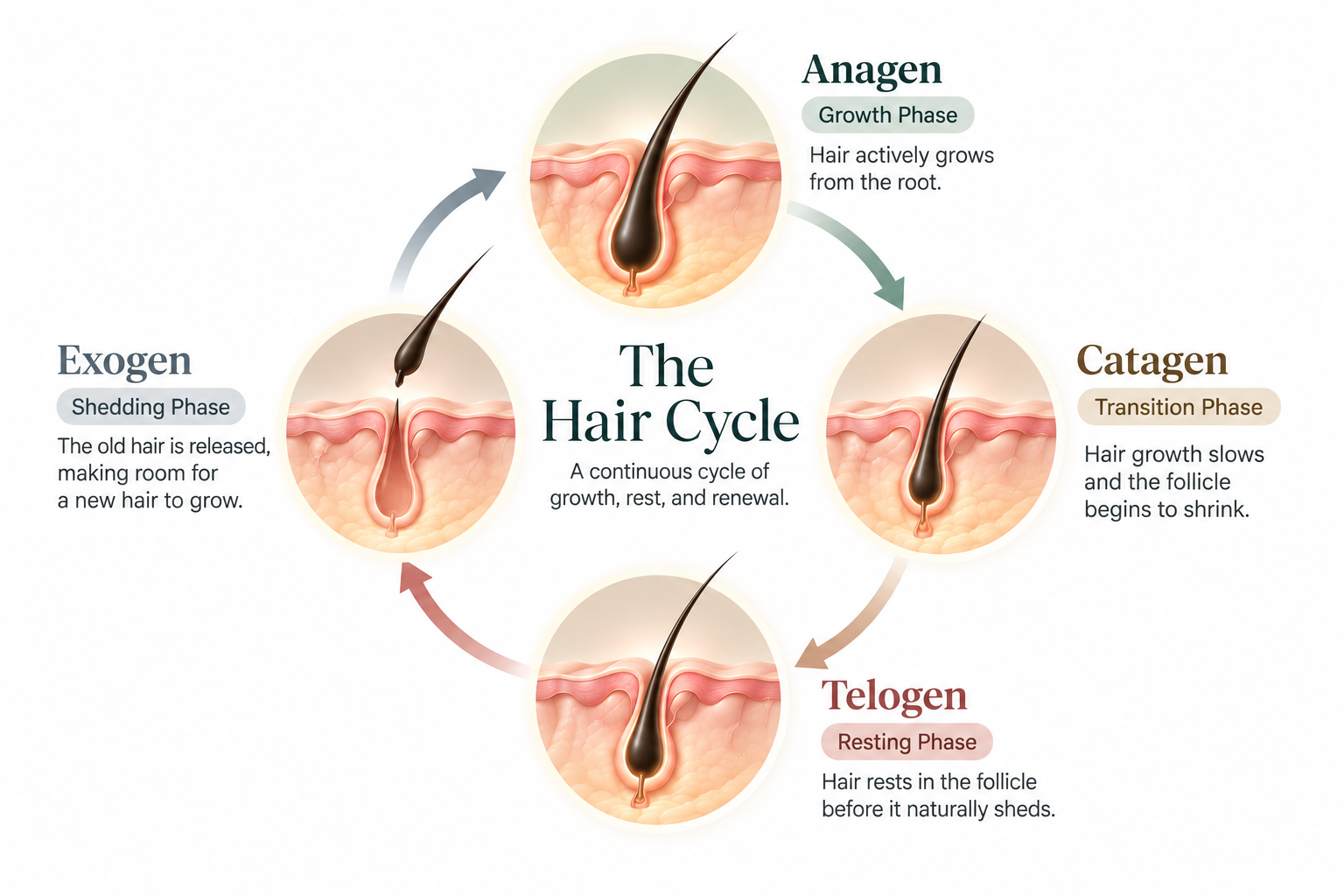
Telogen effluvium is not simply “hair falling out from stress.” It is a disruption of the normal hair cycle. Most scalp follicles are ordinarily in anagen, the active growth phase, but a significant physiological stressor can cause an unusually large number to enter telogen, the resting phase, prematurely. Those hairs remain in place for a period before shedding, which is why visible hair loss commonly appears two to three months after the original trigger. (Malkud, 2015)

That delay also explains why correcting protein intake or slowing weight loss does not necessarily stop shedding immediately. Once follicles have entered telogen, they still need to move through that phase before returning to active growth. For me, this means that addressing the trigger and supporting the follicle during recovery are different parts of the process, and both matter.

Diagram comparing a healthy hair cycle with a disrupted telogen-effluvium cycle, plus a linear recovery sequence
In telogen effluvium, a physiological stressor pushes more follicles than usual into the resting phase at the same time. When those hairs reach the shedding phase a few months later, they are released together, making daily shedding noticeably heavier.

Why I Started Looking More Closely at the Follicle

Hair growth is regulated locally within the follicle. Dermal papilla cells act as an important signaling center and help regulate follicle size and hair-cycle activity, while the surrounding follicular niche helps regulate regenerative activity (Morgan, 2014; Rompolas & Greco, 2014). Since I was already addressing nutrition systemically, I became interested in whether targeted scalp support could complement it by acting directly on follicle biology.

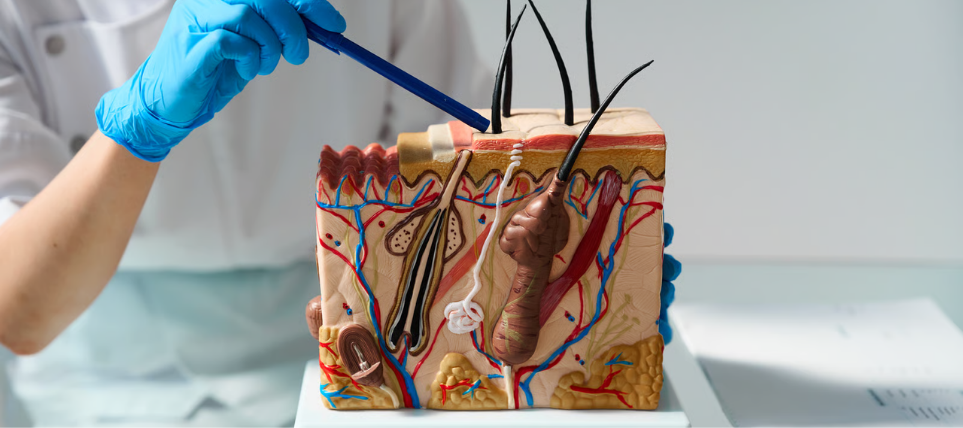
Gloved hands pointing to a 3D anatomical cross-section model of skin and hair follicles
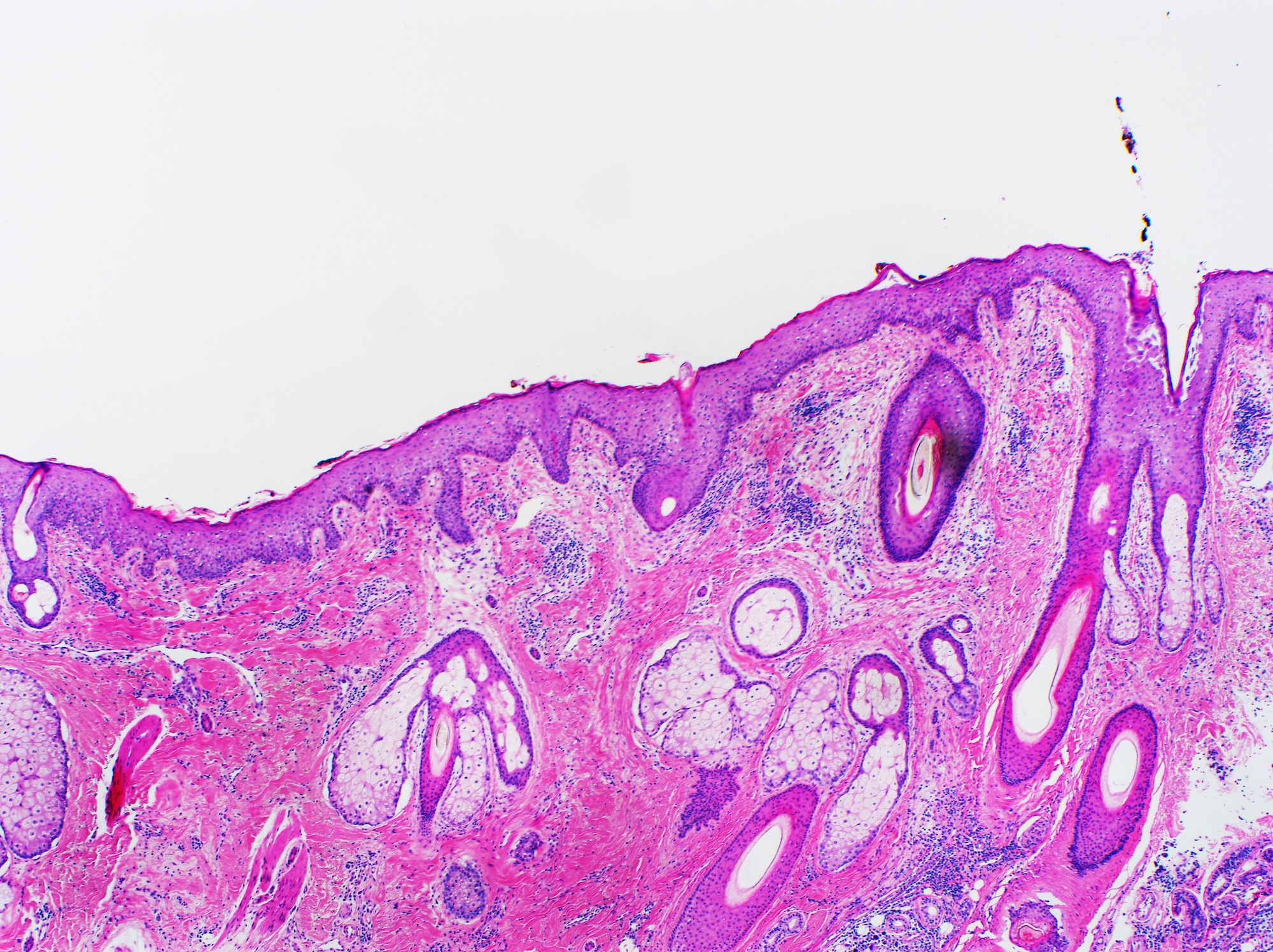
Hair follicle repeatedly regresses and rebuilds itself with each hair cycle. That regeneration depends on coordinated cellular signaling within the follicle, not nutrition alone.

What I Look For to Support My Hair

The Option I Stick To

My Pick · Minoxidil-Free Engineered topical

RE:YOU (NOVOGRO™ technology)

Promising — Clinically Tested in Women With thinning hair, including GLP-1 users

Targets follicle biology Shedding objectively measured Non-hormonal Benchmark vs. minoxidil

Pros

  • Complements protein and nutritional support with a dedicated scalp step
  • Targets follicle biology directly, including dermal papilla growth (NOVOGRO™-623/624) plus scalp-environment support (NOVOGRO™-273)
  • Clinical trial included GLP-1 users, with shedding measured by standardized combing and counting
  • 58% average reduction in measured shedding at 90 days in the overall clinical population
  • Benchmarked head-to-head against minoxidil
  • Non-hormonal, drug-free, lightweight daily serum

Cons

  • Full randomized clinical readout still pending — interim 3-month data looks strong
  • Newer brand; long-term real-world data limited
  • Direct-to-consumer subscription cost

How Does It Stand Out from Other Topical Options

Minoxidil was the obvious evidence-based option, but it can also cause an initial shedding phase during the first several weeks as resting hairs are released. (Messenger & Rundegren, 2004). For someone already watching more hair come out after GLP-1 weight loss, deliberately choosing a treatment that could temporarily add to that shedding was not especially appealing.

Most non-drug alternatives sat at the opposite extreme. They were typically built around botanicals, caffeine, peptides, or conditioning ingredients; some individual ingredients have preclinical evidence related to hair growth, but the finished formulas are often not engineered around a defined molecular target or tested in controlled clinical trials.

That is what made NOVOGRO™, the active ingredients that power RE:YOU, catch my attention. NOVOGRO™ 623 and 624 were developed to support dermal papilla cells, the signaling center at the base of the follicle, while NOVOGRO™ 273 supports the surrounding follicular environment. In preclinical testing, NOVOGRO™ increased dermal papilla cell activity by about 20% and increased growth-factor production and cellular metabolism by about 15% versus control — meaning the cells and signals that support hair growth were more active (Qu et al., 2026, bioRxiv preprint).

More importantly, that biology translated into measurable human results. In RE:YOU's double-blind, minoxidil-benchmarked clinical trial in 190 women, measured shedding decreased by an average of 58% at 90 days, with 26% greater shedding reduction than the minoxidil comparator, assessed using a standardized comb test in which shed hairs were collected and counted. The study also measured improvements in hair density, diameter, and scalp coverage.

Interim 3-month clinical results. See the full data →
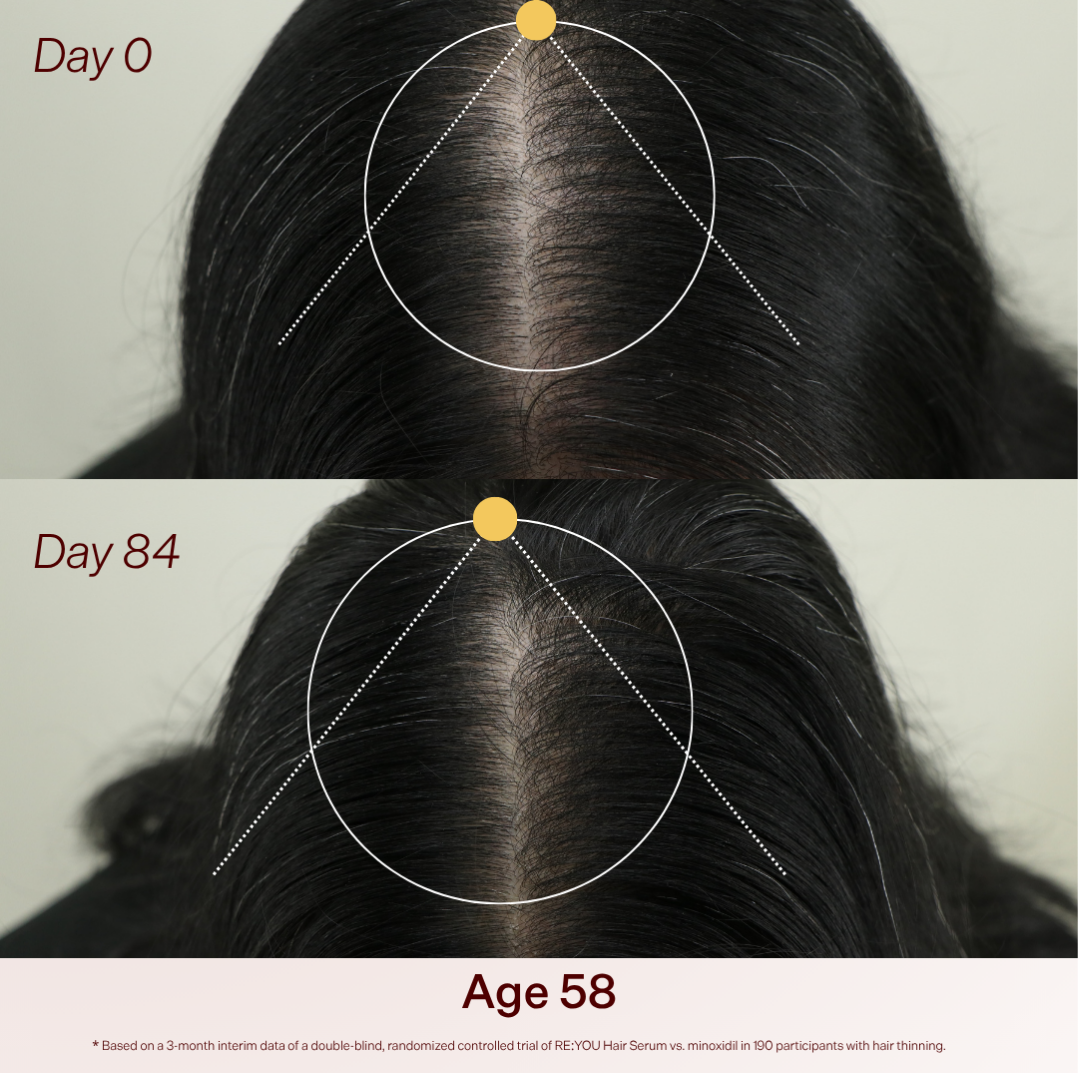
Before and after scalp photos at Day 0 and Day 84 for a 58-year-old participant
RE:YOU (NOVOGRO™ complex) before and after image. Based on a double-blind, randomized, minoxidil-benchmarked clinical trial with 190 female participants. Source: RE:YOU.
Our Rating
Promising — Clinical Pending

Strong follicle biology, objective shedding measurement, and encouraging 90-day results earn RE:YOU 4 stars. The fifth star awaits the full 6-month clinical readout.

What to Expect: Week by Week

Realistic timelines matter. Here's what the current evidence suggests for each option.

Month 1
Early Phase

GLP-1 hair cycle: Follicles affected by rapid weight loss may already be shifting toward telogen, even before shedding is visible.
RE:YOU: Scalp may start to feel calmer and more balanced as shedding begins to slow.

Month 2
Early Recovery

GLP-1 hair cycle: Delayed shedding may become more noticeable as telogen hairs are released.
RE:YOU: Baby hairs may start appearing around the hairline and part, while existing strands begin to feel thicker.

Month 3
Measurable Change

GLP-1 hair cycle: Shedding may still be occurring while follicles begin transitioning back toward active growth.
RE:YOU: By Day 90, clinical testing showed less measured shedding by standardized comb count, alongside measured improvements in hair density.

Months 4–6
Visible Recovery

GLP-1 hair cycle: As the underlying trigger improves, new anagen hairs continue growing and visible density gradually returns.
RE:YOU: Continued use supports the follicle through recovery as fuller-looking hair becomes increasingly visible.


References & Further Reading