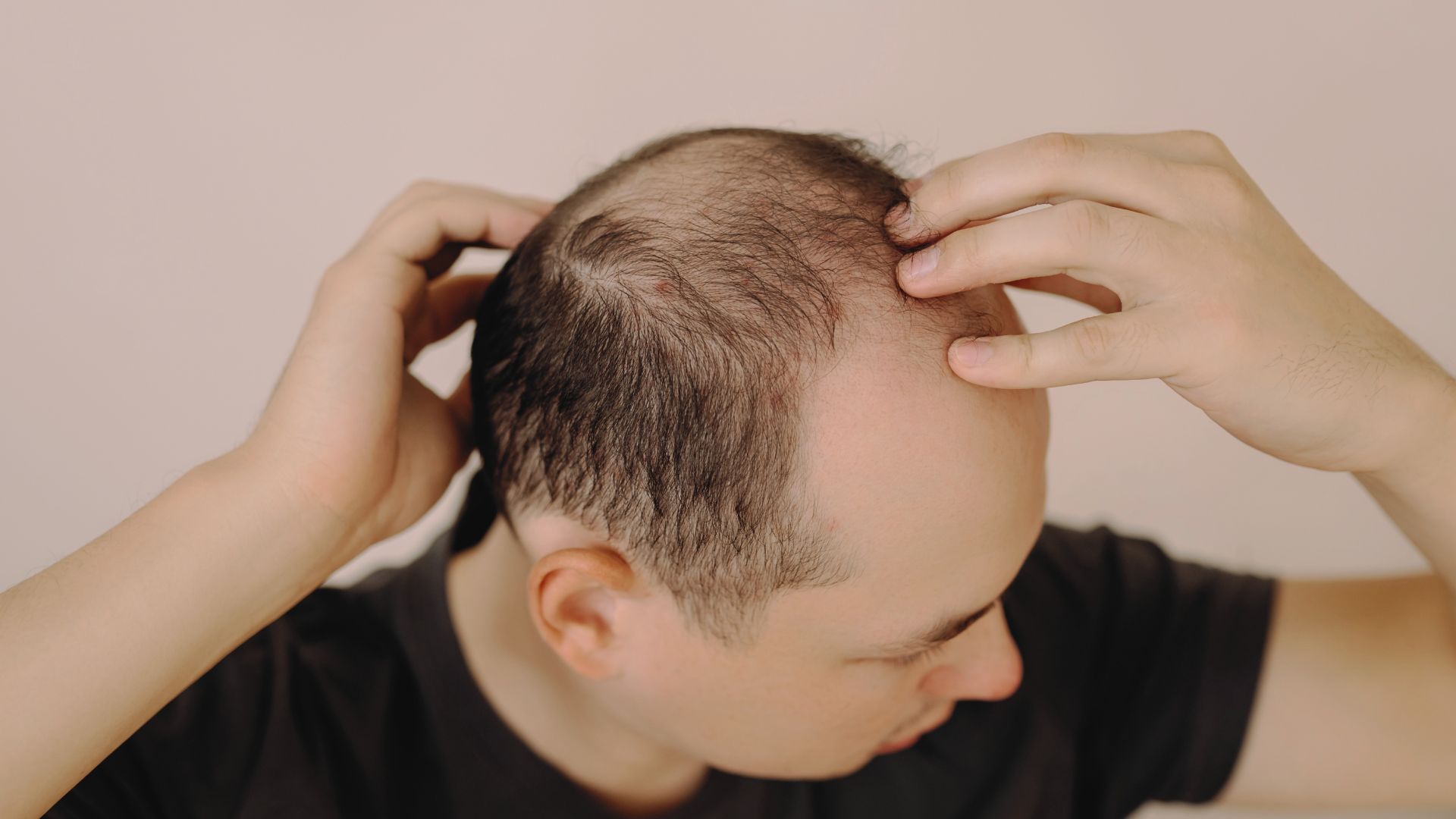
Ask a dermatologist what they reach for when a woman with pattern hair loss cannot tolerate minoxidil or wants an oral option, and spironolactone comes up quickly. It is one of the most widely prescribed off-label treatments in this space — familiar, inexpensive, and backed by a coherent mechanism. It is not, however, FDA-approved for hair loss, and the evidence supporting its use is considerably weaker and less controlled than the marketing around it sometimes implies.
This article reviews what spironolactone actually does, what the trials and observational data show, and the contraindications that make it a women-only drug in practice.
Part of a Series
This article is part of our Hair Loss: Marketing or Science? series, examining the evidence behind popular treatments and ingredients.
- Hair Growth Supplements (Nutrafol, Viviscal, Biotin)
- Caffeine Shampoo (Alpecin): Does It Actually Work?
- You are here: Spironolactone for Female Hair Loss
- Dutasteride vs. Finasteride: Is “Stronger” Actually Better?
- Prostaglandin Analogs (Latanoprost, Bimatoprost) for Scalp Hair Loss
- Exosomes, Stem Cells & Hair Cloning: The Frontier Hype
The Mechanism: Anti-Androgen Activity
Spironolactone was developed as an aldosterone antagonist — a potassium-sparing diuretic used for hypertension and heart failure. Its relevance to hair loss comes from a secondary property: it competitively blocks androgen receptors and weakly inhibits testosterone synthesis. In the scalp, this anti-androgenic activity can reduce the DHT-mediated miniaturization of follicles that drives androgenetic alopecia.
The mechanism is pharmacologically sound. Androgens drive female pattern hair loss through the same DHT-receptor pathway they drive male pattern loss, and an agent that blocks that receptor at the follicle level has a plausible basis for effect. The question is whether the clinical evidence lives up to that rationale — and here the picture is more complicated.
The Claim
“Spironolactone is an effective, evidence-based treatment for female pattern hair loss — a proven anti-androgen that stops shedding and promotes regrowth in women.”
(Composite representative framing; reflects how spironolactone is positioned in patient-facing materials and telehealth hair-loss platforms.)
What the Evidence Actually Shows
The evidence base for spironolactone in female pattern hair loss is real but predominantly observational. A 2023 systematic review and meta-analysis of oral spironolactone for female pattern hair loss found an overall improvement rate of 56.6% — rising to 65.8% in combination therapy (with minoxidil) versus 43.2% in monotherapy. A large retrospective cohort study similarly found meaningful proportions of women responding to treatment. Earlier observational data, Sinclair et al. (2005), reported that 44% of women showed hair regrowth, 44% stabilized, and 12% continued to lose hair on oral antiandrogen treatment.
What is largely absent is the gold standard: large, randomized, placebo-controlled trials with objective hair-count endpoints, independent of industry funding, and benchmarked against minoxidil. A 2023 systematic review of both oral and topical spironolactone confirmed that the evidence is promising but the controlled-trial data remain sparse. The JAAD has noted that spironolactone is prescribed despite few physician-reported outcomes from rigorous trials. A 2025 comparative study found topical spironolactone performed comparably to topical minoxidil in female pattern hair loss (PMC 2025), which is encouraging but still a single small comparative trial.
The practical effect size is real — dermatologists use this drug and see results — but the evidence quality does not match that of minoxidil or finasteride, both of which were put through large, independent, placebo-controlled trials before reaching widespread use.
Who It Is and Is Not For
Spironolactone is used almost exclusively in women with pattern hair loss for one critical reason: it is a teratogen. In male fetuses it can cause feminization of the genitalia; for this reason it is contraindicated in pregnancy and in women who may become pregnant without reliable contraception. In men it causes gynecomastia, breast tenderness, and loss of libido — side effects that make it clinically unsuitable for male pattern hair loss.
In postmenopausal women, or premenopausal women on reliable contraception, the safety profile is generally acceptable at the doses used for hair loss (typically 100–200 mg/day, lower than doses used for hypertension). Electrolyte monitoring (potassium) is advised, particularly in women with renal impairment or those on ACE inhibitors. Menstrual irregularity is reported at higher doses.
| Treatment | Mechanism in FPHL | Evidence Quality | FDA-Approved for Hair Loss? | Key Contraindication |
|---|---|---|---|---|
| Minoxidil (topical) | Anagen prolongation, vasodilation | Large independent RCTs | Yes (women) | Pregnancy (caution) |
| Spironolactone (oral) | Androgen receptor blockade | Observational + small trials | No (off-label) | Pregnancy — teratogen |
| Finasteride (oral) | 5AR type II inhibition → ↓ DHT | Large RCTs (men); limited in women | Men only | Pregnancy — teratogen |
What the Evidence Actually Shows
Spironolactone has a sound anti-androgen mechanism for female pattern hair loss and real-world evidence of meaningful response rates in observational data. The overall picture from meta-analysis is that roughly half to two-thirds of women improve, with better outcomes in combination with minoxidil. But the evidence base is predominantly retrospective and observational — the large, independent, placebo-controlled trials that establish a drug as first-line are absent. It is a reasonable second-line or adjunct option for women who are appropriate candidates, not a proven replacement for minoxidil.
Verdict & Practical Implications
Verdict: Partially Supported
Spironolactone is partially supported for female pattern hair loss. The mechanism is real, the observational response rates are meaningful, and combination with minoxidil improves outcomes. Evidence rating: 3/5 — genuinely used in clinical practice with real results, but lacking the independent RCT evidence base of the approved first-line treatments.
For women with female pattern hair loss who have not responded adequately to topical minoxidil, spironolactone is a clinically reasonable next step — particularly if there is evidence of androgen excess or hyperandrogenism. It is not a substitute for ruling out treatable causes first: iron deficiency, thyroid dysfunction, and nutritional deficits should be assessed before reaching for a systemic drug. And it is strictly a conversation with a prescriber — the pregnancy contraindication and electrolyte monitoring requirements make this a drug that needs medical supervision, not a supplement to self-start.
References & Further Reading
- Sinclair, R., et al. (2005). Treatment of female pattern hair loss with oral antiandrogens. British Journal of Dermatology, 152(3), 466–473.
- Albalat, W., & Elkot, R. (2023). The Efficacy and Safety of Oral Spironolactone in the Treatment of Female Pattern Hair Loss: A Systematic Review and Meta-Analysis. International Journal of Women's Dermatology.
- Wambier, C. G., et al. (2023). The Efficacy and Safety of Oral and Topical Spironolactone in Androgenetic Alopecia Treatment: A Systematic Review. Journal of Clinical Medicine.
- Donovan, J. C., et al. (2020). Spironolactone for treatment of female pattern hair loss. Journal of the American Academy of Dermatology.
- PMC. (2025). Evaluation of the Efficacy and Safety of Topical Spironolactone versus Topical Minoxidil in the Treatment of Female Pattern Hair Loss.
- Famenini, S., & Goh, C. (2014). Demographics of women with female pattern hair loss and the effectiveness of spironolactone therapy. Journal of Drugs in Dermatology.
- Marketing or Science. Minoxidil for Female Pattern Hair Loss.
- Marketing or Science. Finasteride for Female Hair Loss.
- Marketing or Science. DHT Blockers: Finasteride, Saw Palmetto, and the Evidence Gap.