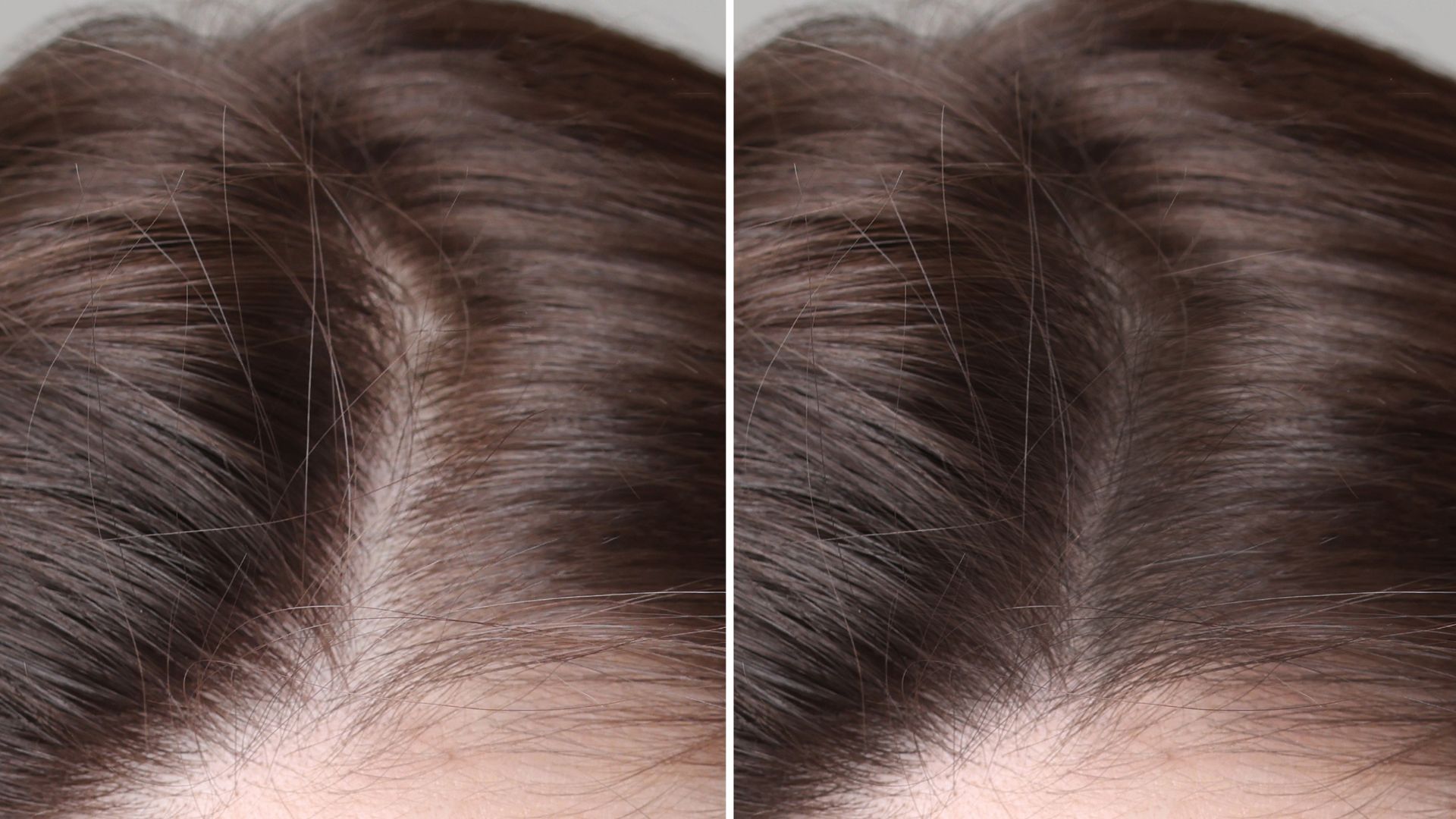
Bimatoprost (Latisse) is FDA-approved to grow longer, thicker eyelashes — a well-known cosmetic application that emerged from glaucoma patients noticing increased lash growth as a side effect of eye-drop therapy. Latanoprost works through the same class of receptor. The logical leap from there to “these drugs should regrow scalp hair” is short and superficially sensible. Prostaglandins regulate hair follicle biology; blocking certain prostaglandins or activating others can push follicles into the growth phase. The mechanism is real.
The clinical evidence for scalp use, however, is a different story — small, inconsistent, and nowhere near the scale needed to establish a treatment. This article traces what we actually know.
Part of a Series
This article is part of our Hair Loss: Marketing or Science? series, examining the evidence behind popular treatments and ingredients.
- Hair Growth Supplements (Nutrafol, Viviscal, Biotin)
- Caffeine Shampoo (Alpecin): Does It Actually Work?
- Spironolactone for Female Hair Loss
- Dutasteride vs. Finasteride: Is “Stronger” Actually Better?
- You are here: Prostaglandin Analogs (Latanoprost, Bimatoprost) for Scalp Hair Loss
- Exosomes, Stem Cells & Hair Cloning: The Frontier Hype
Prostaglandins and Hair Biology
Prostaglandins are lipid signaling molecules with opposing effects on the hair follicle depending on which receptor they activate:
- PGF2α receptor (FP receptor) activation — generally promotes hair growth and prolongs the anagen phase. This is the receptor bimatoprost (a prostamide) and latanoprost target.
- PGD2 and its receptor (DP2/CRTH2) — inhibit hair growth. Elevated PGD2 levels have been found in the balding scalp of men with androgenetic alopecia, leading to the hypothesis that blocking PGD2 could reverse hair loss.
These are genuine discoveries in follicle biology. The eyelash observation was not a fluke: prostaglandin analogs do influence the hair cycle. The question is whether the eyelash follicle and the scalp follicle respond equivalently — and whether the drug reaches the scalp follicle in a useful dose when applied topically.
The Claim
“Latisse and similar prostaglandin analogs regrow scalp hair — the same drug that grows eyelashes works the same way on the scalp.”
(Composite representative claim; reflects how prostaglandin analogs are discussed on hair-loss forums and in some telehealth contexts.)
The Scalp Evidence: Small Trials, Mixed Results
The most frequently cited scalp study for latanoprost is a randomized, double-blind, placebo-controlled 24-week pilot study that showed latanoprost 0.1% significantly increased hair density (terminal and vellus hairs) vs. placebo in healthy volunteers with androgenetic alopecia. The result was statistically significant. The study was a pilot with a small sample — a proof of concept, not an established treatment. A separate randomized placebo-controlled trial of latanoprost 0.005% in scalp alopecia areata reported significantly increased hair density and regrowth vs. control, though again in a small, specialized population.
For bimatoprost, the laboratory rationale is well-described — it increased hair synthesis in scalp follicle organ culture and advanced pelage regrowth in mice — but the human scalp evidence is even thinner than for latanoprost. A 2023 systematic review and meta-analysis of topical prostaglandin analogs for hair loss found they could significantly improve hair length and density, but noted the evidence base is characterized by small studies, heterogeneous methods, and a need for larger trials before conclusions can be drawn.
The eyelash context is also worth unpacking. Bimatoprost is applied directly to the lash line — a thin strip where the drug can act on follicles at close range. Distributing a drug across a full balding scalp is a different delivery problem, with different penetration requirements, concentration gradients, and systemic exposure considerations.
The PGD2 Hypothesis: Promising and Largely Stalled
The discovery that PGD2 is elevated in balding scalp and inhibits hair growth generated significant excitement and drove development of setipiprant, a PGD2 receptor antagonist, as a potential hair-loss treatment. Clinical trials were initiated. The results were not compelling enough to drive the drug to approval, and development has not progressed to a marketed product. The biology remains interesting; the clinical translation has not materialized.
| Agent | Approved Use | Best Scalp Evidence | Quality |
|---|---|---|---|
| Bimatoprost (Latisse) | Eyelash hypotrichosis (FDA-approved) | Organ culture + mouse models; one small trial | Preclinical / very limited human |
| Latanoprost | Glaucoma (not approved for hair) | Two small RCTs (AGA pilot; alopecia areata) | Small, proof-of-concept only |
| Setipiprant (PGD2 blocker) | No approved use for hair | Clinical trials did not produce a marketable result | Stalled development |
| Minoxidil | FDA-approved for hair loss | Multiple large independent RCTs | High |
What the Evidence Actually Shows
Prostaglandin analogs have a genuine biological rationale for influencing scalp hair follicles, and small pilot data for latanoprost show real signal. But the scalp evidence is entirely in the small-pilot category — the large, replicated trials needed to establish a treatment do not exist. The eyelash → scalp extrapolation skips over the delivery difference between a lash line and a full scalp, and the PGD2 hypothesis, while scientifically interesting, has not produced a drug. This is early-stage science, not an established treatment.
Verdict & Practical Implications
Verdict: Mixed
The evidence is mixed: genuine biological signal, real pilot data for latanoprost, approved use for eyelashes, but no large scalp RCT and no approved indication for scalp hair loss. Evidence rating: 2/5 for the scalp claim specifically — a promising area of research, not a usable treatment.
Prostaglandin analogs are not a practical first-line option for scalp hair loss. For anyone with androgenetic alopecia, the evidence-based starting points remain minoxidil and, where appropriate, finasteride or dutasteride. If the prostaglandin pathway is of scientific interest, the PRP literature — another regenerative approach with modest but more developed clinical evidence — is a useful point of comparison for what “early-stage data” looks like when it matures into a real evidence base. Prostaglandin analogs for the scalp have not reached that point yet.
References & Further Reading
- Blume-Peytavi, U., et al. (2012). A randomized double-blind placebo-controlled pilot study to assess the efficacy of a 24-week topical treatment by latanoprost 0.1% on hair growth and pigmentation in healthy volunteers with androgenetic alopecia. Journal of the American Academy of Dermatology, 66(5), 794–800.
- Rafati, M., et al. (2022). The effect of latanoprost 0.005% solution in the management of scalp alopecia areata, a randomized double-blind placebo-controlled trial. Dermatologic Therapy.
- Khidhir, K. G., et al. (2013). The prostamide-related glaucoma therapy, bimatoprost, offers a novel approach for treating scalp alopecias. FASEB Journal.
- Guo, H., et al. (2023). The efficacy of topical prostaglandin analogs for hair loss: A systematic review and meta-analysis. Frontiers in Medicine.
- Marketing or Science. Minoxidil for Female Pattern Hair Loss.
- Marketing or Science. PRP for Hair Loss: Reviewing the Randomized Trial Evidence.
- Marketing or Science. Copper Peptides (GHK-Cu) for Hair Growth (another early-stage mechanism with limited scalp trial data — a useful comparison).