Hair loss affects more than 30 million women in the United States, yet most over-the-counter serums have consistently failed to deliver measurable hair growth in randomized controlled trials (RCTs). Marketed with flashy claims or a dermatologist-produced formulation, these formulas typically rely on unproven botanical extracts, low-dose, or poorly researched off-the-shelf ingredients. Most often, these formulas rely on the exact same ingredients and dermatologists will take advantage of people's trust in them to sell their own brands. One recent example is KilgourMD. Our team took a deep dive into their formulas, only to find the same age-old ingredients that have been circulating for decades.
During our initial investigation, our team came across a preprint that described a new philosophy - instead of repackaging the same mediocre ingredients, a team of top researchers trained at Caltech, Princeton, Harvard, and Northwestern asked: can modern biotechnology be leveraged to discover new ingredients that tackle multiple failure modes in hair thinning? The result of their research was NOVOGRO™, which is the technology behind the new brand RE:YOU. Let's dig in.
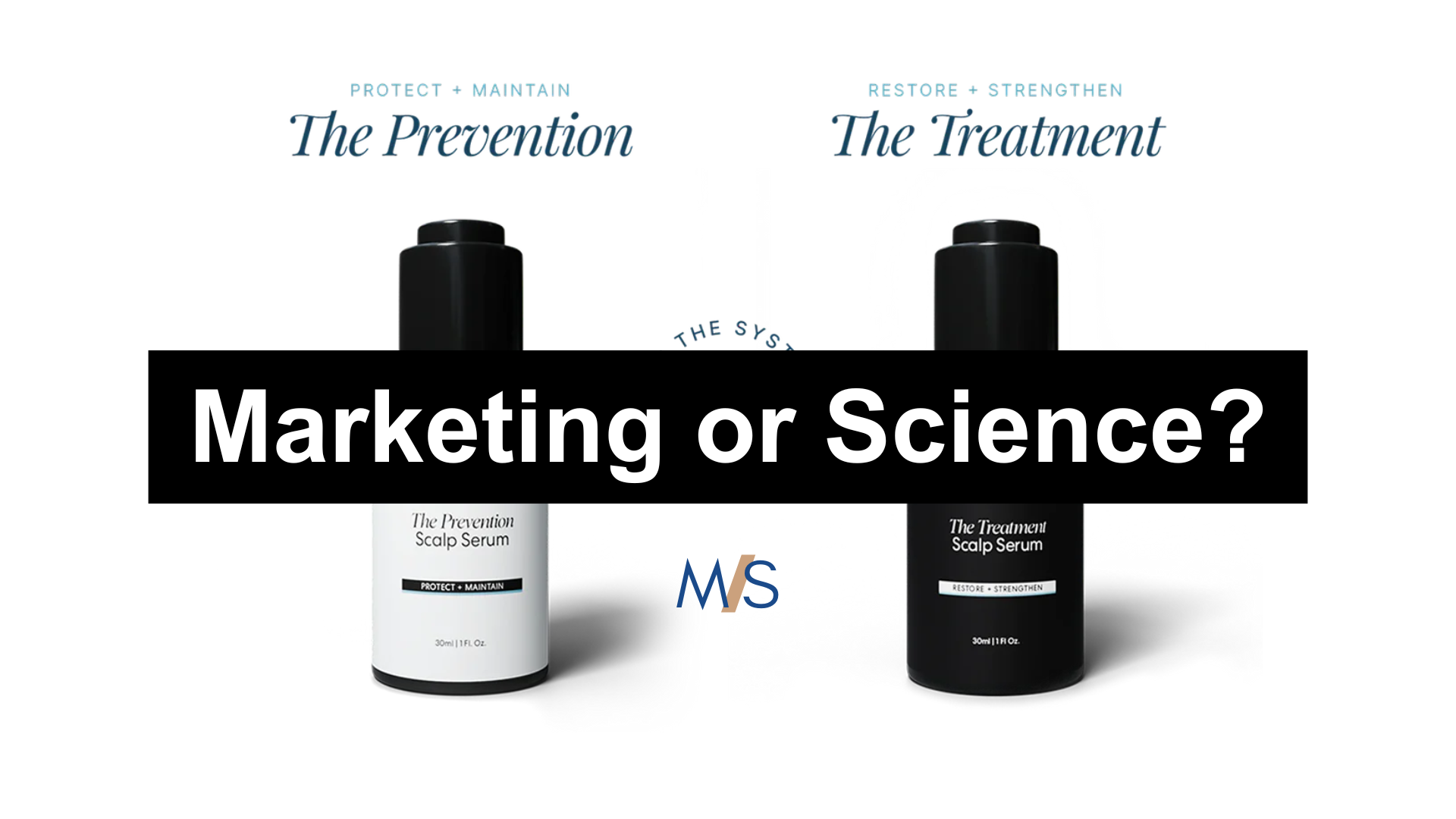
KilgourMD: The Business Boom and Scientific Gap
KilgourMD represents the latest in a long line of “dermatologist-formulated” hair loss serums that rely on the same low-evidence ingredients seen across the category for years. Despite heavy marketing around scalp health and menopausal hair thinning, a closer examination of the brand's timeline, clinical data, funding, and ingredient choices reveals a pattern more consistent with consumer beauty branding than rigorous therapeutic development.
The company launched its products in late 2023 but only released its first clinical evidence in February 2026 - more than two years after going to market. This gap is interesting. Moreover, their clinical study involved only 43 menopausal women with androgenetic alopecia and evaluated the brand's Prevention and Treatment Serums without a head-to-head comparison against an established hair loss treatment such as minoxidil. Without this crucial comparison, and without a placebo arm, it is impossible to determine how effective their formulas actually are.
After consulting our clinical trial experts, a small Phase II study of this scale likely cost under $200,000 to conduct. Meanwhile, the company has raised tens of millions of dollars across seed and Series A rounds. This sequence - commercial launch first, limited clinical data later - signals corporate priorities centered around speed to market and consumer acquisition rather than foundational scientific evidence.
Moreover, KilgourMD's investor base consists primarily of consumer-focused funds that back beauty, wellness, and lifestyle brands rather than biotechnology or pharmaceutical companies with deep clinical development expertise. Lead investors such as Prelude Growth Partners, Willow Growth, Joyance Partners, and Able Partners have portfolios heavy in direct-to-consumer personal care. This funding profile aligns with brands optimized for marketing and retail velocity, not long-term consumer benefit.
The Claim
KilgourMD claims to be a dermatologist-developed, clinically validated dual-action scalp serum system that targets the root causes of hair loss - promising up to 60.3% fewer hairs shed and 53% clinically significant growth by day 120, all through a proprietary blend of 15+ active ingredients delivered via liposomal technology.
(Composite representative claim; reflecting KilgourMD’s positioning on their website and marketing communications)
What the evidence actually shows
KilgourMD’s core serum relies on three widely used cosmetic ingredients: Redensyl, Capixyl, and Procapil. These ingredients have limited independent clinical support and are readily available to any formulator in the category. All three ingredients are more than a decade old and derive the bulk of their published data from manufacturer-sponsored studies. Importantly, these trials typically rely on subjective endpoints such as photographic assessments or investigator global scores rather than objective, machine-graded hair counts, phototrichograms, or blinded histological measures. Even when positive signals appear, results often lack the rigor of truly double-blind, vehicle-controlled designs against standard-of-care comparators.
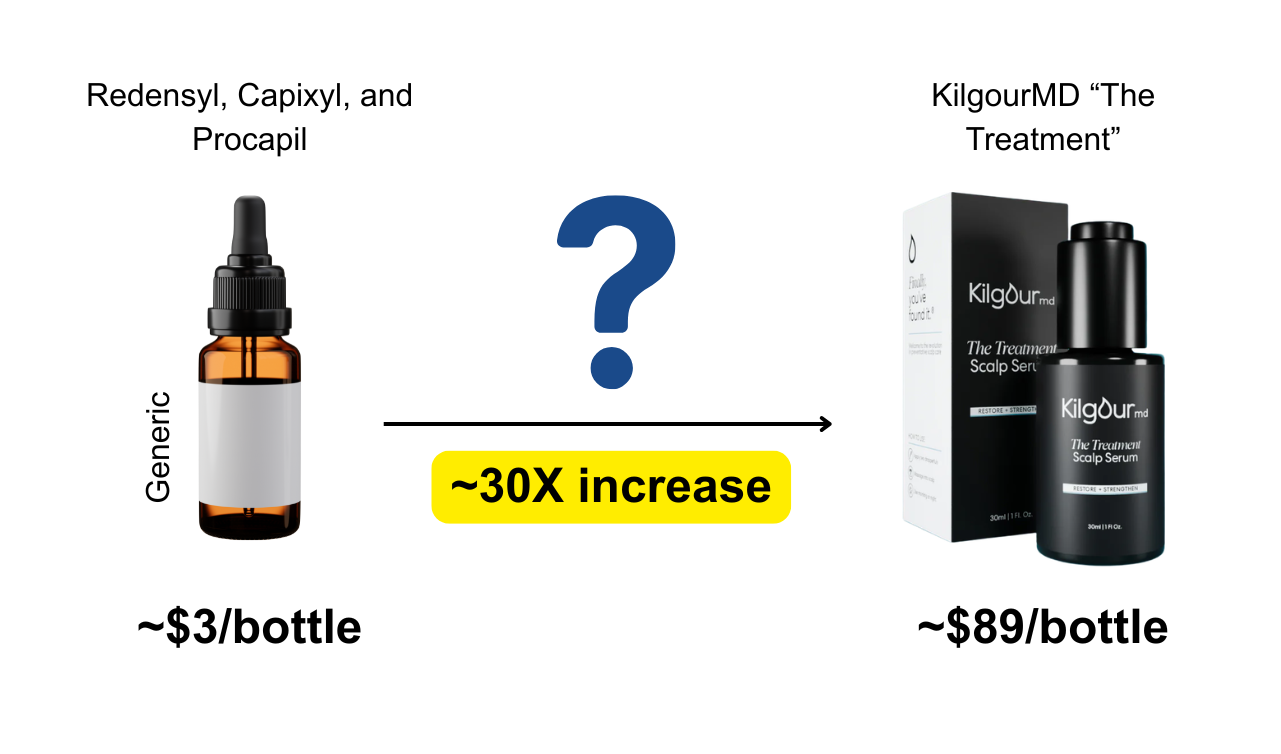
Independent dermatologists frequently describe the evidence base for these active ingredients as weak; many view them as low-risk “cosmeceutical” options precisely because they demonstrate minimal biological impact on the hair cycle or follicle miniaturization. These ingredients are commodity raw materials in the hair serum space. For example, a formulation combining Redensyl, Capixyl, and Procapil at typical use concentrations can be manufactured for well under $3 per bottle (compared to $89 for KilgourMD), according to formulation specialists. The high retail price of premium-branded serums therefore reflects marketing, packaging, and positioning far more than unique or costly active development. Marketing claims for KilgourMD have leaned heavily on manufacturer-provided data for these three ingredients. No large-scale, truly double-blind studies isolate or confirm synergistic efficacy beyond what the raw material suppliers themselves have published.
Kilgour’s 43-person clinical trial - conducted without a placebo or minoxidil arm, in a female population, and relying partly on self-reported outcomes - reads more like a vehicle for marketing claims than a rigorous attempt to establish true serum efficacy. This is a circular evidence pattern common in the cosmeceutical hair loss industry: brands commission small, under-powered studies designed just well enough to generate headline numbers, then use those numbers to lend scientific legitimacy to claims the data can't fully support.
Comparisons against minoxidil actually come not from KilgourMD's own studies but from a third-party 2019 study on the underlying Redensyl, Capixyl, Procapil ingredient combination - buried in their science blog rather than featured on their clinical results page, and with good reason: the study was conducted exclusively in men, making it an awkward reference for a product marketed primarily to women.
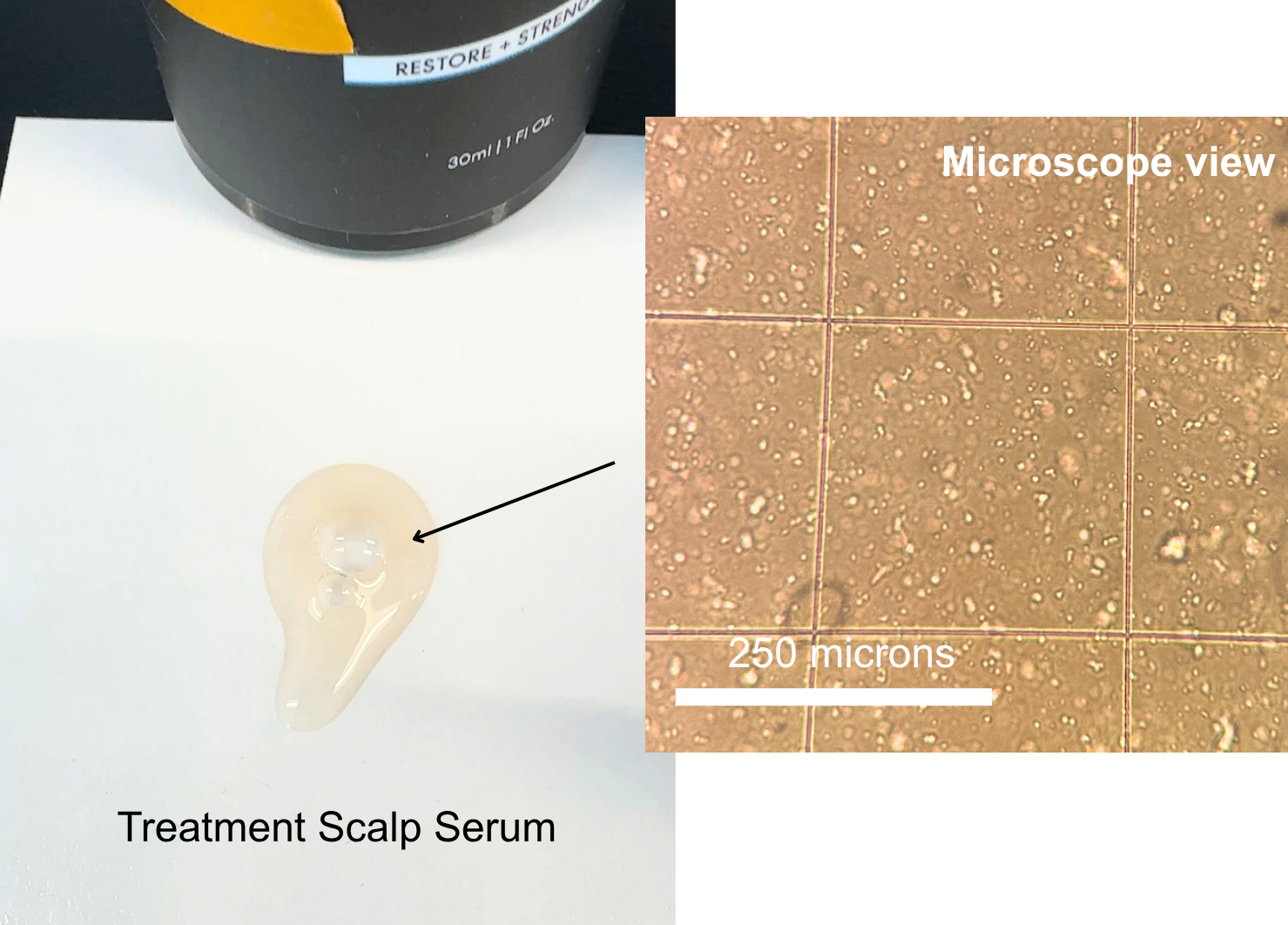
When our team tested their serum (Treatment Scalp Serum), we observed an extremely high number of particulates in the formula, suggesting that certain ingredients had become insoluble or “crashed out” of formula. This significantly limits their ability to penetrate into the scalp and reach the hair follicles where hair growth starts and stops. Additionally, this brings into question their quality assurance (QA) and quality control (QC) processes. The lack of rigorous QA and QC across the board in the beauty and haircare category will be the topic of a future article - please stay tuned.
When we consulted dermatologists on products like Kilgour with these types of active ingredients, they consistently noted that such ingredients generally carry a very low risk of adverse effects - making them attractive for consumer brands - but correspondingly modest or minimal effects on clinically meaningful hair regrowth or stabilization in androgenetic alopecia or hair loss. When patients seek measurable outcomes backed by strong, reproducible data, established treatments with decades of large-scale, independent research remain the clinical benchmark.
KilgourMD's approach, while polished and targeted at an underserved menopausal demographic, fits squarely within the pattern of incremental cosmetic innovation rather than a genuine advance in hair loss therapeutics.
The hair loss pipeline: NOVOGRO™ and what else is coming
Three new approaches to hair loss are now in human trials. NOVOGRO™ targets several pathways at once and is the only one available today. Two pharmaceutical candidates, clascoterone 5% and PP405, each target a single pathway and are still investigational. We start with NOVOGRO™, then compare it with each.
NOVOGRO™: A new challenger?
Fortunately, recent advances in biotechnology and artificial intelligence (AI) are enabling the discovery of entirely new ingredients with more targeted mechanisms of action on the hair follicle.
Back in late June of 2026, our team identified a study in which researchers applied AI to find several new active ingredients, each designed to act on unique pathways involved in the hair growth cycle, from follicle health, to pro-regenerative signalling, to DHT inhibition. The research team conducted comprehensive original preclinical research to establish the safety profile, mechanisms, and dose-response characteristics of their NOVOGRO™ molecules, going well beyond the typical reliance on supplier-provided data. Additionally, they further optimized the new ingredients for presumably topical use through improvements in solubility and formulation stability, addressing common limitations that reduce bioavailability in most cosmetic hair serums like we discussed earlier.
Since then, the brand RE:YOU has been linked to these NOVOGRO™ ingredients. NOVOGRO™ contains the following ingredients. We conduct a deep-dive on each of these in separate articles.
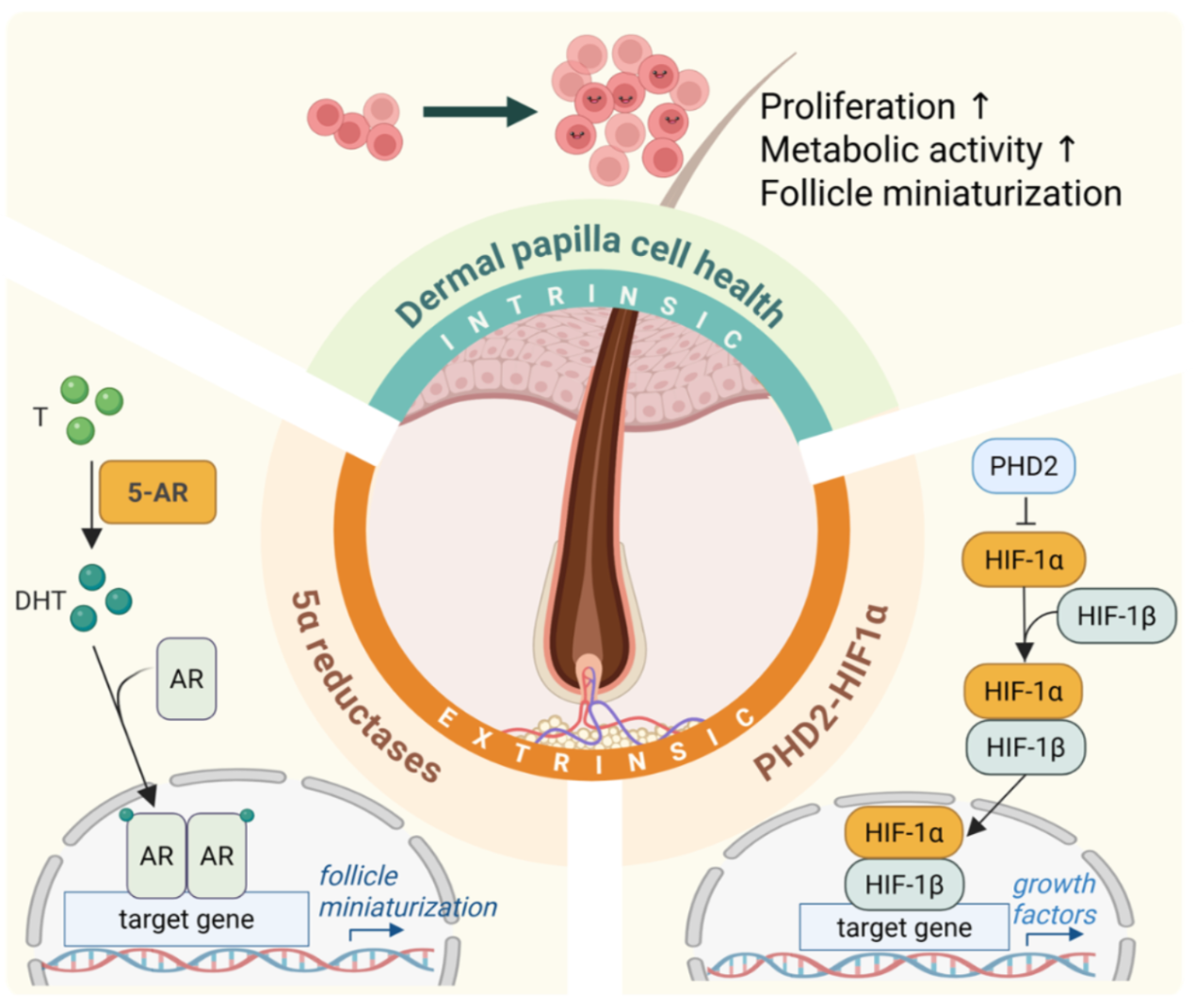
- NV-623/624: boosts dermal papilla cell health. Read more here.
- NV-273: activates a core regenerative pathway to upregulate growth factors, support dermal papilla cell metabolism, and promote microvascular remodeling. Read more here.
- NV-1065: a non-steroidal, non-hormonal molecule that stops DHT-related stress to the extrinsic hair follicle environment. Read more here.
In an impressive experiment, the researchers tested their NOVOGRO™ molecules in a 3D hair follicle model. These hair follicle organoids are lab-grown, miniature versions of human hair follicles that behave similarly to the real ones in our scalps. The researchers made these follicles-in-a-dish by combining two types of human skin cells - the outer skin cells (i.e., keratinocytes) and the deeper follicle tissue cells (i.e., dermal papilla cells) - in a 3D gel environment, where they self-organize into a ball and spontaneously sprout a hair peg-like structure within approximately 10 days. In these experiments, NOVOGRO™ outperformed minoxidil by 30%. When the researchers compared the NOVOGRO™ molecules against commercially available formulas, they saw that NOVOGRO™ outperformed all formulas in inducing peg-like hair growth, including KilgourMD.
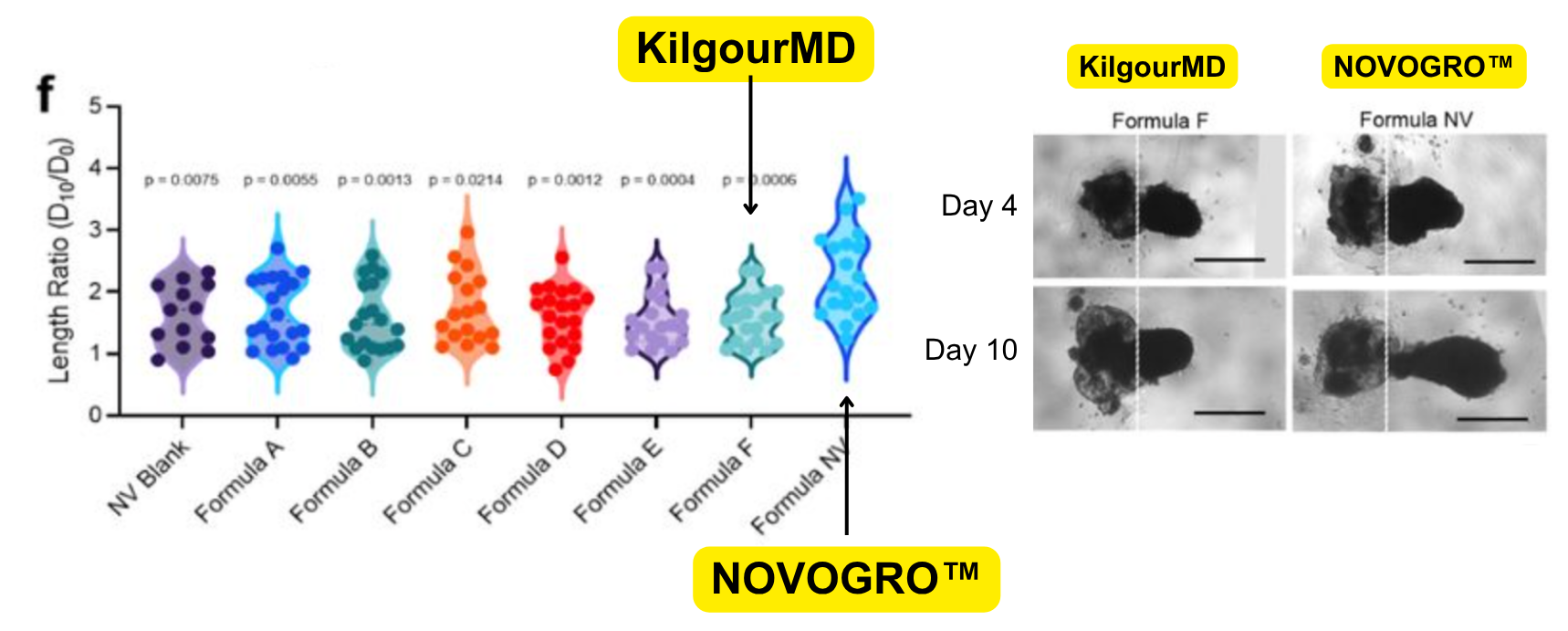
To date, the only widely available product incorporating these patented NOVOGRO™ ingredients (NV-623, NV-624, and NV-273) is the new RE:YOU Dual-Path Hair Growth Serum. Independent online reviews and user reports for RE:YOU have been consistently positive, with many users noting visible improvements in hair density and reduced shedding within the expected several month timeframe for effective hair cycle modulation. Importantly, they also mention its lightweight, non-greasy texture.
Most impressively, RE:YOU and NOVOGRO™ were advanced into a rigorous double-blind, randomized clinical study that included both machine-graded hair count analysis (via digital phototrichogram) and expert clinical grading, with a direct head-to-head comparison against 2% topical minoxidil - the current clinical benchmark for non-prescription hair loss treatment. The study demonstrated statistically superior improvements in total hair growth (50% greater), hair density (50% greater), and less hair shedding versus minoxidil (44% improvement), and higher patient-reported outcomes. No adverse events have been reported, and the treatment appears to be well tolerated. A breakdown of the 90-day interim results is here. What's very impressive about this clinical study is that they recruited 190 women - this is by far the largest N we have seen in this category.
Phototrichogram analysis showed that subjects who applied RE:YOU had 50% greater hair counts and 50% greater hair density compared to minoxidil participants:

Additionally, 97% of RE:YOU subjects showed reduced hair loss by comb testing. On average, hair shedding dropped by 56%, which was 44% better than minoxidil.

Pricing for RE:YOU is premium, which is unsurprising given the underlying science. The formulation experts we consulted estimate that the cost of goods for a single bottle - factoring in the proprietary, lab-synthesized molecules that cannot be sourced from low-cost bulk suppliers - can reach up to $100 depending on manufacturing scale. This figure does not include the significant R&D investment typical of genuine biotechnology-driven discovery programs (millions of dollars).
In contrast to the low-cost, off-the-shelf ingredients used by brands like KilgourMD, RE:YOU’s approach exemplifies a higher bar for evidence and innovation in the hair loss category. While the elevated price point may limit accessibility for some people, it aligns more closely with the economics and rigor expected of treatments that aim to deliver measurable, clinically relevant outcomes rather than marginal cosmetic effects.
Clascoterone 5% (Cosmo Pharmaceuticals)
Clascoterone is the active ingredient in Winlevi, a 1% cream the FDA approved for acne in 2020. Cosmo Pharmaceuticals, through its subsidiary Cassiopea, has reformulated it as a 5% scalp solution for androgenetic alopecia. It blocks the androgen receptor in the follicle, so DHT cannot act on the follicle there. Oral finasteride and dutasteride work differently: they lower DHT levels throughout the body. NOVOGRO™ also targets DHT, through NV-1065, a non-steroidal 5-alpha reductase inhibitor that limits DHT production rather than blocking its receptor. NV-1065 is not in the RE:YOU serum tested in the clinical trial.
Cosmo ran two identical Phase 3 trials, SCALP 1 and SCALP 2, in 1,465 men at 51 sites in the US and Europe. Each trial compared the solution with a vehicle (the same solution without the drug) for six months. In December 2025, Cosmo reported target-area hair count improvements of 539% and 168% relative to vehicle. In 12-month data released in April 2026, men who had responded by six months and stayed on treatment kept gaining hair, with safety comparable to vehicle. Men switched to vehicle at six months lost some of their gains, so like minoxidil it likely requires ongoing use. Cosmo expects to file with the FDA by early 2027.
Three caveats apply. The figures come from Cosmo's press releases, and the full results have not yet been peer-reviewed. The percentages describe improvement relative to vehicle, and Cosmo has not published absolute hair counts. Both trials enrolled only men, so there is no evidence yet in women, including the menopausal women KilgourMD targets.
The trial designs also make a direct comparison with NOVOGRO™ difficult. RE:YOU's trial enrolled only women and compared its serum with minoxidil, an active treatment. The SCALP trials enrolled only men and compared clascoterone with vehicle.
PP405 (Pelage Pharmaceuticals)
PP405 is a topical gel from Pelage Pharmaceuticals, based on UCLA research into how hair follicle stem cells use energy. It blocks the mitochondrial pyruvate carrier (MPC), which pushes the stem cells toward producing lactate. In lab and animal studies, that shift moved dormant follicles back into the growth phase. NOVOGRO™'s NV-273 also aims to wake dormant follicles, but through a different target: it acts on the environment around the follicle through the PHD2-HIF-1α axis. We compare the two mechanisms in detail in PP405 vs. NOVOGRO™.
In a Phase 2a trial, 78 men and women applied PP405 or placebo once daily for four weeks. The trial met its primary safety endpoint, and no drug was detected in participants' blood. In an exploratory analysis, 31% of men with more advanced hair loss had a hair density increase of more than 20% at week 8, compared with 0% on placebo. Pelage has not reported a separate efficacy figure for women. That is a smaller and shorter efficacy dataset than NOVOGRO™'s 90-day interim results in 190 women. In October 2026, Pelage dosed the first patient in AWAKEN, a 12-month Phase 2/3 trial in about 600 men. A separate Phase 2 trial in women is planned to start by the end of 2026.
Pelage has not disclosed PP405's chemical structure, but PP405 may be JXL069, an MPC inhibitor the same UCLA group described in 2021. In July 2026, the World Health Organization proposed the name suvomipic for JXL069. Some sources read that as confirmation that PP405 is JXL069. However, the WHO entry does not mention Pelage or PP405, and Pelage had previously distanced PP405 from JXL069 (TrichoLens lays out what is and isn't confirmed). Until Pelage or a regulator confirms the structure, the link is unconfirmed.
If PP405 is JXL069, early reports from self-experimenters are not encouraging. Since 2025, a small group on the r/tressless forum has bought raw JXL069 online and applied it to their own scalps. In a July 2026 post, one member said his supply was third-party tested and that he used it for 12 weeks, then kept watching for a couple of months after stopping. His summary: “Across the group, we saw no notable results.” He added that the ester versions of JXL069 sold by grey-market vendors have not “produced convincing results based on user reports” either. These are uncontrolled self-experiments. By the poster's own account, he was one person, he was taking other hair loss medications at the same time, and the group mixed their own formulations, which may not match Pelage's gel. He does not rule out that a better-formulated version could work. Still, the reports are a reason to temper expectations until AWAKEN reads out.
JXL069 sold online as a “research chemical” should not be treated as PP405. Its purity, formulation, and dose are unknown, and it has not been clinically tested.
The three approaches also differ in how they reach patients. NOVOGRO™ combines several molecules that act on different pathways in one cosmetic serum, which is on sale now. Clascoterone and PP405 each target one pathway and are being developed as prescription drugs, so the FDA will review efficacy and safety data before either reaches patients. None of the three has peer-reviewed clinical results yet, and only NOVOGRO™ has reported efficacy results in women.
KilgourMD vs what's in the pipeline
Our editorial team has reached out to the researchers of the NOVOGRO™ study who mentioned that the clinical study is still ongoing and the next 6-month data will be available around the end of the year. We will update this article as new clinical data, and any new developments come in.
| Category | KilgourMD | NOVOGRO™ | Clascoterone 5% | PP405 |
|---|---|---|---|---|
| Original development path | Repurposed actives; a combination of existing cosmetic ingredient compounds (Redensyl, Capixyl, Procapil) repositioned into a dual-serum system | Developed specifically to support the hair follicle intrinsically and extrinsically | Prescription drug candidate; same active ingredient as Winlevi 1% acne cream (FDA-approved 2020), reformulated as a 5% scalp solution | Prescription drug candidate from UCLA research, developed by Pelage Pharmaceuticals |
| Primary target | Multi-targeted: follicle stem cells (Redensyl), extracellular matrix and DHT (Capixyl), DHT and microcirculation (Procapil) |
|
Androgen receptor in the scalp | Mitochondrial pyruvate carrier (MPC) in hair follicle stem cells |
| Chemical class | Botanical extracts and biomimetic peptides | Small molecule ingredients | Steroidal small molecule (cortexolone 17α-propionate) | Small molecule; structure undisclosed, possibly JXL069 (suvomipic) |
| Mechanistic approach | Dual-action system: Prevention Serum targets DHT suppression and follicle anchoring; Treatment Serum targets hair follicle stem cell activation and scalp microcirculation via natural extracts. | Boosts hair follicles intrinsically, and supports the environment extrinsically | Blocks DHT from acting at the follicle without lowering whole-body DHT | Shifts stem cell metabolism toward lactate to move dormant follicles into the growth phase |
| Formulability | Water-based formulas, but poorly-optimized | High solubility in water, amenable to topical formulation | Topical scalp solution | Topical gel, once daily |
| Side effect profile | Botanical extracts and biomimetic peptides are generally well-tolerated. No known side effects with Redensyl, Capixyl, or Procapil. | Designed for safety - robust preclinical safety data in human skin and non-skin cells. Long-term safety and real-world follow-up needed. | Comparable to vehicle in Phase 3; negligible systemic absorption reported. Long-term and real-world data pending. | Well tolerated in Phase 2a; no drug detected in blood. Long-term data pending. |
| Clinical data | Company-sponsored trial: 60.3% fewer hairs shed, 53% showed clinically significant growth at 4 months (43 women). | Company-sponsored trial: 97% had less hair shedding, on average 44% better than minoxidil. 50% greater hair counts and hair density by phototrichogram (190 women). These are the interim 90-day results. | Two vehicle-controlled Phase 3 RCTs in 1,465 men; up to 539% relative hair count improvement at 6 months, continued gains at 12 months. Men only; topline press releases, not yet peer-reviewed. | Phase 2a in 78 men and women with 4 weeks of dosing; 31% of men with more advanced hair loss had >20% density gain at week 8 vs 0% on placebo (exploratory). Phase 2/3 in ~600 men began October 2026. |
| MoS Assessment | A well-tolerated, accessible entry point in the category - but the evidence base relies heavily on individual ingredient studies rather than the finished formulation, and the mechanisms engaged are not rooted in robust science. | Still early, but the overall multi-path strategy is meaningfully more sophisticated than KilgourMD. The interim clinical data is very promising. | The largest controlled dataset in this comparison, but only in men. Not yet approved; FDA filing expected by early 2027. | A new mechanism with early human data. Efficacy evidence so far is small and exploratory, and self-experimenters using JXL069 (possibly the same compound) report no meaningful results. |
Our Verdict
KilgourMD is a product built on an all too familiar foundation - Redensyl, Capixyl, and Procapil are recognizable names in the hair loss category - but they are also ingredients that have been circulating in cosmetic formulations for over a decade, and the evidence behind them reflects a bygone era of hair science. The clinical data KilgourMD points to is real, but it conflates two distinct bodies of evidence in a way that flatters the brand more than the science warrants. Their own clinical trial - 43 women over four months - contains no placebo arm or minoxidil comparison, making it impossible to separate genuine efficacy from natural fluctuations of hair growth over time.
Moreover, without a minoxidil comparison, they cannot make any comparisons to minoxidil. These are not minor caveats. They are the kind of study design decisions that separate genuinely validated products from those that have learned to speak the language of clinical evidence without fully earning it. For consumers who have already tried the category staples and found them wanting, KilgourMD is unlikely to offer a meaningfully different experience. It is, at its core, a refinement of approaches that have existed for years, packaged with strong branding and dermatologist credibility.
NOVOGRO™ starts from a different premise entirely. Rather than selecting from the same shortlist of established cosmetic actives, it targets both the intrinsic hair follicle and its extrinsic environment. The clinical data is still maturing, but the biological rationale is more sophisticated, and the mechanism is more precisely matched to what the science tells us actually goes wrong in hair thinning and hair loss.
Verdict: Claim Overstated
Evidence rating: KilgourMD: 1/5 | NOVOGRO™: interim clinical data strong, 5/5 preclinical
References & Further Reading
- Fernández, D. G., Quinn, C., Alhayek, S., Prasad, A. R., et al. (2026). Efficacy of a dual-serum cosmetic system in women with female pattern hair loss. Journal of Drugs in Dermatology, 25(6), 83251s3–83251s10. doi:10.36849/JDD.83251
- Crunchbase. KilgourMD: company profile and funding rounds.
- (2019). A comparative study between topical 5% minoxidil and topical “Redensyl, Capixyl, and Procapil” combination in men with androgenetic alopecia. Journal of Cosmetology & Trichology. As cited in KilgourMD. (2024, January 5). KilgourMD is where mother nature meets science.
- Qu, Z. et al. (2026). AI-enabled discovery of small molecules targeting complementary pathways for hair follicle rejuvenation. bioRxiv.
- RE:YOU. (2026). One of the most rigorous clinical trials in hair thinning (interim 90-day results). RE:YOU.
- ClinicalTrials.gov. (2026). Effects of a topical serum solution on hair characteristics (NCT07785869). U.S. National Library of Medicine.
- Cosmo Pharmaceuticals. (2025, December). Cosmo announces breakthrough Phase III topline results from Scalp 1 and Scalp 2 for clascoterone 5% solution in male hair loss. Newsfile.
- Cosmo Pharmaceuticals. (2026, April 15). Phase III 12-month data for clascoterone 5% topical solution confirm positive safety for chronic use and continued hair growth.
- ClinicalTrials.gov. A study to evaluate the efficacy and safety of clascoterone solution in treatment of male pattern hair loss (SCALP 1; NCT05910450); see also SCALP 2 (NCT05914805). U.S. National Library of Medicine.
- U.S. Food and Drug Administration. (2020). WINLEVI® (clascoterone) cream, for topical use: prescribing information.
- Pelage Pharmaceuticals. (2025, June 17). Pelage Pharmaceuticals announces positive Phase 2a clinical trial results for PP405 in regenerative hair loss therapy.
- Pelage Pharmaceuticals. (2026, October 14). Pelage Pharmaceuticals announces first patient dosed in Phase 2/3 AWAKEN trial of PP405 for androgenetic alopecia; trial registration NCT07819435.
- Liu, X., Flores, A. A., Situ, L., Gu, W., Ding, H., Christofk, H. R., Lowry, W. E., & Jung, M. E. (2021). Development of novel mitochondrial pyruvate carrier inhibitors to treat hair loss. Journal of Medicinal Chemistry, 64(4), 2046–2063.
- World Health Organization. (2026, July 19). International Nonproprietary Names for pharmaceutical substances: Proposed INN List 135.
- TrichoLens. (2026, August 4). Is suvomipic (JXL069) Pelage’s PP405?.
- r/tressless. (2026, July 30). PP405 (JXL069) is confirmed: Here’s everything I’ve learned after a year of testing. Reddit.