Generic Rx · prescription required
Pros
- Best evidence for preserving native (non-transplanted) hair long-term
- Addresses the actual cause of loss — DHT-driven miniaturization
- Reduces the amount of surrounding hair lost to progression around grafts
- Decades of clinical use in male pattern hair loss at 1 mg/day
Cons
- Systemic hormonal drug — sexual/mood side effects in a minority of men
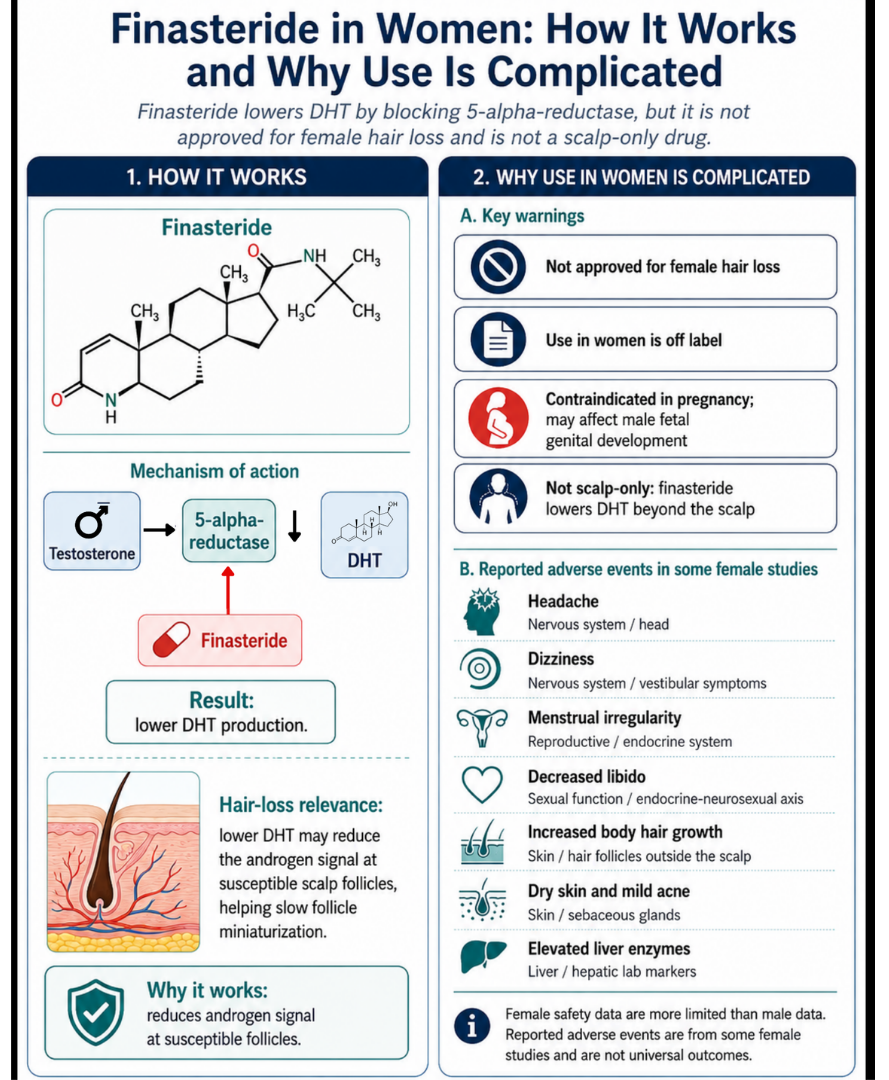
- Pregnancy category X — contraindicated in women who may become pregnant
- Benefit stops when you stop the drug
- Does not improve graft survival per se; it protects the surrounding field
Why It's the Foundation
A transplant relocates DHT-resistant donor follicles, but it does nothing for the native, genetically vulnerable hair around them. Without a DHT blocker, that native hair keeps thinning — and a patient can end up with transplanted islands surrounded by continuing loss. Finasteride, an irreversible type II 5-alpha-reductase inhibitor, suppresses serum DHT roughly 65–70% within 24 hours and is the single most important tool for protecting the long-term result. Dutasteride blocks both 5-AR isoenzymes and lowers DHT further; it is used off-label with stronger suppression and a correspondingly broader side-effect discussion.
The trade-off is that this is a systemic endocrine drug, not a scalp-only intervention. In men, adverse effects include sexual dysfunction, mood changes, and gynecomastia in a minority; in women, its pregnancy category X status is the dominant safety constraint. We cover the female evidence in detail in Finasteride vs. NOVOGRO™.
Who It's Best For
Effectively every male transplant patient with ongoing pattern loss who can tolerate it — it is the backbone of protecting the result. Women only under specialist supervision with appropriate pregnancy precautions.